
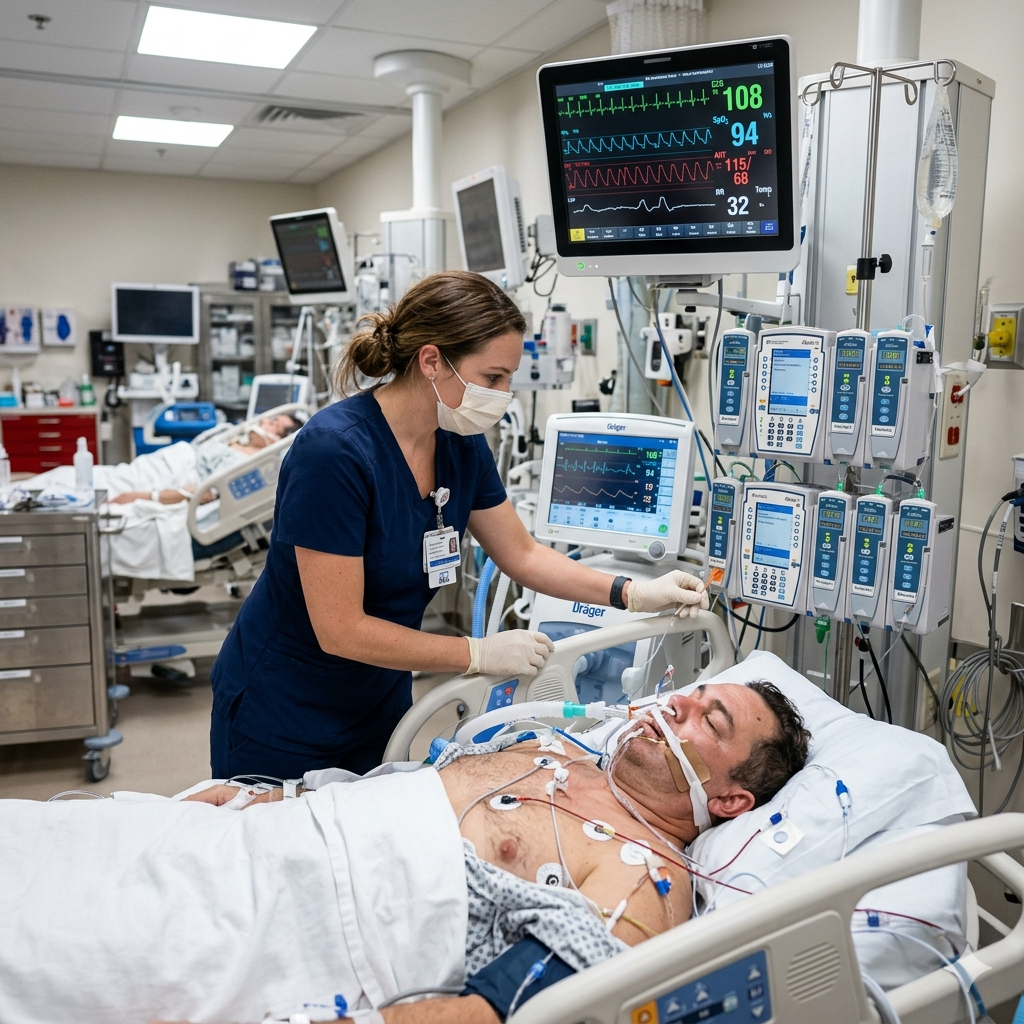
When the immune system turns on itself, the consequences can be catastrophic. Cytokine storm — a life-threatening hyperinflammatory response triggered by severe infections — demands rapid clinical recognition and decisive nursing action. For the registered nurse working in critical care or any acute setting, understanding this syndrome is not optional. It is a high-yield topic for NCLEX preparation and a clinical reality that can mean the difference between life and death at the bedside.
Cytokine storm nursing implications span assessment, monitoring, pharmacologic management, and collaborative care. This article breaks down the pathophysiology, clinical presentation, and evidence-based nursing interventions every RN nurse must master.
What Is a Cytokine Storm? Pathophysiology for Nurses
Under normal conditions, the immune system releases cytokines — signaling proteins such as interleukins (IL-1, IL-6), tumor necrosis factor-alpha (TNF-α), and interferons — to coordinate the inflammatory response against pathogens. In cytokine storm, this process becomes dysregulated. The immune system enters a state of uncontrolled positive feedback, releasing cytokines in excessive quantities that begin to damage the body’s own tissues and organs.
Severe infections — including bacterial sepsis, influenza, COVID-19, and certain fungal infections — are among the most common triggers. Other causes include hematologic malignancies, CAR-T cell therapy, and autoimmune disorders, but for the registered nurse in an acute care setting, infectious etiologies are the primary concern.
The cascading cytokine release leads to:
- Systemic vasodilation and distributive shock
- Increased capillary permeability, causing third-spacing and edema
- Endothelial dysfunction, predisposing to disseminated intravascular coagulation (DIC)
- Multi-organ dysfunction syndrome (MODS), affecting lungs, kidneys, liver, and cardiovascular system
Understanding this mechanism helps the RN nurse anticipate clinical deterioration and intervene early.
Recognizing Cytokine Storm: Clinical Assessment Findings
Early recognition is the cornerstone of cytokine storm management. The registered nurse must perform a systematic assessment and identify subtle changes before the patient decompensates.
Vital signs and hemodynamic changes:
- Fever (often >38.5°C / 101.3°F) or, in late stages, hypothermia
- Tachycardia (HR >100 bpm)
- Hypotension or widened pulse pressure (early distributive shock)
- Tachypnea and decreased SpO₂
Neurological changes:
- Confusion, agitation, or altered level of consciousness
- These may precede overt hemodynamic instability
Respiratory assessment:
- Crackles, increased work of breathing, or accessory muscle use
- Rapid progression to Acute Respiratory Distress Syndrome (ARDS) is a hallmark complication
Laboratory findings the RN nurse must monitor:
- Elevated ferritin (often dramatically elevated — a key marker)
- Elevated C-reactive protein (CRP) and erythrocyte sedimentation rate (ESR)
- Elevated D-dimer and coagulation abnormalities (PT/INR, aPTT)
- Elevated IL-6 levels (when available)
- Lymphopenia on CBC
- Rising creatinine, LFTs, and LDH — signaling organ involvement
- Troponin elevation if myocardial involvement is present
The nursing assessment must be continuous. Trends matter more than isolated values. Report deteriorating trends immediately using SBAR communication with the medical team.
Priority Nursing Interventions in Cytokine Storm
The cytokine storm nursing implications translate directly into clinical action. The following interventions reflect current critical care practice and align with concepts tested on NCLEX.
1. Airway and Oxygenation Management
Respiratory failure is a primary threat. The RN nurse must:
- Apply supplemental oxygen immediately and titrate to SpO₂ ≥94%
- Prepare for escalation: high-flow nasal cannula (HFNC), non-invasive positive pressure ventilation (NIPPV), or mechanical ventilation
- For intubated patients, implement lung-protective ventilation: tidal volumes of 6 mL/kg ideal body weight and PEEP titration per ARDS protocol
- Position the patient at 30–45 degrees head-of-bed elevation to optimize respiratory mechanics
2. Hemodynamic Monitoring and Fluid Resuscitation
- Establish large-bore IV access or assist with central venous catheter placement
- Administer IV crystalloid fluids (typically 30 mL/kg for septic shock per Surviving Sepsis Campaign guidelines) — but reassess frequently to avoid fluid overload in ARDS
- Initiate vasopressor therapy (norepinephrine is first-line) per physician or advanced practice order; titrate to a MAP ≥65 mmHg
- Monitor urine output hourly — target ≥0.5 mL/kg/hr
3. Pharmacologic Interventions
The registered nurse must understand and monitor medications used to blunt the cytokine response:
- Corticosteroids (e.g., dexamethasone, methylprednisolone): Suppress immune hyperactivation; monitor blood glucose closely — steroids cause hyperglycemia
- IL-6 receptor antagonists (e.g., tocilizumab, siltuximab): Used in severe cytokine storm, particularly in CAR-T or COVID-19 contexts; monitor for secondary infections
- Anticoagulation (e.g., heparin infusion): Addresses DIC risk; monitor aPTT, platelet count, and bleeding precautions
- Broad-spectrum antibiotics: Initiated promptly if infectious etiology is confirmed or suspected; the RN nurse draws blood cultures before the first dose
4. Continuous Monitoring and Early Complication Detection
- Continuous cardiac monitoring for dysrhythmias
- Hourly neurological checks in the ICU
- Trending of serial labs every 4–6 hours as ordered
- Assess for signs of DIC: petechiae, ecchymosis, oozing from IV sites, hematuria
Multi-Organ Dysfunction: Nursing Considerations by System
Cytokine storm places every organ system at risk. The registered nurse must apply a systems-based approach:
| Organ System | Complication | Nursing Focus |
|---|---|---|
| Pulmonary | ARDS | Lung-protective ventilation, prone positioning if ordered |
| Renal | Acute Kidney Injury (AKI) | Hourly urine output, avoid nephrotoxic agents, prepare for CRRT |
| Cardiovascular | Distributive shock, cardiomyopathy | Vasopressors, hemodynamic monitoring, 12-lead ECG |
| Hematologic | DIC, thrombocytopenia | Bleeding precautions, anticoagulation monitoring |
| Hepatic | Transaminitis, coagulopathy | LFT trending, monitor for jaundice |
| Neurologic | Encephalopathy | Reorientation, minimize sedation when possible, fall precautions |
This table serves as a useful quick reference for bedside nursing rounds and reflects the complexity that NCLEX critical care questions test.
Cytokine Storm and Sepsis: Overlapping Nursing Priorities
Cytokine storm and sepsis share overlapping pathophysiology, and the nursing bundle for sepsis directly applies to many cytokine storm cases. The Hour-1 Sepsis Bundle (formerly the 3-hour bundle) includes:
- Measure lactate level
- Obtain blood cultures before antibiotics
- Administer broad-spectrum antibiotics
- Begin rapid administration of 30 mL/kg crystalloid for hypotension or lactate ≥4 mmol/L
- Apply vasopressors if hypotension persists
For the RN nurse, executing this nursing bundle rapidly and documenting each element is both a clinical priority and an NCLEX-tested skill. Delays in bundle completion are associated with increased mortality. Every minute matters — and the nurse is the linchpin of that response.
💡 NCLEX Tips: Cytokine Storm
- First nursing action when cytokine storm is suspected: Assess airway, breathing, and circulation (ABC) — then notify the provider using SBAR.
- Elevated ferritin is a red flag marker for cytokine storm — expect NCLEX questions that include it among lab findings.
- Norepinephrine is the vasopressor of choice for distributive/septic shock — know this for pharmacology questions.
- Lung-protective ventilation = 6 mL/kg tidal volume + plateau pressure <30 cmH₂O — high-yield for ARDS management questions.
- When a patient on corticosteroids develops cytokine storm treatment, always monitor blood glucose — steroids cause hyperglycemia and can mask infection signs.
- Cytokine storm can occur in infections and in non-infectious contexts (CAR-T therapy, rheumatologic conditions) — NCLEX may present either scenario.
Family Communication and Patient Advocacy
Critical illness places enormous stress on patients and families. The RN nurse plays a central role in communication and advocacy. When a patient develops cytokine storm:
- Provide family-centered updates using plain language — avoid jargon like “cytokine cascade”; instead say “the immune system is overreacting and causing inflammation throughout the body”
- Facilitate family meetings with the intensivist and social worker
- Assess for advance directives and ensure goals of care are documented
- Support the patient’s dignity and comfort even in the most acute phase — pain management, oral care, and position changes remain nursing priorities
This aspect of care is increasingly emphasized in NCLEX NGN (Next Generation NCLEX) questions that assess clinical judgment in complex, multisystem scenarios.
Conclusion
Cytokine storm is one of the most demanding syndromes a registered nurse will encounter in acute and critical care practice. Mastering the cytokine storm nursing implications — from early recognition to hemodynamic management to multi-organ system monitoring — prepares the RN nurse to act with precision under pressure. The ability to trend labs, escalate care, execute sepsis bundles, and communicate effectively makes the nurse central to survival outcomes.
For NCLEX candidates, this topic bridges critical care, pharmacology, and clinical judgment — all domains of the Next Generation NCLEX. Strengthen your exam readiness by practicing high-acuity questions and diving into the full nursing bundle of resources at RN-Nurse.com. Whether you are preparing for boards or sharpening your ICU skills, structured review and consistent practice are the keys to mastery.
👉 Explore NCLEX practice questions and nursing courses at rn-nurse.com/nursing-courses/