Continuous Infusion Medications in Critical Care Nursing: What Every RN Must Know

continuous infusion medications critical care

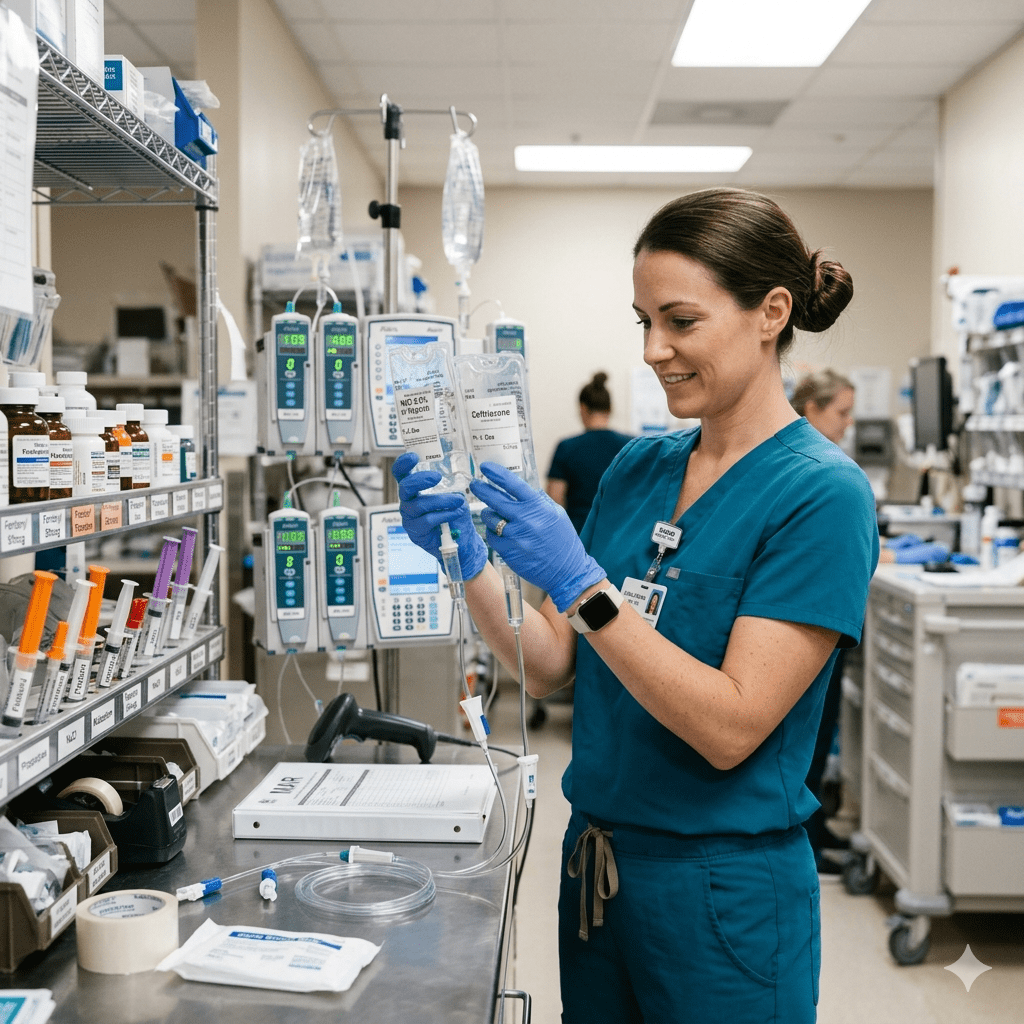
Critically ill patients rarely receive medications as isolated boluses. In the ICU, continuous infusion medications are the backbone of hemodynamic management, sedation, analgesia, and organ support. For a registered nurse working in intensive care — or for a nursing student preparing for the NCLEX — understanding how these drips work, how to titrate them safely, … Read more

IV Compatibility and Medication Mixing Safety for Nurses

IV compatibility medication safety

Medication errors involving intravenous drugs rank among the most preventable — and most dangerous — adverse events in clinical practice. IV compatibility and medication mixing safety form a critical knowledge domain for every registered nurse, from the new graduate to the seasoned ICU clinician. Whether a nurse administers vasoactive drips in the critical care unit … Read more

Nephrotoxic Medications and Renal Protection: What Every Nurse Must Know for the NCLEX

nephrotoxic medications renal protection

Kidney injury caused by medications is one of the most preventable complications in clinical care — yet it remains a leading cause of acute kidney injury (AKI) in hospitalized patients. For any registered nurse working in medical-surgical, critical care, or outpatient settings, the ability to recognize nephrotoxic medications and apply evidence-based renal protection strategies is … Read more

Drug-Induced Liver Injury Nursing: Monitoring, Assessment, and NCLEX Essentials

drug-induced liver injury nursing

Drug-induced liver injury (DILI) is one of the most clinically significant and frequently overlooked adverse drug reactions in modern healthcare. For the registered nurse, recognizing early hepatotoxicity — and responding decisively — can mean the difference between reversible liver damage and fulminant liver failure. DILI accounts for more than 50% of acute liver failure cases … Read more

Reversal Agents for Anticoagulants: A Nursing Pharmacology Guide for NCLEX

reversal agents for anticoagulants

Anticoagulant therapy saves lives — but it also carries the constant risk of serious, potentially life-threatening bleeding. Therefore, any registered nurse working in acute care, emergency, or critical care settings must know how and when to administer reversal agents for anticoagulants. These medications act quickly to neutralize anticoagulant activity, and the ability to identify the … Read more

Sedative Agents in Mechanical Ventilation: A Nursing Guide for the ICU

sedative agents mechanical ventilation

Mechanical ventilation is one of the most complex and high-stakes interventions a registered nurse will encounter in the ICU. Managing a ventilated patient goes far beyond monitoring machine settings — it demands expert pharmacological knowledge, particularly around sedative agents. The appropriate use of sedative agents in mechanical ventilation directly affects patient outcomes, ventilator synchrony, ICU … Read more

Therapeutic Index and Drug Safety Monitoring: What Every Nurse Must Know for NCLEX

therapeutic index drug safety nursing

Pharmacology is one of the most demanding domains on the NCLEX — and for good reason. Medication errors remain among the leading causes of preventable patient harm in clinical settings. At the heart of safe drug administration lies one foundational concept that every registered nurse must understand deeply: the therapeutic index (TI). Mastering therapeutic index … Read more

Antidotes in Toxicology Emergencies: A Complete Nursing Guide for NCLEX

Antidotes in toxicology emergencies

Toxicology emergencies demand speed, precision, and a thorough command of pharmacology. When a patient arrives in the emergency department with a suspected overdose or poisoning, the registered nurse is often the first clinician to assess, stabilize, and initiate treatment. Because of this front-line role, mastery of antidotes in toxicology emergencies is not just an NCLEX … Read more

Drug Interactions in Polypharmacy: What Every Nurse Must Know for NCLEX and Clinical Practice

drug interactions polypharmacy nursing

Polypharmacy — defined as the concurrent use of five or more medications — is one of the most pressing pharmacological challenges facing nurses today. As the population ages and chronic disease management grows more complex, drug interactions in polypharmacy patients represent a leading cause of preventable adverse events, hospitalizations, and mortality. For the registered nurse, … Read more

Pharmacogenomics Nursing Implications: How Genetics Shape Drug Response

pharmacogenomics nursing implications

Every patient metabolizes medications differently — and genetics are a primary reason why. Pharmacogenomics is the study of how an individual’s genetic makeup influences their response to drugs, including how efficiently a drug is absorbed, metabolized, and excreted. For nursing students preparing for the NCLEX and practicing RNs in clinical settings, understanding pharmacogenomics nursing implications … Read more