
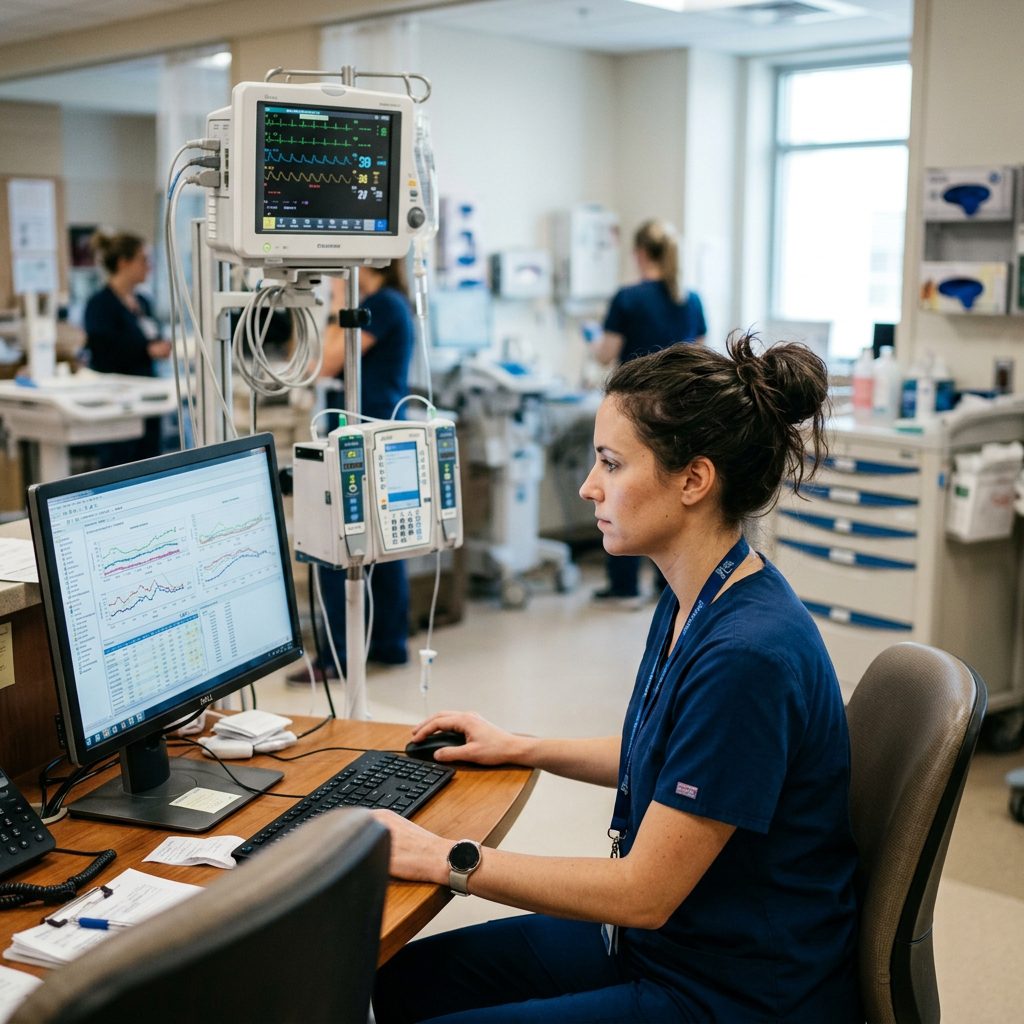
Introduction
Tumor lysis syndrome is one of the true oncologic emergencies, and because it often strikes within hours to days of starting chemotherapy, nurses are frequently the first to catch the warning signs. Since prevention is far more effective than treatment once TLS is established, understanding who’s at risk and what to watch for is essential oncology nursing knowledge — and a well-tested NCLEX topic. This guide walks through the pathophysiology, risk stratification, and nursing priorities that make the difference in outcomes.
Table of Contents
- What Is Tumor Lysis Syndrome?
- Pathophysiology
- Risk Factors
- Laboratory vs. Clinical TLS
- Signs and Symptoms
- Nursing Assessment and Monitoring
- Prevention
- Medical Treatment
- Nursing Interventions
- Complications
- NCLEX Tips and Memory Tricks
- Clinical Pearls
- Key Takeaways
- FAQs
- References
What Is Tumor Lysis Syndrome?
Tumor lysis syndrome (TLS) occurs when a large number of rapidly dividing malignant cells are destroyed, or lysed, releasing their intracellular contents — including electrolytes and nucleic acid breakdown products — into the bloodstream all at once. Because this happens so quickly, the body’s normal regulatory systems can’t keep up, and the result is a cascade of metabolic disturbances that the Oncology Nursing Society recognizes as one of the classic oncologic emergencies.
Pathophysiology
As tumor cells break down, they release potassium, phosphate, and nucleic acids directly into the circulation. The nucleic acids are then metabolized into uric acid, which can crystallize in the renal tubules. Meanwhile, the released phosphate binds with calcium, causing calcium levels to drop. Altogether, this produces four hallmark laboratory abnormalities: hyperkalemia, hyperphosphatemia, hypocalcemia, and hyperuricemia — and because these changes happen so fast, the kidneys are often overwhelmed before compensatory mechanisms can catch up.
Risk Factors
- Hematologic malignancies with high growth fractions, particularly Burkitt lymphoma, lymphoblastic lymphoma, and certain cases of diffuse large B-cell lymphoma or chronic lymphocytic leukemia
- High tumor burden prior to treatment
- Bulky disease or elevated white blood cell count at diagnosis
- Pre-existing renal impairment, which reduces the kidneys’ ability to clear the released byproducts
- Dehydration or inadequate hydration at the start of treatment
- Highly chemosensitive tumors, since a strong initial treatment response accelerates cell death
Laboratory vs. Clinical TLS
TLS is generally classified along a spectrum. Laboratory TLS refers to the biochemical abnormalities alone — two or more of the hallmark electrolyte changes detected on labs. Clinical TLS, on the other hand, refers to laboratory TLS accompanied by clinically significant complications, such as acute kidney injury, cardiac arrhythmia, or seizure. Recognizing laboratory TLS early is precisely what allows nurses and the care team to intervene before it progresses to the clinical stage.
Signs and Symptoms
Because early TLS can be asymptomatic and detected only on labs, ongoing surveillance matters as much as symptom recognition. That said, once metabolic changes progress, patients may show:
- Muscle cramps, weakness, or paresthesias (from hyperkalemia or hypocalcemia)
- Cardiac dysrhythmias or palpitations
- Nausea, vomiting, or diarrhea
- Lethargy or altered mental status
- Decreased urine output (a red flag for developing acute kidney injury)
- Tetany or seizures in severe hypocalcemia
- Flank pain, sometimes related to uric acid crystal deposition
Nursing Assessment and Monitoring
- Frequent monitoring of serum electrolytes, uric acid, and renal function — institutional protocols commonly call for these labs every 4 to 12 hours during the highest-risk window
- Continuous cardiac monitoring for at-risk or symptomatic patients, since hyperkalemia-related dysrhythmias can develop rapidly
- Strict intake and output monitoring to track renal function and hydration status
- Daily weights to help guide fluid management
- Ongoing neuromuscular assessment, since tetany and muscle cramping can signal worsening hypocalcemia
Prevention
Because TLS can often be prevented altogether with proactive management, prevention is the true cornerstone of nursing care in at-risk patients. Key strategies include:
- Risk stratification before treatment begins, so high-risk patients receive more intensive monitoring and prophylaxis from the outset
- Aggressive IV hydration, typically started before chemotherapy and continued throughout the highest-risk period
- Prophylactic uric-acid-lowering medication — allopurinol for low- to intermediate-risk patients, or rasburicase for high-risk patients, per current NCCN guidance
- Avoiding unnecessary potassium- or phosphate-containing IV fluids or supplements during the at-risk window
- Patient and family education, so they understand why frequent labs and close monitoring are necessary even before symptoms appear
Medical Treatment
If TLS develops despite preventive measures, treatment focuses on correcting the specific electrolyte abnormalities, supporting renal function, and continuing aggressive hydration. Rasburicase is often used to rapidly lower uric acid levels in confirmed or high-risk cases, while hyperkalemia is managed according to standard emergency protocols. In severe cases with refractory electrolyte abnormalities or significant kidney injury, renal replacement therapy may become necessary.
Nursing Interventions
- Collaborate with the provider on continuous cardiac monitoring decisions
- Administer prescribed IV fluids and medications (allopurinol, rasburicase) as ordered, and monitor for effectiveness and side effects
- Promptly report any ECG changes or new dysrhythmias associated with electrolyte shifts
- Continue IV fluid therapy for as long as the patient remains at risk, not just during the initial treatment window
- Provide emotional support and clear education to the patient and family throughout, since this can be a frightening and fast-moving complication
- Coordinate closely with the interprofessional team — oncology, nephrology, and critical care may all be involved in higher-acuity cases
Complications
- Acute kidney injury, sometimes requiring dialysis
- Life-threatening cardiac arrhythmias from hyperkalemia
- Seizures from severe hypocalcemia
- Multi-organ dysfunction in severe, unrecognized cases
- Death, particularly when TLS is not identified and treated promptly
NCLEX Tips and Memory Tricks
- Remember the four hallmark abnormalities with “Hyper-Hyper-Hyper-Hypo”: hyperkalemia, hyperphosphatemia, hyperuricemia, and hypocalcemia.
- Since TLS typically develops within hours to days after chemotherapy starts, any new symptoms during this window in a high-risk patient should raise suspicion immediately.
- If a question describes labs drawn every few hours in a newly chemotherapy-treated patient, think TLS surveillance protocol, not routine monitoring.
- Mnemonic — “LYSE”: Lab monitoring frequently, You hydrate aggressively, Start prophylaxis (allopurinol/rasburicase) early, EKG monitoring for at-risk patients.
Clinical Pearls
- Laboratory TLS can exist well before any symptoms appear — this is exactly why scheduled lab monitoring matters more than waiting for the patient to “look sick.”
- Because highly chemosensitive tumors respond so quickly to treatment, ironically, the patients most likely to have a great initial response to chemo are often the same patients at highest TLS risk.
- Rasburicase dosing and use should always be double-checked against current institutional protocol and renal function, since it’s a high-alert medication in this population.
Key Takeaways
- TLS results from rapid tumor cell breakdown, causing hyperkalemia, hyperphosphatemia, hypocalcemia, and hyperuricemia.
- Highest risk is seen in hematologic malignancies with high growth fractions and high tumor burden.
- Prevention — risk stratification, aggressive hydration, and prophylactic medication — is more effective than treating established TLS.
- Frequent lab monitoring and continuous cardiac monitoring in at-risk patients are core nursing responsibilities.
FAQs
What causes tumor lysis syndrome?
The rapid destruction of a large number of tumor cells, most often triggered by chemotherapy, which releases intracellular electrolytes and nucleic acid byproducts into the bloodstream faster than the body can clear them.
What are the four main electrolyte abnormalities in tumor lysis syndrome?
Hyperkalemia, hyperphosphatemia, hypocalcemia, and hyperuricemia.
How often should labs be monitored for tumor lysis syndrome risk?
Institutional protocols vary, but serum electrolytes, uric acid, and renal function are commonly monitored every 4 to 12 hours during the highest-risk period.
What medications are used to prevent tumor lysis syndrome?
Allopurinol is typically used for low- to intermediate-risk patients, while rasburicase is used for high-risk patients, alongside aggressive IV hydration.
Which cancers carry the highest risk of tumor lysis syndrome?
Hematologic malignancies with high growth fractions, such as Burkitt lymphoma, lymphoblastic lymphoma, and certain aggressive lymphomas and leukemias.
References
- StatPearls (NCBI Bookshelf) — Tumor Lysis Syndrome
- Nursing2026 (Lippincott) — Recognizing and Preventing Tumor Lysis Syndrome
- NCCN Clinical Practice Guidelines — Tumor Lysis Syndrome Management
- British Committee for Standards in Haematology — Tumor Lysis Syndrome Prevention Guidelines
RELATED ARTICLES:
- https://rn-nurse.com/chemotherapy-nursing-care-guide/
- https://rn-nurse.com/neutropenic-precautions-nursing-guide/
- https://rn-nurse.com/acute-kidney-injury-nursing-staging/
- https://rn-nurse.com/nursing-care-electrolyte-imbalance-cancer-patients/
- https://rn-nurse.com/lab-value-cheats/
- https://rn-nurse.com/high-alert-medications-nurses/
- https://rn-nurse.com/drug-toxicity-signs/
- https://rn-nurse.com/central-line-care/
- https://rn-nurse.com/immunotherapy-in-cancer-care/
- https://rn-nurse.com/sepsis-management/