
Introduction
Neutropenic precautions protect one of the most vulnerable patient populations in nursing: people whose immune systems can no longer mount a normal defense against infection. For nurses working in oncology, hematology, or any unit that cares for chemotherapy or transplant patients, understanding when and how to apply these precautions isn’t optional — it’s a patient-safety essential and a near-guaranteed NCLEX topic. This guide covers the pathophysiology, assessment, interventions, and exam-ready pearls you need.
Table of Contents
- What Is Neutropenia?
- Causes and Risk Factors
- Pathophysiology
- Signs and Symptoms
- Nursing Assessment
- Diagnosis and Lab Values
- Medical and Pharmacologic Treatment
- Neutropenic Precautions: Core Interventions
- Patient and Family Education
- Complications
- Prevention
- Prognosis
- NCLEX Tips and Memory Tricks
- Clinical Pearls
- Key Takeaways
- FAQs
- References
What Is Neutropenia?
Neutrophils are the white blood cells responsible for the body’s first-line defense against bacterial and fungal infection. Neutropenia means the absolute neutrophil count (ANC) has dropped below normal, leaving the patient with a reduced ability to fight infection.
| Severity | ANC (cells/µL) |
|---|---|
| Normal | 2,500 – 6,000 |
| Mild neutropenia | 1,000 – 1,500 |
| Moderate neutropenia | 500 – 1,000 |
| Severe neutropenia | < 500 |
Neutropenic precautions are typically initiated when the ANC falls below 1,000 cells/µL, and are intensified — sometimes with additional protective measures — when the ANC drops below 500 cells/µL, the threshold associated with the highest infection risk.
How ANC is calculated:
ANC = (Total WBC) × (% neutrophils + % bands) ÷ 100
Causes and Risk Factors
- Chemotherapy (myelosuppression is the most common cause in nursing practice)
- Radiation therapy involving bone marrow-heavy areas
- Hematologic malignancies (leukemia, lymphoma) that crowd out normal marrow production
- Hematopoietic stem cell/bone marrow transplant, especially the pre-engraftment period
- Certain medications (clozapine, some antibiotics, antithyroid drugs)
- Bone marrow failure syndromes (aplastic anemia)
- Severe sepsis or overwhelming infection
- Autoimmune neutropenia
- Nutritional deficiencies (severe B12, folate, or copper deficiency)
Pathophysiology
Chemotherapy and radiation target rapidly dividing cells — this includes cancer cells, but also the rapidly dividing precursor cells in bone marrow that produce neutrophils. Neutrophil production drops sharply roughly 7–14 days after a chemotherapy cycle (the “nadir”), leaving a window of peak vulnerability before counts recover. Without adequate neutrophils, the body loses its ability to localize and destroy invading bacteria and fungi, so infections can progress rapidly and with minimal typical inflammatory signs (fever may be the only sign, since the inflammatory response itself depends on neutrophils).
Signs and Symptoms
Because neutrophils drive the classic signs of infection (pus, redness, swelling), neutropenic patients often present atypically:
- Fever is frequently the only sign — any temperature ≥100.4°F (38°C) in a neutropenic patient is a medical emergency until proven otherwise
- Chills, malaise, fatigue
- Minimal or absent redness/swelling/pus at infection sites
- Sore throat or oral ulcers (mucositis can mask or mimic infection)
- Cough (may lack visible sputum production)
- Diarrhea or abdominal pain
- Dysuria (may lack cloudy urine or classic UTI signs)
Nursing Assessment
- Monitor ANC trend daily during expected nadir periods
- Vital signs, especially temperature, per protocol (often q4h in inpatient oncology)
- Skin and mucous membrane inspection (mouth, perianal area, IV/central line sites)
- Respiratory assessment (breath sounds, oxygen saturation)
- GI assessment (bowel pattern, abdominal pain)
- Review of recent invasive procedures or lines that could serve as infection entry points
Diagnosis and Lab Values
- CBC with differential — the primary test for calculating ANC
- Blood cultures (at least two sets, from different sites) if fever develops
- Urinalysis and urine culture
- Chest X-ray if respiratory symptoms present
- Site-specific cultures as indicated (wound, sputum, stool)
- Lactate and comprehensive metabolic panel if sepsis is suspected
Medical and Pharmacologic Treatment
- Febrile neutropenia is a medical emergency: broad-spectrum empiric IV antibiotics (typically an antipseudomonal agent) should begin within 1 hour of recognized fever, after cultures are drawn but without waiting for results
- Colony-stimulating factors (filgrastim, pegfilgrastim) may be given prophylactically after chemotherapy or therapeutically to stimulate neutrophil production
- Antifungal or antiviral therapy added if fever persists despite antibiotics or specific pathogens are suspected
- Growth factor support and dose adjustments for future chemotherapy cycles may be considered
Neutropenic Precautions: Core Interventions
| Intervention | Nursing Action |
|---|---|
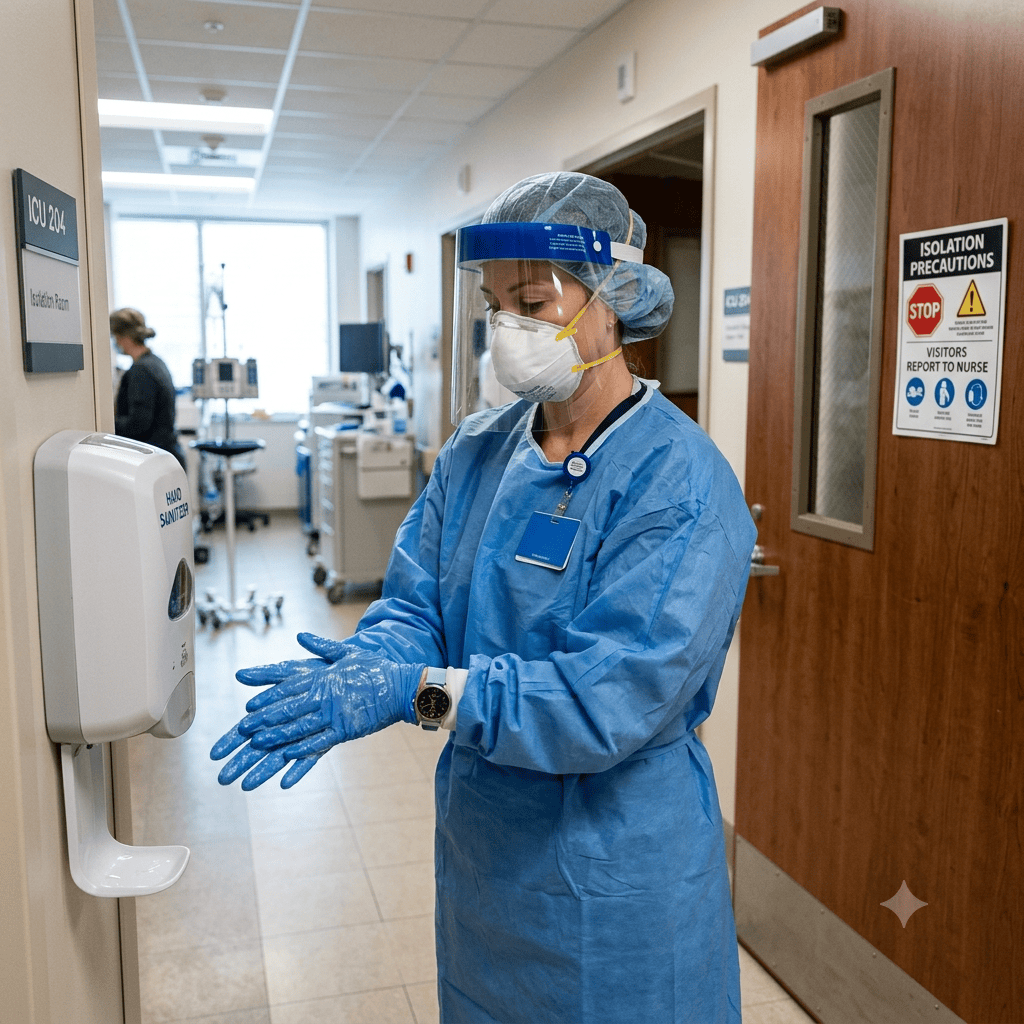
| Hand hygiene | The single most effective intervention — all staff and visitors must perform hand hygiene before and after patient contact |
| Standard precautions | Routine standard precautions are sufficient for most patients; special gowns/gloves/masks are not required for routine care |
| Private room | Not required for most patients; HSCT recipients require a private room with HEPA filtration and frequent air exchanges |
| Visitor screening | Restrict visitors who are ill or recently exposed to communicable disease; limit crowds |
| Fresh flowers/plants | Avoid — soil and stagnant water can harbor bacteria and fungi |
| Diet | Avoid raw or undercooked meat, unpasteurized dairy, unwashed produce; a “neutropenic diet” is used at some institutions, though evidence for strict versions is limited — follow facility policy |
| Invasive procedures | Minimize unnecessary invasive procedures (IM injections, rectal temps/suppositories, urinary catheterization) that create infection entry points |
| Skin/oral care | Encourage gentle oral hygiene with a soft toothbrush; monitor IV and central line sites closely |
| Fever response | Treat any temperature ≥100.4°F (38°C) as a medical emergency — notify the provider immediately |
Patient and Family Education
- Check temperature at home per provider instructions and report fever immediately — don’t wait it out
- Practice frequent hand hygiene and avoid close contact with sick individuals
- Avoid crowds and people who are ill, especially during the expected nadir period
- Use a soft-bristled toothbrush and avoid flossing if gums bleed easily
- Avoid razors (use electric razors) to reduce skin breaks
- Cook meat thoroughly; wash produce well; avoid unpasteurized products
- Avoid gardening, changing pet litter boxes, or handling animal waste
- Know when to call: fever, chills, new pain, redness, or swelling anywhere
Complications
- Sepsis and septic shock (can progress rapidly with minimal warning signs)
- Delayed chemotherapy administration due to unresolved neutropenia
- Fungal infections (particularly with prolonged neutropenia)
- Mucositis-related infection
- Death, if febrile neutropenia is not recognized and treated promptly
Prevention
- Prophylactic colony-stimulating factors for high-risk chemotherapy regimens
- Strict adherence to hand hygiene by all staff and visitors
- Patient/family education before the expected nadir period
- Minimizing unnecessary invasive procedures
- Prompt recognition and treatment of fever
Prognosis
Prognosis depends heavily on how quickly fever and infection are recognized and treated. With prompt empiric antibiotics and supportive care, most episodes of febrile neutropenia resolve without major complications. Delayed recognition significantly increases the risk of sepsis and mortality — which is exactly why nursing vigilance during the nadir period is so critical.
NCLEX Tips and Memory Tricks
- Any fever in a neutropenic patient = medical emergency. Don’t wait for other signs of infection — there may not be any.
- Remember: hand hygiene, not isolation gear, is the highest-yield answer for “best nursing intervention” questions.
- If a question asks about diet for a neutropenic patient, the safest answer avoids raw/undercooked foods and unwashed produce.
- Mnemonic — “NEUTRO”: No fresh flowers, Emergency if febrile, Use hand hygiene always, Thermometer checks routinely, Restrict raw foods, Only minimize invasive procedures.
Clinical Pearls
- Because inflammation depends on neutrophils, a neutropenic patient with pneumonia may have a nearly clear chest X-ray and minimal cough — don’t be falsely reassured by a “normal-looking” exam.
- ANC nadir typically occurs 7–14 days after chemotherapy — know your patient’s chemotherapy timeline to anticipate risk.
- Rectal temperatures, suppositories, and enemas are avoided in neutropenic patients due to mucosal trauma risk.
Key Takeaways
- Neutropenic precautions generally begin at ANC < 1,000 cells/µL, with the highest risk below 500 cells/µL.
- Hand hygiene is the most important infection-prevention measure — not gowns, gloves, or a private room, for most patients.
- Fever is often the only sign of infection and always requires immediate provider notification.
- Patient education on home safety is essential, since much of the nadir period happens outside the hospital.
FAQs
What ANC level requires neutropenic precautions?
Precautions are typically started when ANC falls below 1,000 cells/µL, with stricter vigilance below 500 cells/µL.
What is the single most important intervention to prevent infection in a neutropenic patient?
Consistent hand hygiene by all staff, patients, and visitors.
Can neutropenic patients have fresh flowers or plants in their room?
No — soil and stagnant water in vases can harbor bacteria and fungi, so fresh flowers and plants are avoided.
What temperature is considered a fever in a neutropenic patient?
A single temperature of 100.4°F (38°C) or higher is treated as a medical emergency requiring immediate evaluation.
Do neutropenic patients need a private room?
Most do not. The exception is hematopoietic stem cell transplant recipients, who require a private room with HEPA filtration and frequent air exchanges.
References
- National Comprehensive Cancer Network (NCCN) Clinical Practice Guidelines in Oncology
- Infectious Diseases Society of America (IDSA) Clinical Practice Guideline for the Use of Antimicrobial Agents in Neutropenic Patients
- Centers for Disease Control and Prevention (CDC) infection control guidance for immunocompromised patients
- Oncology Nursing Society (ONS) patient safety resources
RELATED ARTICLES (existing rn-nurse.com posts to link):
- https://rn-nurse.com/chemotherapy-nursing-care-guide/
- https://rn-nurse.com/immunotherapy-in-cancer-care/
- https://rn-nurse.com/nursing-care-electrolyte-imbalance-cancer-patients/
- https://rn-nurse.com/infection-control-standard-vs-transmission-based-precautions-nclex-nursing-guide/
- https://rn-nurse.com/standard-vs-transmission-based-precautions/
- https://rn-nurse.com/proper-hand-hygiene-prevent-infections/
- https://rn-nurse.com/high-alert-medications-nurses/
- https://rn-nurse.com/lab-value-cheats/
- https://rn-nurse.com/sepsis-management/
- https://rn-nurse.com/sepsis-bundles/
- https://rn-nurse.com/sepsis-nurse-golden-hour/
- https://rn-nurse.com/central-line-care/
- https://rn-nurse.com/drug-toxicity-signs/
- https://rn-nurse.com/antiemetic-medications-nursing-considerations/
- https://rn-nurse.com/recognizing-sepsis-post-surgical-patients/