
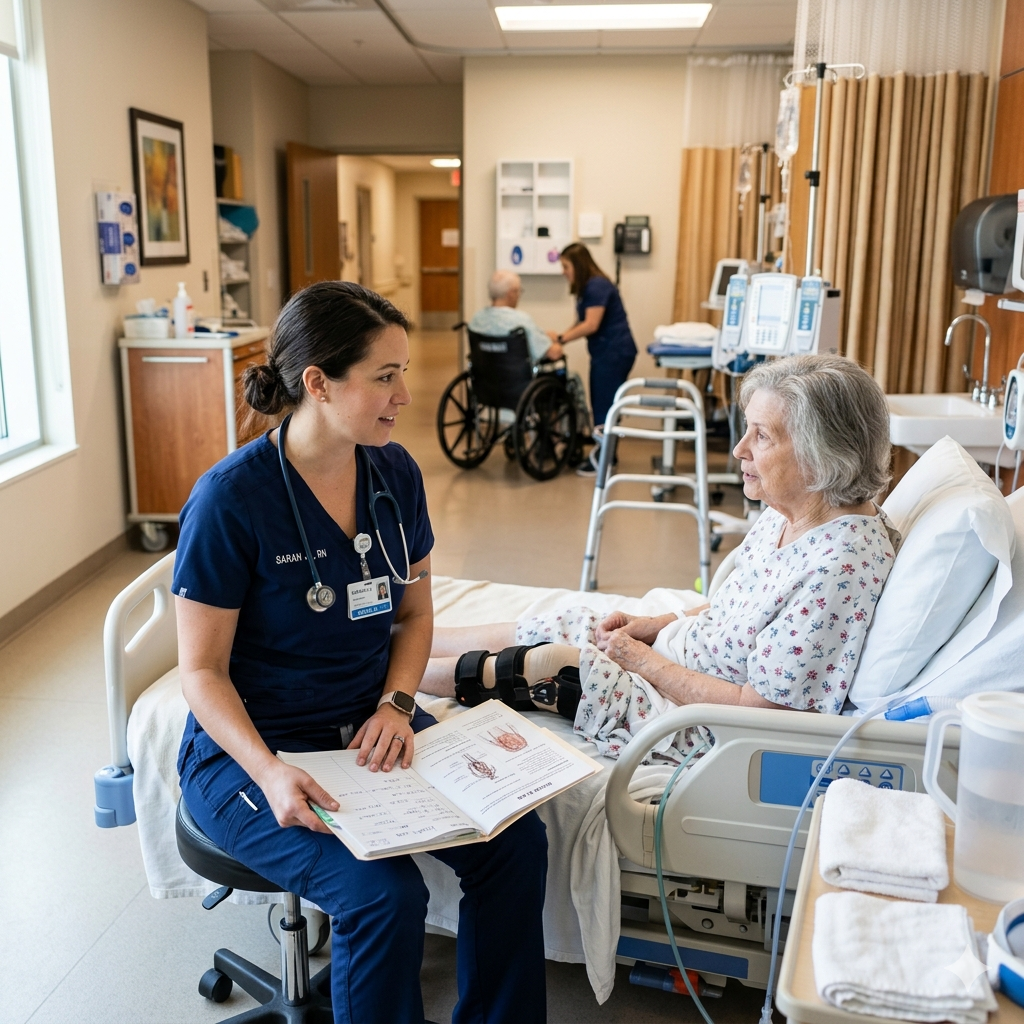
Spinal cord injury (SCI) profoundly affects nearly every system in the body — including sexual function. For nursing students preparing for the NCLEX and registered nurses practicing in rehabilitation, medical-surgical, and critical care units, understanding how SCI disrupts sexual response, fertility, and intimacy is both clinically essential and deeply humanizing. Patients living with SCI consistently rank sexual function among their top quality-of-life concerns, yet this topic is frequently under-addressed in clinical settings. Skilled nursing care demands that the RN nurse be equipped not only with the physiology but also the communication tools to support patients navigating this life-altering change.
How Spinal Cord Injury Disrupts Sexual Physiology
Sexual function relies on an intricate interplay of spinal cord segments, the autonomic nervous system, and higher cortical centers. When a spinal cord injury disrupts this pathway, the degree of sexual impairment depends on the level and completeness of the injury.
The key spinal segments involved in sexual response include:
- T10–L2: Sympathetic outflow — controls psychogenic arousal (arousal triggered by thoughts, sights, or sounds)
- S2–S4: Parasympathetic outflow — controls reflexogenic arousal (arousal triggered by direct genital stimulation)
- S2–S4 also governs: ejaculation in males and vaginal lubrication and clitoral engorgement in females
A complete injury at or above T6 may preserve reflexogenic responses while eliminating psychogenic ones. Injuries at or below T10 often spare psychogenic arousal but impair or eliminate reflexogenic response. Understanding this framework is critical for NCLEX-style clinical reasoning questions involving neurological and rehabilitation nursing.
Sexual Function in Males with Spinal Cord Injury
Male patients with SCI face specific challenges related to erection, ejaculation, and fertility. Nursing assessment and patient education should address each component directly.
Erection in males is mediated by both sympathetic (psychogenic) and parasympathetic (reflexogenic) pathways:
- Reflexogenic erections: Present in most men with upper motor neuron (UMN) injuries (injuries above the sacral cord). These occur in response to direct physical stimulation but are not triggered by thoughts or visual stimuli.
- Psychogenic erections: More likely preserved in lower motor neuron (LMN) injuries (conus medullaris or cauda equina). These respond to mental arousal rather than touch.
Ejaculation is significantly impaired in males with SCI. Anejaculation — the inability to ejaculate — occurs in the majority of men with complete injuries. When ejaculation does occur, retrograde ejaculation (semen entering the bladder rather than exiting the urethra) is common due to disrupted sympathetic innervation. This has direct implications for fertility.
For males seeking to father biological children, options include penile vibratory stimulation (PVS) and electroejaculation (EEJ), both of which require specialist involvement. The RN nurse plays a vital role in connecting patients with urology and reproductive endocrinology resources.
Sexual Function in Females with Spinal Cord Injury
Female sexual function following SCI is less extensively studied but equally important. Nursing care should not minimize these concerns or assume female patients are less affected.
Key considerations for female patients include:
- Vaginal lubrication: Controlled by S2–S4 parasympathetic fibers. Women with UMN injuries may retain reflexogenic lubrication; those with LMN injuries may not.
- Clitoral engorgement and orgasm: Possible in some women, particularly with UMN injuries, but often altered in quality and intensity.
- Menstruation: Typically resumes within 6 months of injury. Female patients should be informed that fertility is generally preserved — SCI does not cause infertility in women the way it commonly does in men.
- Pregnancy: Achievable and relatively common. However, SCI carries specific obstetric risks, particularly autonomic dysreflexia during labor, which every registered nurse in obstetric or rehabilitation settings must know how to recognize and manage.
A comprehensive nursing assessment of the female SCI patient includes reproductive goals, contraceptive needs, and plans for future pregnancy.
Autonomic Dysreflexia and Sexual Activity
Autonomic dysreflexia (AD) is a potentially life-threatening condition that can be triggered by sexual activity or genital stimulation in patients with injuries at or above T6. It occurs when a noxious stimulus below the level of injury triggers a massive, uncontrolled sympathetic response.
Signs and symptoms include:
- Sudden, severe hypertension (systolic BP ≥ 20–40 mmHg above baseline)
- Pounding headache
- Flushing and sweating above the level of injury
- Pallor and pilomotor erection (goosebumps) below the level of injury
- Nasal congestion
- Bradycardia
Nursing interventions for AD during sexual activity:
- Immediately sit the patient upright to lower blood pressure through orthostatic effect
- Identify and remove the triggering stimulus (e.g., restrictive clothing, full bladder, pressure from positioning)
- Monitor blood pressure every 2–5 minutes
- Notify the provider if BP does not respond quickly
- Administer antihypertensives as ordered (e.g., nifedipine, nitrates)
Patient education on recognizing AD symptoms before and during sexual activity is a high-priority nursing intervention for this population.
💡 NCLEX Tips for Spinal Cord Injury Sexual Function
- Reflexogenic arousal is mediated by S2–S4; psychogenic arousal by T10–L2 — know which is preserved based on injury level
- Autonomic dysreflexia is an emergency triggered by stimuli below T6 — first action is to sit the patient upright and find the trigger
- Female SCI patients retain fertility; male patients commonly experience anejaculation or retrograde ejaculation
- NCLEX may test therapeutic communication — the nurse should always create a non-judgmental space for sexual health discussions
- Prioritize patient education on AD prevention before the patient resumes sexual activity
Nursing Assessment and Therapeutic Communication
Addressing sexual function after SCI requires the RN nurse to use therapeutic communication skills that are both clinically precise and emotionally sensitive. Many patients hesitate to raise this topic first, assuming healthcare providers will dismiss or avoid it. The nurse must initiate the conversation proactively.
A structured approach to assessment includes:
- Permission: Ask open-ended questions to open the topic (“Many patients with spinal cord injuries have questions about how this affects intimacy — is that something you’d like to talk about?”)
- Limited Information: Provide brief, factual education based on the patient’s injury level without overwhelming
- Specific Suggestions: Offer referrals to sexual health specialists, pelvic floor therapists, or couples counseling as appropriate
- Intensive Therapy: Refer to rehabilitation specialists for complex needs including fertility planning
This PLISSIT model is widely used in rehabilitation nursing and may appear in NCLEX clinical judgment scenarios. Nursing students who study it as part of their nursing bundle for rehabilitation content will be better prepared for both the exam and practice.
Documenting sexual health concerns and follow-up referrals is equally important — this ensures continuity of care across the rehabilitation team.
Patient Education Priorities for the RN Nurse
Before discharge or transition to a rehabilitation setting, the registered nurse should ensure the SCI patient understands the following:
| Topic | Key Teaching Points |
|---|---|
| Arousal and response | Explain reflexogenic vs. psychogenic pathways based on their specific injury level |
| Contraception | SCI does not prevent pregnancy in females — contraceptive planning is essential |
| Fertility options (males) | PVS, EEJ, and sperm banking are available options; refer to urology |
| Autonomic dysreflexia | Recognize triggers and symptoms; know when to stop activity and call for help |
| Positioning and safety | Adaptive positioning, pressure injury prevention during sexual activity |
| Psychological support | Address grief, body image changes, and relationship strain; refer to counseling |
| Medications | Discuss PDE-5 inhibitors (e.g., sildenafil) for erectile dysfunction — contraindicated with nitrates |
Education should be provided in private, documented thoroughly, and offered again at follow-up visits, as readiness to receive this information varies widely in the acute phase.
Conclusion
Spinal cord injury sexual function is a critical area of nursing care that combines neuroanatomy, pharmacology, rehabilitation principles, and therapeutic communication. Every nurse and nursing student preparing for the NCLEX should understand how injury level affects arousal and fertility, how to recognize and respond to autonomic dysreflexia, and how to initiate sensitive, evidence-based conversations about sexual health. These skills are not peripheral — they are central to holistic, patient-centered rehabilitation nursing.
Deepen your knowledge with the complete nursing bundle at rn-nurse.com/nursing-courses and test your clinical reasoning with NCLEX-style practice questions at rn-nurse.com/nclex-qcm. The RN nurse who addresses the whole patient — not just the injury — delivers the highest standard of care.