
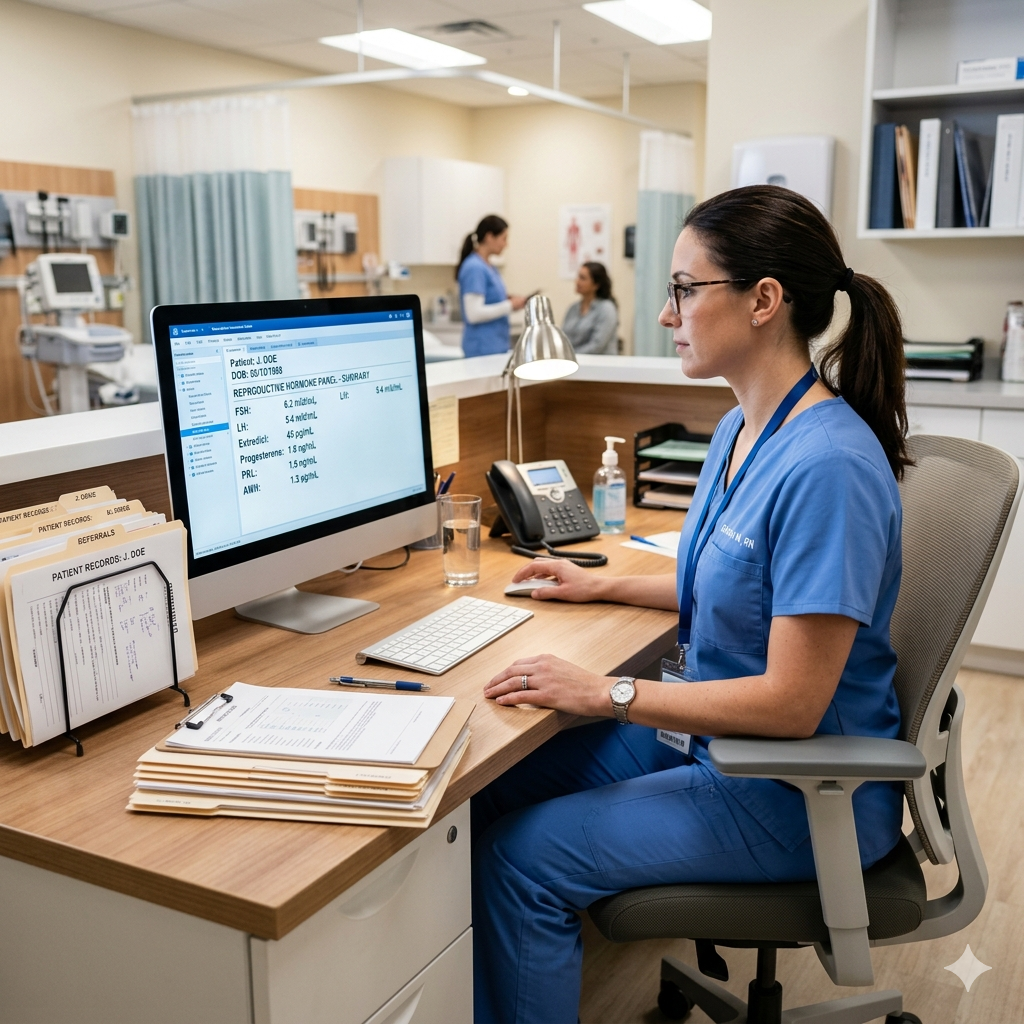
Infertility affects approximately 1 in 6 couples worldwide, making it one of the most clinically significant topics in OB/Maternity nursing. For the registered nurse working in reproductive health, women’s health, or medical-surgical environments, understanding the underlying pathophysiology of infertility is not just a testable concept — it is a foundation for delivering compassionate, evidence-based care. NCLEX candidates must be able to differentiate between male and female contributing factors, recognize relevant diagnostic findings, and apply appropriate nursing interventions. This guide breaks down infertility pathophysiology nursing from both sides of the equation so that every RN nurse is prepared for both the exam and the bedside.
Defining Infertility: What Every Nurse Must Know
Infertility is clinically defined as the inability to achieve a successful pregnancy after 12 months of regular, unprotected intercourse — or after 6 months if the female partner is 35 years of age or older. It is further classified as:
- Primary infertility: The couple has never achieved a pregnancy
- Secondary infertility: The couple has previously conceived but is unable to do so again
For the RN nurse, it is critical to understand that infertility is not exclusively a female problem. Research consistently shows that male factors contribute to approximately 40–50% of all infertility cases, female factors account for another 40–50%, and roughly 10–20% of cases involve combined or unexplained causes.
Registered nurses must approach infertility care with sensitivity and avoid assumptions about cause or gender. A thorough nursing assessment includes reproductive history, menstrual cycle regularity, sexual history, chronic illness, medication use, and environmental exposures for both partners.
Female Infertility: Pathophysiology and Key Causes
Female infertility is most commonly linked to ovulatory dysfunction, structural abnormalities, or hormonal imbalances. Understanding each mechanism is essential for infertility pathophysiology nursing practice and NCLEX preparation.
Ovulatory Disorders
Polycystic ovary syndrome (PCOS) is the leading cause of anovulation in women of reproductive age. It involves elevated androgens, insulin resistance, and disrupted follicle-stimulating hormone (FSH) and luteinizing hormone (LH) signaling. The result is the failure to release a mature oocyte during the menstrual cycle.
Hypothalamic dysfunction — often caused by extreme weight loss, excessive exercise, or stress — suppresses gonadotropin-releasing hormone (GnRH) secretion, reducing FSH and LH levels and halting ovulation.
Hyperprolactinemia elevates prolactin levels (often from a pituitary adenoma), which suppresses GnRH and prevents normal ovulation.
Structural and Anatomical Factors
- Uterine fibroids (leiomyomas): Submucosal fibroids distort the uterine cavity, impeding implantation
- Endometriosis: Ectopic endometrial tissue causes inflammation, adhesions, and scarring of the fallopian tubes and ovaries
- Tubal occlusion: Often secondary to pelvic inflammatory disease (PID), prior ectopic pregnancy, or prior sexually transmitted infections (STIs) such as Chlamydia trachomatis or Neisseria gonorrhoeae
- Cervical factor: Abnormal cervical mucus impedes sperm transport
Diminished Ovarian Reserve
Diminished ovarian reserve (DOR) refers to a decline in the number and quality of oocytes. It is assessed via anti-Müllerian hormone (AMH) levels, antral follicle count on ultrasound, and day 3 FSH levels. Elevated FSH and low AMH signal poor ovarian reserve — a high-yield concept on the NCLEX.
Male Infertility: Pathophysiology and Key Causes
Male factor infertility is evaluated primarily through semen analysis, which assesses sperm concentration, motility, morphology, and volume. Abnormalities in any of these parameters can impair fertilization.
Sperm Production Disorders
Azoospermia is the complete absence of sperm in the ejaculate. It may be:
- Obstructive: Caused by a blockage in the vas deferens or epididymis (e.g., prior vasectomy, congenital bilateral absence of the vas deferens seen in cystic fibrosis)
- Non-obstructive: Due to spermatogenic failure from hormonal deficiency, genetic causes (e.g., Klinefelter syndrome — 47,XXY), or testicular damage
Oligospermia refers to a low sperm count (< 15 million sperm/mL). Causes include varicocele (abnormal dilation of testicular veins causing elevated scrotal temperature), hormonal deficiencies (low testosterone, elevated FSH), and toxic exposures.
Hormonal and Endocrine Causes
The hypothalamic-pituitary-gonadal (HPG) axis governs testosterone and sperm production. Disruptions — from hyperprolactinemia, hypogonadotropic hypogonadism, or thyroid disorders — impair spermatogenesis. Elevated FSH in a male patient often indicates primary testicular failure and is a key NCLEX-relevant finding.
Environmental and Lifestyle Factors
The RN nurse must assess and educate patients about modifiable risk factors for male infertility:
- Tobacco and anabolic steroid use
- Heat exposure (laptops, hot tubs, tight clothing)
- Chemotherapy and radiation history
- Occupational chemical exposures (pesticides, heavy metals)
Hormonal Comparison: Male vs. Female Infertility Factors
| Parameter | Female Relevance | Male Relevance |
|---|---|---|
| FSH | Elevated = poor ovarian reserve | Elevated = testicular failure |
| LH | Surge triggers ovulation | Stimulates testosterone production |
| Prolactin | Elevated = anovulation | Elevated = low testosterone, low sperm |
| AMH | Low = diminished ovarian reserve | N/A (not routinely used) |
| Testosterone | Low in PCOS variants | Low = impaired spermatogenesis |
| Estradiol (E2) | Regulated by follicular development | Elevated levels can impair sperm production |
Nursing Assessment and Interventions for Infertility
Infertility pathophysiology nursing requires a systematic, patient-centered approach. The registered nurse plays a pivotal role in assessment, education, emotional support, and coordination of care.
Priority nursing assessments include:
- Detailed menstrual history (cycle length, regularity, dysmenorrhea, intermenstrual bleeding)
- Sexual history and frequency of intercourse
- Prior STI history, pelvic surgeries, or ectopic pregnancies
- Semen analysis results for the male partner
- Review of current medications (NSAIDs, corticosteroids, antidepressants, antihypertensives — all can affect reproductive function)
- Psychosocial screening for anxiety, depression, and relationship strain
Key nursing interventions:
- Educate patients on the timing of ovulation using basal body temperature (BBT) charting, ovulation predictor kits (OPKs), and cycle tracking
- Counsel on lifestyle modifications — healthy BMI, smoking cessation, limiting alcohol, reducing heat exposure for male partners
- Provide emotional support — validate feelings of grief, frustration, and stigma; refer to support groups or mental health professionals as appropriate
- Facilitate referrals to reproductive endocrinologists, urologists, and genetic counselors based on identified pathology
- Prepare patients for assisted reproductive technologies (ART) such as intrauterine insemination (IUI) or in vitro fertilization (IVF)
A strong nursing bundle approach to infertility combines clinical assessment, patient education, emotional care, and multidisciplinary collaboration — all of which are testable competencies on the NCLEX.
💡 NCLEX Tips for Infertility Pathophysiology
- Elevated FSH in a woman signals poor ovarian reserve; in a man, it signals primary testicular failure — know both directions.
- PCOS is the most common cause of female anovulatory infertility; expect questions about insulin resistance, irregular menses, and hirsutism.
- Varicocele is a leading correctable cause of male infertility — remember it raises scrotal temperature and impairs sperm production.
- A day 3 FSH > 10 mIU/mL in a woman suggests diminished ovarian reserve — a high-yield lab value for NCLEX.
- Always assess both partners — male factor infertility is equally as common as female factor; never assume the cause lies with one partner.
Conclusion
Infertility is a multifactorial condition that demands clinical precision and compassionate nursing care. Whether the cause stems from ovulatory dysfunction, tubal occlusion, hormonal dysregulation, or male spermatogenic failure, the RN nurse must be equipped to assess, educate, and advocate effectively. Mastering infertility pathophysiology nursing — including the hormonal mechanisms behind both male and female factors — builds the clinical reasoning skills that translate directly to NCLEX success and real-world reproductive health practice.
Deepen your preparation with targeted NCLEX practice questions at https://rn-nurse.com/nclex-qcm/, or explore the full nursing bundle and OB/Maternity course offerings at https://rn-nurse.com/nursing-courses/ to take your exam readiness to the next level.