
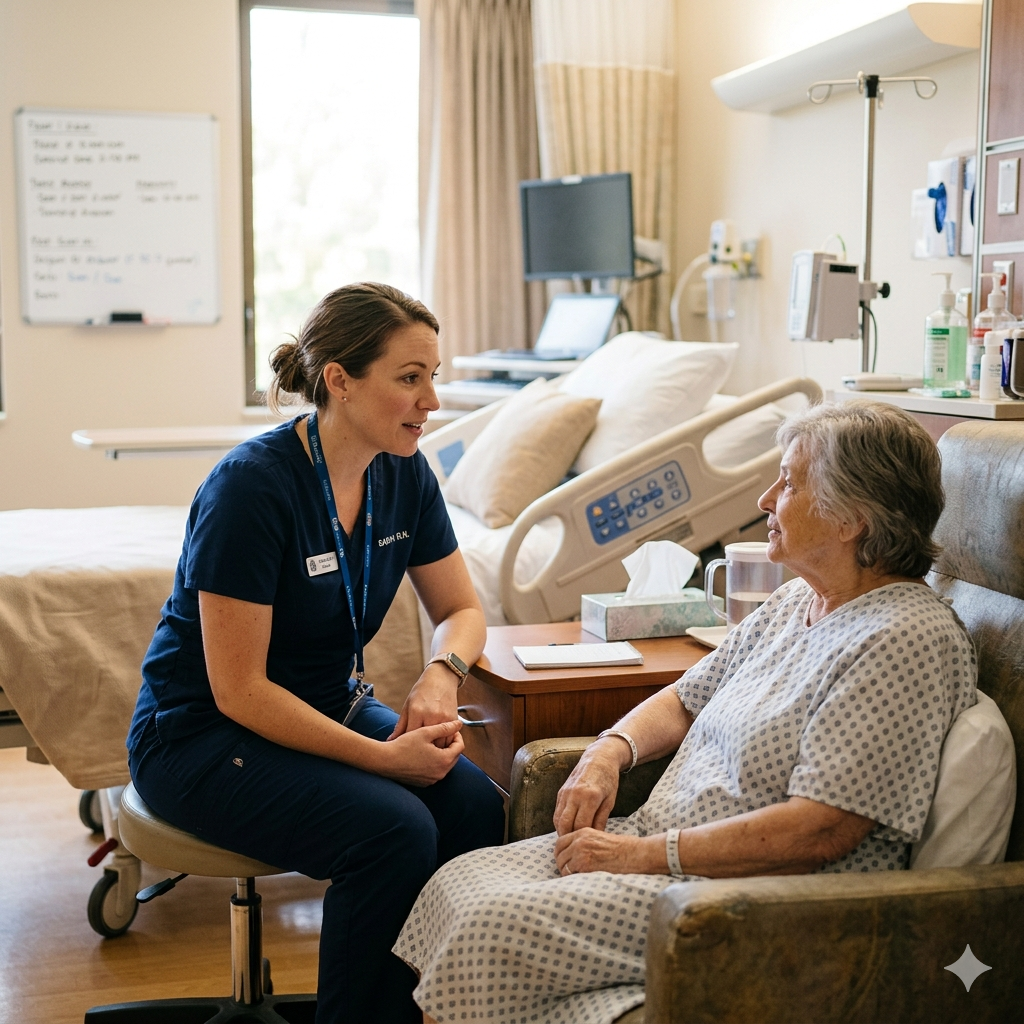
Sexual violence affects millions of people across every demographic — and survivors frequently encounter the healthcare system in the immediate aftermath of assault or during long-term recovery. For a registered nurse, understanding trauma-informed care for sexual violence survivors is not optional; it is a clinical and ethical imperative. This approach directly impacts patient outcomes, evidence collection, and the therapeutic relationship. Whether preparing for the NCLEX or practicing at the bedside, every nurse must be equipped to provide survivor-centered care that minimizes re-traumatization and promotes healing.
What Is Trauma-Informed Care in Nursing?
Trauma-informed care (TIC) is a framework that recognizes the widespread impact of trauma on physical, emotional, and behavioral health. Rather than asking “What is wrong with this patient?”, the trauma-informed nurse asks, “What happened to this patient?”
The Substance Abuse and Mental Health Services Administration (SAMHSA) identifies four core assumptions that guide trauma-informed practice — the Four R’s:
- Realize the prevalence and far-reaching impact of trauma
- Recognize the signs and symptoms of trauma in patients and staff
- Respond by integrating trauma knowledge into policies, procedures, and practices
- Resist re-traumatization through every patient interaction
For survivors of sexual violence, these principles translate directly into nursing interventions. A registered nurse who understands trauma neurobiology will not misinterpret a patient’s flat affect or non-linear recall as dishonesty — they will recognize these as normal neurological responses to acute trauma.
The Nursing Assessment: Approaching Survivors with Safety and Sensitivity
The initial assessment of a sexual assault survivor sets the tone for the entire care encounter. A trauma-informed nurse prioritizes physical and emotional safety before any clinical task.
Key nursing assessment principles include:
- Obtain explicit consent before every examination, procedure, or evidence collection step — even if consent was given moments before
- Use neutral, non-judgmental language: Avoid phrases such as “Why didn’t you leave?” or “Were you drinking?”
- Allow the patient to control the pace: Never rush the history or physical exam
- Explain each step before performing it, giving the patient the choice to pause or stop
- Provide a same-gender nurse or advocate when requested
Document objectively. Nursing documentation should record the patient’s exact words using quotes, avoid subjective interpretation, and note any visible injuries using body maps or photography per institutional protocol. Accurate, thorough documentation may be critical for legal proceedings.
The Role of the SANE Nurse in Sexual Violence Care
The Sexual Assault Nurse Examiner (SANE) is a registered nurse with advanced, specialized training in forensic evidence collection, trauma-informed assessment, and survivor advocacy. The SANE nurse role represents one of the most significant advancements in sexual assault care and is a high-yield NCLEX topic in the mental health and fundamentals categories.
Core SANE nursing responsibilities include:
- Performing the sexual assault forensic examination (SAFE) with sensitivity and precision
- Collecting evidence using a standardized rape kit within the window of evidentiary integrity (typically 72–120 hours post-assault, per institutional protocol)
- Administering emergency contraception (e.g., levonorgestrel) and prophylactic STI treatment per standing orders or physician protocol
- Offering HIV post-exposure prophylaxis (PEP) when indicated within 72 hours of exposure
- Completing thorough documentation for the chain of custody
- Connecting survivors with advocacy services, counseling, and legal resources
Not every nurse will become a SANE, but every nurse must understand when and how to involve one — and how to provide supportive, non-stigmatizing care in the interim.
Trauma Responses: What Every RN Nurse Must Recognize
Survivors of sexual violence may present in ways that are not intuitively consistent with what many expect from a “victim.” Understanding the neurobiological basis of trauma responses prevents nurses from making harmful assumptions.
Common trauma responses a nurse may observe:
| Response | Clinical Explanation |
|---|---|
| Flat or calm affect | Dissociation or emotional numbing as a protective mechanism |
| Delayed or fragmented recall | The hippocampus is suppressed under acute stress; memory encoding is non-linear |
| Minimizing language | Shame, self-blame, or fear of not being believed |
| Delayed disclosure | Survivors often wait hours, days, or years before reporting |
| Freeze response | Tonic immobility — an involuntary neurological response, not consent |
| Conflicted emotions about the perpetrator | Common when the assailant is a known person or intimate partner |
The nursing role is not to evaluate credibility. It is to provide competent, compassionate, non-judgmental care to every patient who presents for treatment.
Nursing Interventions: The Trauma-Informed Framework in Action
Trauma-informed nursing interventions for survivors of sexual violence span the physical, emotional, and psychosocial domains.
Physical nursing interventions:
- Assess and treat acute injuries, prioritizing the ABCs (airway, breathing, circulation)
- Collect evidence promptly and accurately, preserving the chain of custody
- Administer medications as ordered: emergency contraception, STI prophylaxis (e.g., ceftriaxone, azithromycin, metronidazole), and HIV PEP
- Offer a private, secure environment — never place a survivor in a waiting room where the assailant may be present
Psychological and supportive nursing interventions:
- Implement active therapeutic communication: open-ended questions, reflective listening, validation without judgment
- Inform the patient of their rights, including the right to decline forensic examination while still receiving medical care
- Involve a sexual assault advocate or crisis counselor — this is standard of care, not an add-on
- Assess for acute suicidal ideation or self-harm risk using a standardized tool; consult psychiatry if indicated
- Provide written discharge instructions that include safety planning, follow-up resources, and community support contacts
Every interaction is a nursing bundle of clinical skill, empathetic communication, and ethical responsibility.
Mandatory Reporting and Legal Obligations for the RN Nurse
Mandatory reporting laws for sexual assault vary by jurisdiction and patient age. Every RN nurse must know the specific laws governing their state or region of practice.
General principles:
- Minors: Most jurisdictions require mandatory reporting of sexual assault involving patients under 18 years of age, regardless of the survivor’s wishes
- Adults: In many states, adult survivors retain the right to choose whether law enforcement is notified; some states require reporting regardless of patient consent
- “Jane Doe” or anonymous reporting options: Some jurisdictions allow evidence collection and preservation without immediate law enforcement involvement, preserving the survivor’s options
When mandatory reporting is required, inform the patient before making the report. Transparency builds trust and preserves the therapeutic relationship. Document the report and all communications in the medical record per institutional policy.
💡 NCLEX Tips for Trauma-Informed Care: Sexual Violence
- The first priority when a sexual assault survivor arrives is establishing safety and building rapport — not rushing to collect evidence.
- Tonic immobility (freeze response) is a neurobiological reaction, not consent — expect NCLEX questions that test this concept.
- A SANE nurse should be involved when forensic evidence collection is required; not all nurses are trained for this role.
- Emergency contraception (levonorgestrel) is most effective within 72 hours of unprotected intercourse; HIV PEP must begin within 72 hours of exposure.
- Nurses must never express doubt about a survivor’s account or use language that implies blame — this is both ethically wrong and a testable NCLEX behavior.
Trauma-Informed Care and the Long-Term Nursing Relationship
Sexual violence survivors may present across all nursing settings — the emergency department, primary care, OB/maternity, mental health units, and beyond. The trauma of sexual violence is associated with long-term sequelae including post-traumatic stress disorder (PTSD), depression, anxiety disorders, somatic complaints, substance use disorders, and sexual dysfunction.
A nursing assessment that incorporates trauma screening tools — such as the Primary Care PTSD Screen for DSM-5 (PC-PTSD-5) — enables early identification and referral. When trauma history is recognized and acknowledged sensitively, patients are more likely to engage with care, adhere to treatment, and experience improved outcomes.
Registered nurses in every specialty should integrate trauma-informed principles as a standard of practice, not as a specialty skill reserved for mental health settings.
Conclusion
Trauma-informed care for sexual violence survivors is one of the most clinically and ethically significant areas of nursing practice. From the SANE nurse performing a forensic exam to the med-surg nurse caring for a patient with a trauma history, every nurse has a role in reducing re-traumatization and promoting recovery. Mastering this content supports both real-world practice and NCLEX success. Deepen your knowledge with evidence-based resources and test yourself with NCLEX-style questions at rn-nurse.com/nclex-qcm/, or explore the full nursing bundle at rn-nurse.com/nursing-courses/ to build the clinical expertise every RN nurse needs.