
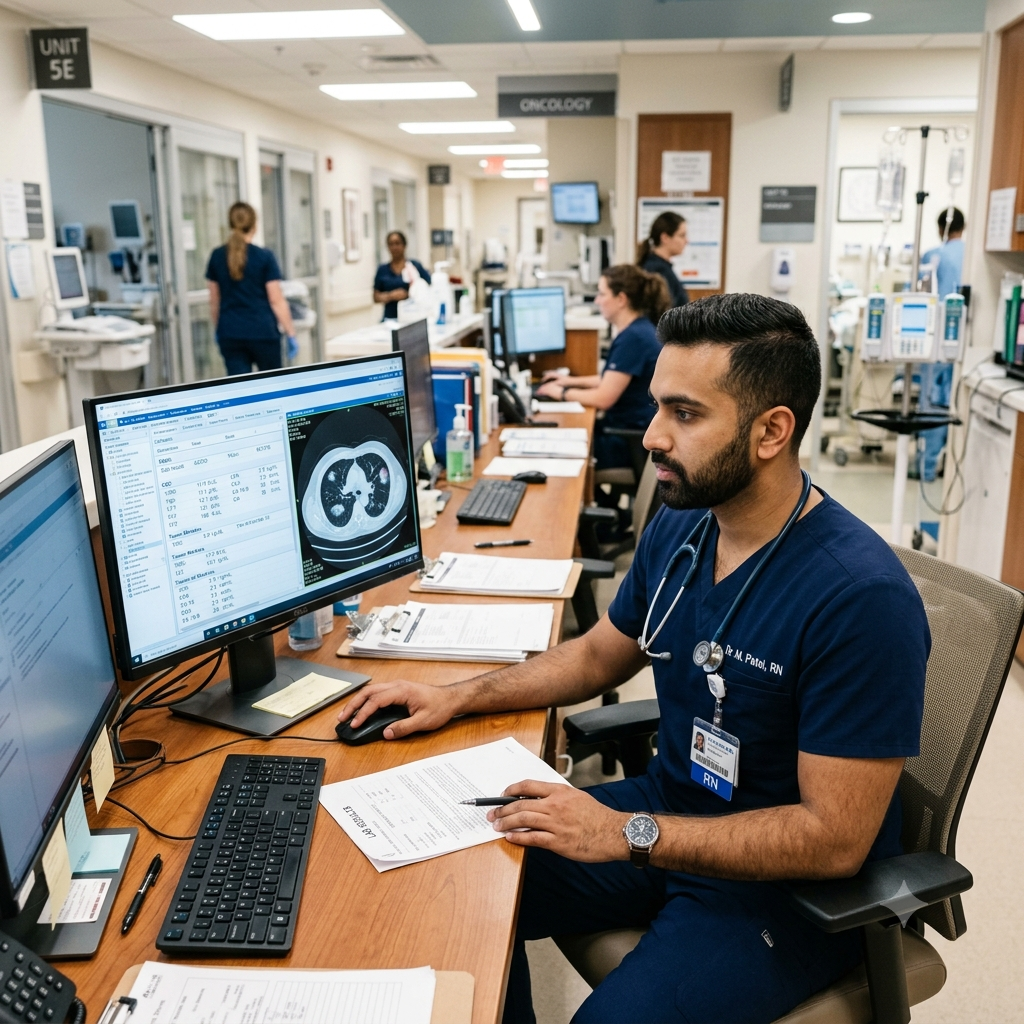
Testicular cancer is the most common solid malignancy in males between the ages of 15 and 35 — a fact that carries enormous clinical significance for every registered nurse working in oncology, medical-surgical, urology, or primary care settings. Despite its prevalence in this demographic, it carries a favorable prognosis when detected and treated early, with five-year survival rates exceeding 95% for localized disease. NCLEX candidates and practicing RN nurses alike must be equipped to recognize early warning signs, perform thorough assessments, anticipate treatment protocols, and deliver evidence-based patient education. Testicular cancer nursing assessment is a high-yield topic for the NCLEX and a critical competency for bedside practice.
Pathophysiology and Risk Factors Every Nurse Must Recognize
Understanding the biology of testicular cancer helps nurses frame their assessment and patient teaching. The vast majority of testicular tumors — roughly 95% — are germ cell tumors (GCTs), which arise from the cells that produce sperm. These are further divided into two major subtypes:
- Seminomas: Slow-growing, highly radiosensitive, typically confined to the testis at diagnosis
- Non-seminomatous germ cell tumors (NSGCTs): Include embryonal carcinoma, teratoma, choriocarcinoma, and yolk sac tumors; tend to metastasize earlier
Key risk factors the nursing assessment should explore include:
- Cryptorchidism (undescended testicle) — the single strongest modifiable risk factor; men with a history of orchiopexy remain at elevated risk
- Family history of testicular cancer (father or brother)
- Personal history of testicular cancer in the contralateral testis
- Klinefelter syndrome
- White/Caucasian ethnicity (higher incidence compared to other racial groups)
Understanding these factors enables nurses to identify high-risk patients proactively and facilitates early referral.
Clinical Presentation: Early Signs Nurses Must Not Miss
Testicular cancer nursing assessment hinges on recognizing a presentation that is frequently subtle and easily dismissed by young patients. The classic symptom is a painless, firm, unilateral scrotal mass — this is the hallmark finding and must prompt immediate urological evaluation.
Additional signs and symptoms include:
- A dull ache or heaviness in the scrotum or lower abdomen
- Gynecomastia (breast tissue enlargement) — caused by beta-hCG secretion from certain tumor types, particularly choriocarcinoma
- Back pain or flank pain, suggesting retroperitoneal lymph node involvement
- Sudden onset of a hydrocele in a young male with no history of trauma
- Fatigue, weight loss, or respiratory symptoms in advanced disease with pulmonary metastasis
A critical nursing consideration: many young men delay reporting scrotal changes due to embarrassment or fear. The RN nurse plays a pivotal role in creating a non-judgmental, private assessment environment that encourages disclosure.
Diagnostic Workup and Serum Tumor Markers
Nurses must be familiar with the diagnostic pathway to anticipate orders, prepare patients, and interpret trending lab results. The standard workup includes:
Scrotal Ultrasound — the first-line imaging modality; highly sensitive for detecting testicular masses
Serum Tumor Markers — drawn before orchiectomy to establish baseline levels:
| Marker | Normal Value | Associated Tumor Type |
|---|---|---|
| Alpha-fetoprotein (AFP) | < 10 ng/mL | NSGCTs (never elevated in pure seminoma) |
| Beta-hCG (β-hCG) | < 5 mIU/mL | Choriocarcinoma, mixed GCTs, some seminomas |
| Lactate dehydrogenase (LDH) | 140–280 U/L | Reflects tumor burden; elevated in advanced disease |
Post-surgical marker trends guide staging and treatment response. The registered nurse monitoring these values plays an active role in identifying disease progression or treatment efficacy.
CT scan of the abdomen and pelvis evaluates retroperitoneal lymph node involvement; chest CT is added when metastasis is suspected.
Staging and Treatment Overview for Nursing Practice
Testicular cancer is staged using the TNM system combined with serum marker levels (the “S” category). For nursing practice, a simplified understanding supports patient education:
- Stage I: Tumor confined to testis; excellent prognosis; treatment is radical orchiectomy ± surveillance or adjuvant therapy
- Stage II: Regional lymph node involvement; treated with orchiectomy + radiation (seminoma) or chemotherapy (NSGCT)
- Stage III: Distant metastasis; treated with BEP chemotherapy (bleomycin, etoposide, cisplatin)
Radical orchiectomy via an inguinal approach — never transscrotal — is the cornerstone of both diagnosis and treatment. The nursing bundle of care around surgery includes pre-operative education on sperm banking, post-operative pain management, wound monitoring, and psychological support.
Nurses administering BEP chemotherapy must monitor closely for:
- Bleomycin pulmonary toxicity — assess breath sounds, respiratory rate, and oxygen saturation at every encounter
- Cisplatin nephrotoxicity — maintain aggressive IV hydration; monitor BMP and urine output
- Etoposide myelosuppression — monitor CBC for neutropenia, thrombocytopenia, and anemia
Nursing Interventions: Perioperative and Oncology Care
The nursing process is central to quality care across the testicular cancer treatment continuum. Priority nursing interventions include:
Preoperative Care:
- Educate the patient on the inguinal surgical approach and expected recovery
- Discuss sperm banking — a critical fertility preservation conversation that must occur before surgery or chemotherapy; this is a high-yield NCLEX topic
- Address body image concerns and psychological impact; refer to oncology social work as indicated
Postoperative Care:
- Monitor the surgical site for bleeding, hematoma, or infection
- Manage pain with multimodal analgesia; assess scrotal/inguinal swelling
- Teach activity restrictions: avoid heavy lifting for 4–6 weeks, support scrotal elevation
Chemotherapy Administration (NCLEX Priority Nursing Actions):
- Verify two patient identifiers before administration
- Pre-medicate for nausea with antiemetics per protocol
- Ensure IV access is patent; monitor for extravasation
- Educate patients to report fever > 100.4°F (38°C), bleeding, or shortness of breath immediately
Patient Education: Testicular Self-Exam and Long-Term Survivorship
Patient teaching is one of the most impactful roles of the RN nurse in testicular cancer management. The testicular self-examination (TSE) — performed monthly after a warm shower — is the primary tool for early detection:
- Stand in front of a mirror; look for swelling
- Examine each testis with both hands; roll gently between thumb and fingers
- Locate the epididymis (soft, rope-like structure at the back) — distinguish from a mass
- Report any painless lumps, changes in size, or heaviness to a provider promptly
Long-term survivorship education — particularly important for young men — includes:
- Fertility monitoring: Chemotherapy and radiation may impair spermatogenesis; follow-up with urology/reproductive endocrinology
- Cardiovascular risk: Cisplatin is associated with long-term cardiovascular complications; lifestyle counseling is essential
- Secondary malignancy surveillance: Survivors have elevated risk of secondary cancers; reinforce regular health screenings
- Psychological support: Anxiety, depression, and body image concerns are common; encourage therapeutic support resources
💡 NCLEX Tips for Testicular Cancer Nursing Assessment
- A painless scrotal mass in a young male is testicular cancer until proven otherwise — always prioritize urological referral
- AFP is never elevated in pure seminoma; elevation indicates NSGCT or mixed tumor
- Orchiectomy is always performed via the inguinal approach — a scrotal incision risks lymphatic seeding
- Sperm banking must be discussed before surgery or chemotherapy — fertility is a priority nursing concern
- Bleomycin toxicity targets the lungs — assess respiratory status at every nursing encounter during BEP chemotherapy
Conclusion
Testicular cancer nursing assessment demands clinical precision, compassion, and strong NCLEX-ready knowledge across pathophysiology, diagnostics, surgical care, chemotherapy management, and patient education. For the registered nurse, early identification of the classic painless scrotal mass — combined with prompt intervention and comprehensive patient teaching including testicular self-exam — directly impacts patient outcomes. The RN nurse is also central to supporting young patients through the psychological and reproductive challenges that accompany this diagnosis.
Deepen your clinical knowledge and build your NCLEX confidence with the complete nursing bundle at RN-Nurse.com. Practice oncology and med-surg NCLEX questions today at rn-nurse.com/nclex-qcm/ and walk into your exam — and your clinical practice — fully prepared.