
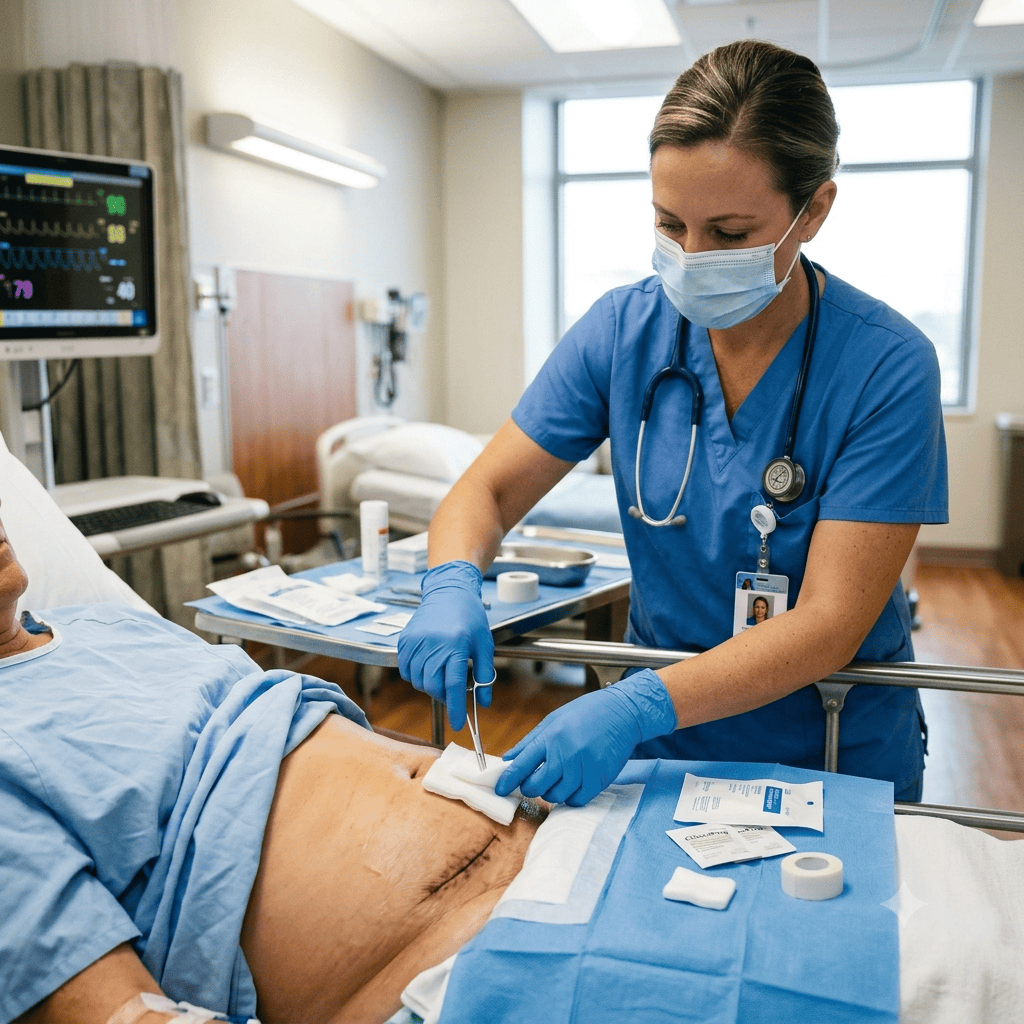
Surgical site infections (SSIs) are among the most common healthcare-associated infections, and they are also among the most preventable. For nurses, SSI prevention isn’t a single task — it’s a coordinated bundle of interventions that starts before the patient ever enters the operating room and continues well after they’ve gone home. This guide breaks down the full SSI prevention bundle, the nursing role at every stage, and the key facts you need for clinical practice and the NCLEX.
Table of Contents
- What Is a Surgical Site Infection?
- Classification of Surgical Wounds
- Risk Factors for SSI
- Pathophysiology: How SSIs Develop
- The SSI Prevention Bundle: Preoperative Phase
- The SSI Prevention Bundle: Intraoperative Phase
- The SSI Prevention Bundle: Postoperative Phase
- Signs and Symptoms of SSI
- Assessment and Diagnosis
- Laboratory and Diagnostic Findings
- Medical and Surgical Treatment
- Nursing Interventions Summary
- Patient and Family Education
- Complications
- Prognosis
- Clinical Pearls
- NCLEX Tips and Memory Tricks
- FAQs
- Key Takeaways
- References
What Is a Surgical Site Infection?
A surgical site infection is an infection that develops at or near a surgical incision within 30 to 90 days of the procedure, depending on whether an implant was placed. The CDC’s National Healthcare Safety Network defines three categories based on depth of tissue involvement: superficial incisional, deep incisional, and organ/space infection. Each carries different implications for treatment and recovery, but all three share the same root cause — pathogens gaining entry into tissue that should otherwise remain sterile or protected.
SSIs matter clinically and financially. They prolong hospital stays, increase readmission rates, raise the risk of reoperation, and are strongly linked to patient morbidity and, in severe cases, mortality. This is exactly why the prevention bundle approach exists: no single intervention eliminates SSI risk, but layering several evidence-based practices together produces a measurable reduction in infection rates.
Classification of Surgical Wounds
Understanding wound classification helps nurses anticipate infection risk before the first incision is made.
| Classification | Description | Example |
|---|---|---|
| Class I – Clean | No inflammation, no entry into respiratory/GI/GU tract | Hernia repair |
| Class II – Clean-Contaminated | Controlled entry into a tract, minimal spillage | Elective cholecystectomy |
| Class III – Contaminated | Open, fresh trauma wound or major break in sterile technique | Bowel resection with spillage |
| Class IV – Dirty/Infected | Existing infection or perforated viscera before surgery | Perforated appendix |
Risk Factors for SSI
Risk factors are generally grouped into patient-related and procedure-related categories.
Patient-related risk factors:
- Diabetes mellitus and hyperglycemia
- Obesity
- Smoking and tobacco use
- Immunosuppression or corticosteroid therapy
- Malnutrition
- Advanced age
- Pre-existing remote infection
Procedure-related risk factors:
- Prolonged operative time
- Emergency surgery
- Inadequate skin preparation
- Hypothermia during surgery
- Poor glycemic control intraoperatively
- Improper hair removal technique
- Contaminated or dirty wound classification
- Inadequate antibiotic prophylaxis timing
Pathophysiology: How SSIs Develop
An SSI develops when microorganisms — most commonly Staphylococcus aureus, coagulase-negative staphylococci, Enterococcus species, and Escherichia coli — contaminate the surgical wound in numbers sufficient to overwhelm local immune defenses. Contamination can occur from the patient’s own skin or endogenous flora, from the surgical team or environment, or, less commonly, from contaminated instruments. Once organisms adhere to tissue or an implanted device, they can form a biofilm that resists both the immune response and systemic antibiotics, which is why prevention is prioritized so heavily over treatment.
The SSI Prevention Bundle: Preoperative Phase
The preoperative phase is where nurses have the greatest opportunity to reduce baseline risk.
Preoperative bundle elements:
- Screening and decolonization: Nasal screening for Staphylococcus aureus and, where indicated, decolonization with intranasal mupirocin and chlorhexidine bathing.
- Chlorhexidine gluconate (CHG) bathing: Patients bathe or shower with CHG the night before and/or morning of surgery.
- Hair removal: If hair removal is necessary, use clippers immediately before surgery — never razors, which cause microabrasions that increase infection risk.
- Glycemic control: Blood glucose target generally less than 180 mg/dL perioperatively for both diabetic and non-diabetic patients.
- Smoking cessation counseling: Ideally initiated weeks before elective surgery.
- Nutritional optimization: Addressing malnutrition or hypoalbuminemia when time allows.
- Antibiotic prophylaxis timing: Administered within 60 minutes before incision (120 minutes for vancomycin or fluoroquinolones).
The SSI Prevention Bundle: Intraoperative Phase
The operating room nurse and surgical team share responsibility for these elements.
- Surgical hand antisepsis and maintenance of sterile field integrity
- Skin antisepsis with an alcohol-based chlorhexidine preparation
- Maintenance of normothermia, keeping core temperature above 36°C (96.8°F)
- Maintenance of adequate tissue oxygenation
- Appropriate antibiotic re-dosing for procedures exceeding two half-lives of the drug or with significant blood loss
- Minimizing operating room traffic to reduce airborne contamination
- Wound protector devices for contaminated or dirty cases
- Glove change before fascial closure in high-risk cases
The SSI Prevention Bundle: Postoperative Phase
Postoperative nursing care is where ongoing surveillance and patient education take center stage.
- Sterile dressing management: Keep the initial postoperative dressing intact for 24–48 hours unless otherwise indicated.
- Hand hygiene before and after every dressing change
- Aseptic technique during dressing changes and wound care
- Daily wound assessment for signs of infection
- Glycemic monitoring continued into the postoperative period
- Early mobilization to support circulation and wound healing
- Discontinuation of prophylactic antibiotics within 24 hours postoperatively unless clinically indicated otherwise
- Discharge education on wound care and infection warning signs
Signs and Symptoms of SSI
Nurses should recognize the classic local and systemic indicators of SSI.
Local signs:
- Erythema extending beyond incision margins
- Increased warmth at the site
- Localized swelling or induration
- Purulent drainage
- Increased or new-onset pain at the incision
- Wound dehiscence
Systemic signs:
- Fever, often greater than 38°C (100.4°F)
- Tachycardia
- Elevated white blood cell count
- Malaise or new confusion, especially in older adults
Assessment and Diagnosis
Nursing assessment of a surgical wound should follow a consistent framework, often remembered with the acronym REEDA: Redness, Edema, Ecchymosis, Discharge, and Approximation of wound edges. Any deviation from expected healing should be documented with objective measurements (drainage amount, color, odor) and reported to the provider.
Diagnosis is typically confirmed through a combination of clinical assessment, wound culture, and, when deep or organ/space infection is suspected, imaging studies.
Laboratory and Diagnostic Findings
- Complete blood count (CBC): Elevated white blood cell count with left shift
- C-reactive protein (CRP) and erythrocyte sedimentation rate (ESR): May be elevated, though nonspecific
- Wound culture and sensitivity: Identifies causative organism and guides antibiotic therapy
- Blood cultures: Obtained if systemic infection or sepsis is suspected
- Imaging (CT or ultrasound): Used to evaluate for deep or organ/space abscess formation
Medical and Surgical Treatment
Treatment depends on the depth and severity of the infection.
- Superficial incisional SSI: Often managed with opening of the incision, local wound care, and oral or topical antibiotics.
- Deep incisional or organ/space SSI: May require surgical debridement, drainage of abscess, IV antibiotics, and in some cases, return to the operating room.
- Antibiotic selection: Guided by culture results and local antibiogram, narrowed once sensitivities return.
- Negative pressure wound therapy: May be used to promote granulation tissue in open, complex wounds.
Nursing Interventions Summary
- Perform thorough hand hygiene before and after all patient contact
- Maintain aseptic technique for all wound care and dressing changes
- Monitor and trend vital signs, especially temperature
- Assess the wound at every shift using the REEDA framework
- Monitor laboratory trends (WBC, CRP)
- Administer prescribed antibiotics on schedule
- Encourage early ambulation and deep breathing exercises
- Optimize nutrition and monitor blood glucose
- Educate patient and family on infection warning signs before discharge
- Document all findings and communicate changes promptly to the provider
Patient and Family Education
Patients need clear, plain-language instructions before discharge:
- Keep the incision clean and dry as directed
- Wash hands before and after touching the dressing or wound
- Watch for and report increased redness, warmth, swelling, drainage, odor, or fever
- Take the full course of any prescribed antibiotics
- Avoid soaking the wound (baths, pools, hot tubs) until cleared by the surgeon
- Follow activity restrictions to protect wound integrity
- Keep all follow-up appointments for wound checks and suture or staple removal
Complications
- Wound dehiscence or evisceration
- Delayed wound healing
- Abscess formation
- Sepsis
- Need for reoperation
- Extended hospital stay and readmission
- Chronic wound or fistula formation in severe cases
Prognosis
Most superficial SSIs resolve well with prompt local wound care and, when needed, a short course of antibiotics. Deep incisional and organ/space infections carry a higher risk of complications and generally require a longer recovery period, additional interventions, and closer follow-up. Early recognition by the nursing team is one of the strongest predictors of a favorable outcome.
Clinical Pearls
- Normothermia matters just as much as sterile technique — even mild intraoperative hypothermia measurably increases SSI risk.
- Clippers, never razors, for hair removal — and only if hair removal is truly necessary.
- Antibiotic timing is a window, not a single moment: give within 60 minutes before incision, and don’t forget re-dosing for long or high-blood-loss procedures.
- A properly closed, dry dressing generally shouldn’t be disturbed unless there’s a clinical reason to look underneath.
- Glycemic control isn’t only for diabetic patients — hyperglycemia in any perioperative patient raises infection risk.
NCLEX Tips and Memory Tricks
Remember the SSI prevention bundle with the mnemonic “SKIN CARE”:
- Skin prep with chlorhexidine
- Keep normothermic
- Infection control (hand hygiene, aseptic technique)
- No razors — clippers only
- Control blood glucose
- Antibiotics timed correctly
- Reassess wound each shift
- Educate patient before discharge
NCLEX questions often test the timing of antibiotic prophylaxis and the type of hair removal device — these are classic distractor points.
FAQs
What are the signs of a surgical site infection? Common signs include redness extending beyond the incision, warmth, swelling, purulent drainage, increased pain, and fever.
What is the SSI prevention bundle? It is a coordinated set of evidence-based interventions — including proper skin preparation, correctly timed antibiotic prophylaxis, normothermia, glycemic control, and aseptic technique — applied across the preoperative, intraoperative, and postoperative phases of care.
How long after surgery can a surgical site infection occur? SSIs are generally defined as occurring within 30 days of surgery, or up to 90 days if an implant was placed.
What is the nurse’s role in preventing surgical site infections? Nurses are responsible for hand hygiene, aseptic technique during wound care, patient skin preparation, monitoring temperature and glucose, timely antibiotic administration, wound assessment, and patient education.
How do you classify surgical wounds? Surgical wounds are classified as Class I (clean), Class II (clean-contaminated), Class III (contaminated), or Class IV (dirty/infected), based on the degree of microbial contamination present at the time of surgery.
Key Takeaways
- SSIs are classified as superficial incisional, deep incisional, or organ/space infections.
- Prevention relies on a bundle approach spanning preoperative, intraoperative, and postoperative care — no single intervention is sufficient alone.
- Nurses play a central role at every phase, from CHG bathing and clipper-only hair removal to postoperative wound assessment and discharge education.
- Key risk factors include diabetes, obesity, smoking, hypothermia, and poor glycemic control.
- Early recognition of local and systemic signs of infection significantly improves outcomes.
References
- Centers for Disease Control and Prevention. Guideline for the Prevention of Surgical Site Infection (2017), CDC Infection Control Guidance Library.
- World Health Organization. Global Guidelines for the Prevention of Surgical Site Infection.
- Society for Healthcare Epidemiology of America (SHEA), Infectious Diseases Society of America (IDSA), Association for Professionals in Infection Control and Epidemiology (APIC), American Hospital Association (AHA). Joint compendium update on SSI prevention strategies in acute-care hospitals.
- National Council of State Boards of Nursing (NCSBN). NCLEX-RN Test Plan.
Note on accuracy: This article reflects CDC and WHO surgical site infection prevention guidance current as of this writing. Institutional protocols may vary; always follow your facility’s policies and the most current CDC/WHO/SHEA-IDSA-APIC-AHA recommendations.
RELATED ARTICLES :
- Infection Control: Standard vs. Transmission-Based Precautions
- Nursing Considerations for Bariatric Surgery Patients
- Diabetic Foot Ulcer Care: Nursing Assessment and Prevention
- How to Insert and Care for a Foley Catheter: Nursing Guide
- Head-to-Toe Assessment: Nursing Checklist for NCLEX and RNs
- Sepsis Management: Early Recognition & Nursing Actions
- Septic Shock Bundle: 1-Hour Protocol Breakdown for Nurses
- Sepsis Protocols in the ICU: What Every Nurse Must Know
- Chorioamnionitis Nursing Management