
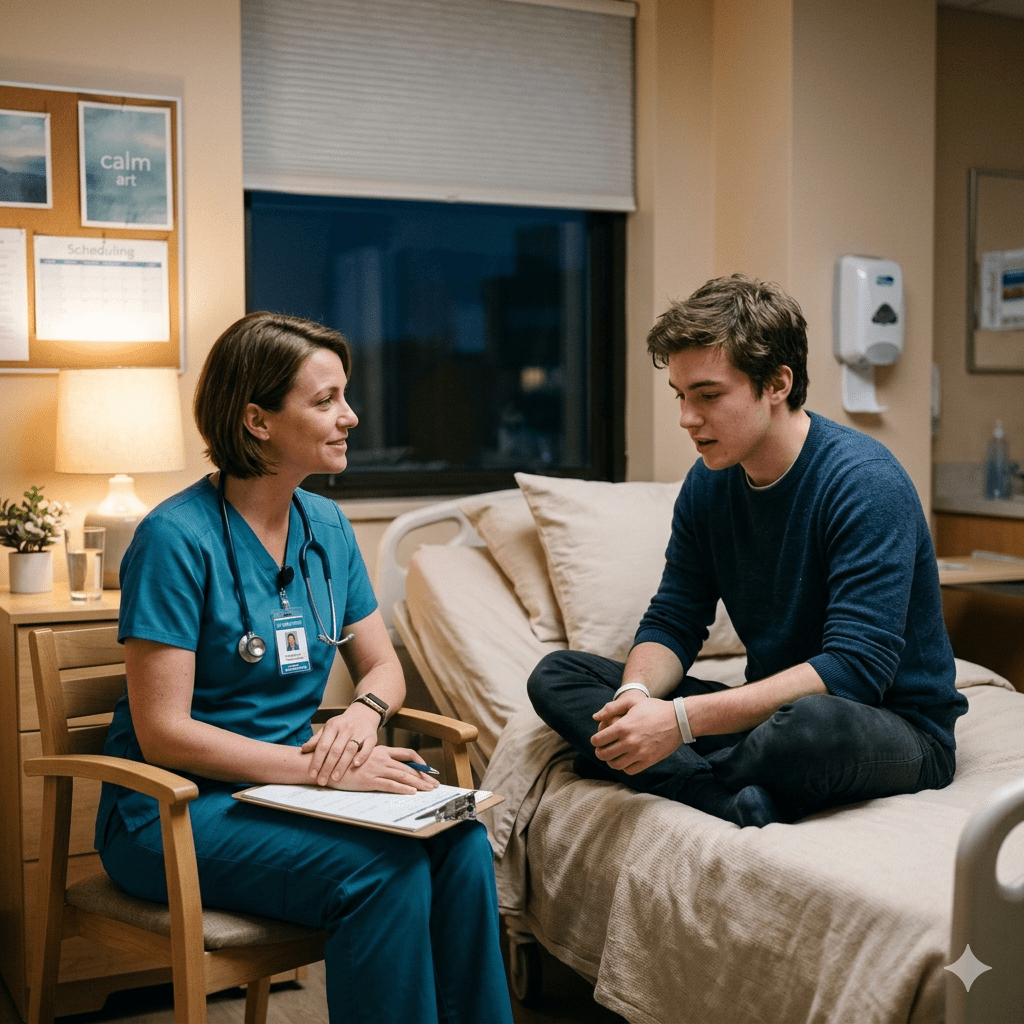
Sleep disturbances are among the most prevalent yet underrecognized clinical challenges in mental health care. For the registered nurse working in a psychiatric setting, understanding sleep disorders in psychiatric patients is essential — both for safe, effective care and for NCLEX exam success. Disrupted sleep is not merely a symptom; it is a driver of psychiatric deterioration that worsens mood, cognition, impulse control, and medication response. Therefore, every RN nurse preparing for the NCLEX or entering mental health practice must be equipped to assess, intervene, and educate patients on this critical dimension of care. A comprehensive nursing bundle that includes sleep health content is an invaluable asset in both exam preparation and clinical readiness.
Why Sleep Disorders Are Central to Psychiatric Nursing
The relationship between sleep and mental illness is bidirectional. Insomnia, hypersomnia, circadian rhythm disturbances, and parasomnias do not merely co-occur with psychiatric diagnoses — they actively worsen them. For instance, in patients with major depressive disorder (MDD), insomnia is present in up to 90% of cases and is a known predictor of suicidal ideation. In bipolar disorder, sleep disruption can trigger manic or hypomanic episodes. Similarly, in schizophrenia, fragmented sleep contributes to cognitive impairment and psychotic relapse.
The nurse’s role, therefore, goes beyond administering a sleep aid at bedtime. Nursing assessment must identify the type of sleep disturbance, its relationship to the psychiatric diagnosis, contributing medications, and the patient’s personal sleep hygiene habits. Accurate documentation of sleep patterns is, consequently, a core function of the psychiatric RN nurse.
Types of Sleep Disorders Commonly Seen in Psychiatric Settings
Nurses working in inpatient or outpatient mental health units frequently encounter the following sleep disorders:
- Insomnia Disorder: Difficulty initiating or maintaining sleep, or early morning awakening, occurring at least 3 nights per week for 3 months or more. This condition is strongly associated with depression, anxiety disorders, and PTSD.
- Hypersomnia/Excessive Daytime Sleepiness: Seen frequently in depression (especially atypical or bipolar depression) and as a side effect of antipsychotics, mood stabilizers, and benzodiazepines.
- Circadian Rhythm Sleep-Wake Disorders: Common in patients with bipolar disorder, schizophrenia, and those on rotating or night-shift schedules.
- Nightmare Disorder: Recurrent, distressing dreams that disrupt sleep. Because of its strong association with PTSD, the nurse must always screen for trauma history.
- Restless Legs Syndrome (RLS): A neurological condition causing uncomfortable leg sensations at rest; associated with iron deficiency and worsened by certain antipsychotics and antidepressants (SSRIs).
- Sleep Apnea: Often comorbid with psychiatric illness, especially in patients taking weight-gaining medications. Consequently, this must be considered when daytime sedation or snoring is reported.
Nursing Assessment of Sleep in Psychiatric Patients
A thorough sleep assessment is a standard nursing responsibility in mental health care. The registered nurse should obtain the following during initial and ongoing assessments:
- Sleep history: Typical bedtime, wake time, number of awakenings, total sleep hours, and sleep quality perception
- Sleep diary review: Document patterns across several days where possible
- Symptom screening: Restlessness, nightmares, sleepwalking, snoring, apneic episodes
- Medication review: Identify stimulating medications (e.g., bupropion, SNRIs, steroids) or sedating agents that may cause rebound effects
- Caffeine, alcohol, and substance use: Both disrupt sleep architecture significantly
- Psychiatric symptom correlation: Is insomnia preceding a mood episode? Is hypersomnia linked to depressive withdrawal?
Use validated tools such as the Pittsburgh Sleep Quality Index (PSQI) or the Epworth Sleepiness Scale when available. Notably, NCLEX questions frequently test the nurse’s ability to prioritize assessment before intervention — and sleep assessment is no exception.
Nursing Interventions for Sleep Disorders in Psychiatric Patients
Nursing interventions span non-pharmacological and pharmacological strategies. The evidence strongly supports non-pharmacological approaches as first-line treatment, particularly Cognitive Behavioral Therapy for Insomnia (CBT-I), which the nurse can reinforce through patient education.
Non-Pharmacological Nursing Interventions
- Sleep hygiene education: Consistent sleep/wake schedule, dark and quiet sleep environment, limiting screen use before bed
- Stimulus control: Encourage the patient to use the bed only for sleep — not for watching television or ruminating
- Relaxation techniques: Progressive muscle relaxation, guided imagery, and deep breathing exercises are all nursing-supported strategies
- Limiting daytime napping: This is especially important in depressed patients who may sleep excessively during the day
- Structured daily activity: Physical activity and structured programming during the day promote nighttime sleep drive
- Therapeutic communication: Address anxiety or fears that interfere with sleep onset; the nurse’s calm engagement remains a powerful therapeutic tool
Pharmacological Management: Nursing Considerations
Pharmacological sleep interventions in psychiatric patients require careful nurse monitoring due to polypharmacy risks. Commonly used agents include:
| Medication Class | Examples | Key Nursing Considerations |
|---|---|---|
| Non-BZD receptor agonists | Zolpidem, eszopiclone | Risk of complex sleep behaviors; avoid in history of sleepwalking |
| Orexin receptor antagonists | Suvorexant (Belsomra) | Monitor for excessive daytime sedation |
| Low-dose TCAs | Doxepin (Silenor) | Monitor cardiac rhythm; anticholinergic effects |
| Melatonin agonists | Ramelteon | Safe for long-term use; no abuse potential |
| Sedating antipsychotics | Quetiapine (low dose) | Used off-label; monitor for metabolic side effects |
| Benzodiazepines | Lorazepam, clonazepam | Short-term use only; high dependence risk; monitor closely |
Following each pharmacological intervention, the nurse must document sleep quality and report continued disturbances to the treatment team promptly.
PTSD and Sleep: A Critical Psychiatric Nursing Focus
Post-Traumatic Stress Disorder (PTSD) deserves special attention in sleep nursing care. Nightmare disorder and hypervigilance severely fragment sleep architecture in these patients. As a result, prazosin, an alpha-1 blocker, is commonly prescribed for PTSD-related nightmares — the nurse must monitor for orthostatic hypotension, particularly at night.
For the NCLEX, it is essential to know that the priority nursing intervention for a PTSD patient with nightmares is establishing a safe therapeutic environment and using trauma-informed communication — not immediately medicating. Safety and therapeutic rapport, therefore, always come first.
💡 NCLEX Tips for Sleep Disorders in Psychiatric Patients
- Insomnia in a patient with bipolar disorder may signal an upcoming manic episode — always assess for other prodromal symptoms.
- The priority intervention for sleep disturbance is always nursing assessment before pharmacological action.
- Benzodiazepines are not first-line for chronic insomnia — know the risks of dependence and respiratory depression.
- CBT-I is the gold-standard non-pharmacological treatment — nurses reinforce its principles during patient education.
- A patient on SSRIs complaining of restless legs at night may be experiencing a drug-induced side effect — report to the prescriber.
Patient and Family Education
Patient education is a primary nursing responsibility. Accordingly, the RN nurse should teach:
- The importance of a consistent sleep schedule, even on weekends
- Avoidance of caffeine after early afternoon and alcohol as a sleep aid (it disrupts REM sleep)
- How to use relaxation techniques independently at bedtime
- Warning signs that sleep disturbance may signal a psychiatric relapse (e.g., decreased need for sleep in bipolar disorder)
- Safe use of prescribed sleep medications and what side effects to report
Furthermore, family members and caregivers benefit from education as well — nighttime agitation, sleepwalking, or severe nightmares may require them to respond safely and therapeutically. When families understand these patterns, they become active partners in the patient’s recovery.
Conclusion
Sleep disorders in psychiatric patients represent a high-stakes area of nursing practice that demands skilled assessment, evidence-based intervention, and strong therapeutic communication. For the RN nurse preparing for the NCLEX or building clinical competence, understanding the bidirectional relationship between sleep and mental illness is non-negotiable. From insomnia in depression to PTSD nightmares and medication-induced hypersomnia, the registered nurse is positioned at the front line of identifying and managing these disturbances. To further strengthen your mental health nursing knowledge, explore the nursing bundle at rn-nurse.com/nursing-courses, and sharpen your exam readiness with practice questions at rn-nurse.com/nclex-qcm.