
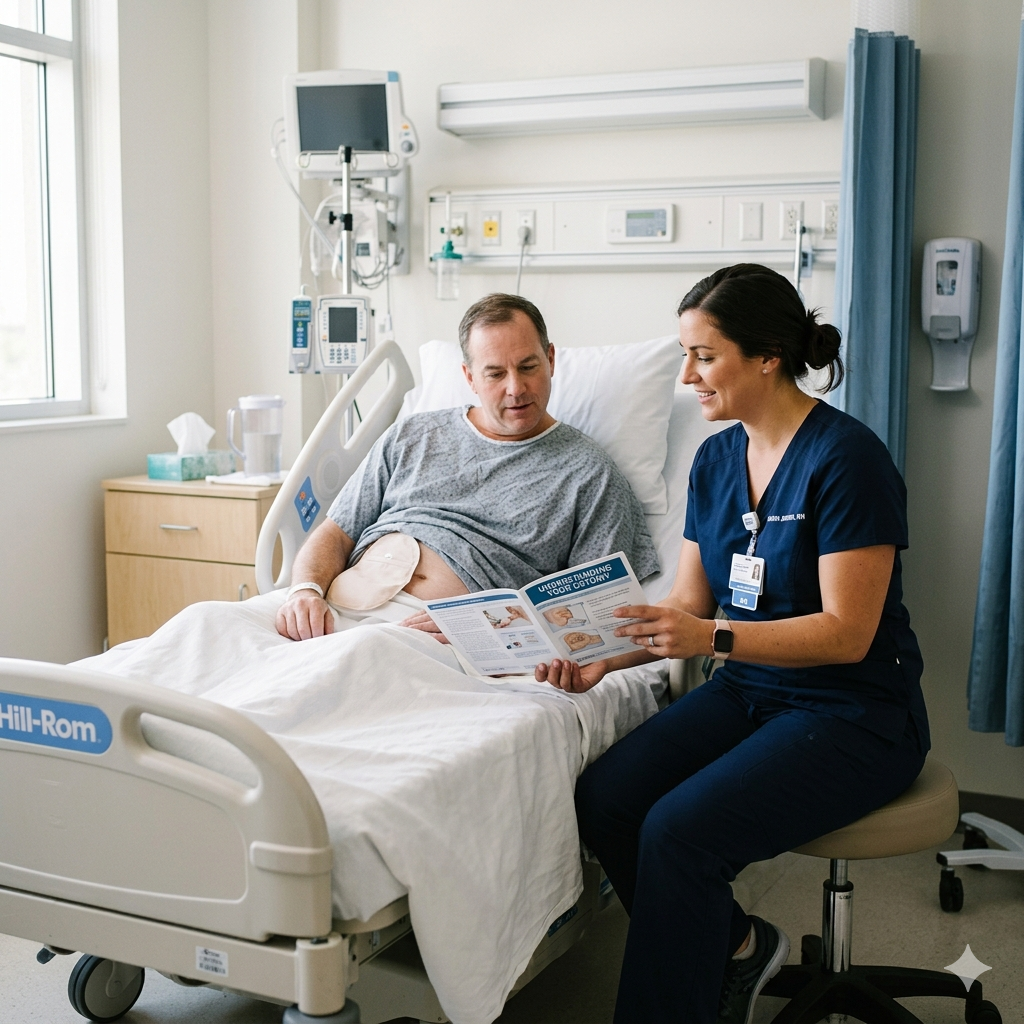
Body image, intimacy, and sexual function are profoundly affected when a patient undergoes ostomy surgery — yet these concerns are among the most underaddressed in clinical nursing practice. Ostomy sexual health nursing sits at the intersection of wound care, psychosocial support, and patient education, making it highly relevant for both bedside practice and NCLEX preparation. Every registered nurse caring for ostomy patients must feel equipped to open these conversations, recognize complications that affect sexual function, and connect patients to the right resources. This nursing guide covers the physiology, psychosocial impact, practical interventions, and NCLEX-tested concepts you need.
Understanding Ostomy Surgery and Its Sexual Health Implications
An ostomy is a surgically created opening (stoma) that diverts the flow of urine or stool to an external pouch worn on the abdomen. The three most common types are:
- Colostomy — diversion of the large intestine, often due to colorectal cancer or diverticulitis
- Ileostomy — diversion of the small intestine, commonly related to Crohn’s disease or ulcerative colitis
- Urostomy — urinary diversion following bladder removal or trauma
Ostomy surgery — particularly abdominoperineal resection (APR) and radical cystectomy — can directly damage the pelvic nerves responsible for sexual response. Surgical disruption of the hypogastric plexus or pudendal nerve may result in erectile dysfunction in male patients and decreased vaginal lubrication or sensation in female patients. Understanding this neuroanatomy helps the registered nurse explain why sexual changes are physiological, not psychological failings.
Psychosocial Impact: Body Image and Intimacy After Ostomy Surgery
The psychological burden of living with an ostomy is substantial. Patients commonly report feelings of shame, embarrassment, and fear of rejection by partners. Body image disturbance — a recognized NANDA nursing diagnosis — is central to this population. Nursing assessment must include direct, compassionate inquiry into how patients perceive their bodies and relationships.
Key psychosocial concerns include:
- Fear of leakage or odor during sexual activity
- Reluctance to undress or be physically intimate
- Withdrawal from established relationships
- Anxiety and depression, which independently suppress libido
- Concerns about the stoma being “seen” or touched by a partner
The registered nurse plays a pivotal role in normalizing these concerns. Silence on the topic sends an unintended message that sexual health is unimportant or inappropriate to discuss. Therapeutic communication — using open-ended questions and non-judgmental language — creates the space patients need to voice these fears. This is especially important for NCLEX scenarios focused on priority nursing interventions in psychosocial care.
Ostomy Sexual Health Nursing: Assessment Priorities
Before providing education, the RN nurse must complete a thorough sexual health assessment. This should include:
- Pre-operative baseline — Ask about sexual function and relationship status before surgery whenever possible
- Surgical approach used — APR and radical cystectomy carry higher risks for nerve damage than loop ileostomies
- Current medications — Antihypertensives, antidepressants, and opioids can all suppress sexual function
- Partner involvement — With patient consent, include the partner in education sessions
- Cultural and religious considerations — Respect that some patients may not wish to discuss these topics openly
A validated screening tool such as the PLISSIT model (Permission, Limited Information, Specific Suggestions, Intensive Therapy) provides a structured nursing framework for addressing sexual concerns at the appropriate depth. The RN nurse introduces the topic (Permission), provides basic education (Limited Information), offers tailored strategies (Specific Suggestions), and refers complex cases to a sexual health counselor (Intensive Therapy).
Nursing Interventions and Patient Education Strategies
Effective ostomy sexual health nursing combines practical pouch management with sensitive patient education. Key nursing interventions include:
Pouch Management Before Intimacy
- Empty the ostomy pouch before sexual activity to reduce anxiety about leakage
- Consider a smaller, more discreet mini-pouch or stoma cap for intimate occasions
- Secure the pouch with a supportive ostomy belt or pouch cover to reduce movement
- Encourage patients to experiment with different ostomy appliance styles through their WOCN (wound, ostomy, and continence nurse)
Positioning and Physical Comfort
- Some positions may place less pressure on the stoma site; encourage patients to experiment safely
- Loose-fitting intimate apparel or specially designed ostomy wraps can increase body confidence
- Teach patients that the stoma itself is not fragile and cannot be “damaged” by gentle contact
Addressing Specific Complications
- Erectile dysfunction: Refer male patients to urology; phosphodiesterase-5 inhibitors (e.g., sildenafil) may be appropriate
- Vaginal dryness: Water-based lubricants are safe and effective; refer to gynecology for vaginal estrogen if appropriate
- Dyspareunia: May result from perineal scarring post-APR; pelvic floor physical therapy is a key referral
A comprehensive nursing bundle for ostomy care should include sexual health education materials as a standard component — not an afterthought.
The Role of the WOCN and Multidisciplinary Team
No single clinician addresses all dimensions of ostomy sexual health alone. The WOCN nurse specialist is the cornerstone of ostomy rehabilitation, but the full multidisciplinary team includes:
| Team Member | Contribution |
|---|---|
| WOCN Nurse | Stoma and appliance management, body image counseling |
| Urologist | Erectile dysfunction evaluation and treatment |
| Gynecologist | Vaginal changes, hormonal support, pelvic floor referral |
| Pelvic Floor PT | Dyspareunia, pelvic muscle rehabilitation |
| Mental Health Counselor | Depression, anxiety, relationship therapy |
| Social Worker | Support groups, community resources |
The registered nurse coordinates this team and ensures that sexual health concerns are documented and communicated across the care continuum. NCLEX questions on this topic frequently test the student’s ability to identify the most appropriate referral for a patient with a specific sexual health concern post-ostomy.
Timing of Sexual Health Education
Timing matters. Pre-operative education sets expectations and reduces post-operative distress, while post-operative education must be staged appropriately:
- Pre-op: Introduce the topic, acknowledge that sexual changes are possible, and plan for follow-up
- Immediate post-op (0–6 weeks): Focus on stoma care and wound healing; avoid overloading the patient
- 6–12 weeks post-op: Physical recovery is underway; begin in-depth sexual health education
- 3–6 months post-op: Many sexual function changes (especially nerve-related) continue to evolve; reassess regularly
The RN nurse documents all patient education related to sexual health and records the patient’s stated readiness to receive information. Premature education before a patient is psychologically ready is ineffective and can feel intrusive.
💡 NCLEX Tips for Ostomy Sexual Health Nursing
- The PLISSIT model is a high-yield nursing framework for sexual health counseling — know all four levels
- Body image disturbance is a priority NANDA nursing diagnosis in the ostomy patient population
- For NCLEX priority questions, the nurse should always address physiological safety first, but psychosocial concerns are priority interventions when physical needs are stable
- Referral to a WOCN nurse is the most appropriate action for complex stoma and sexuality concerns
- Male patients post-APR are at high risk for erectile dysfunction due to pelvic nerve damage — expect this on the exam
Conclusion
Ostomy sexual health nursing requires clinical confidence, therapeutic communication, and a commitment to whole-person care. From the moment of surgical planning through long-term follow-up, the registered nurse is uniquely positioned to normalize sexual health conversations, deliver evidence-based education, and connect patients with the right multidisciplinary support. Addressing intimacy and body image is not peripheral to ostomy nursing — it is central to patient recovery and quality of life.
Whether you are an RN nurse preparing for licensure or a practicing nurse seeking to strengthen your practice, building competence in this area reflects the highest standard of holistic nursing care. Use the rn-nurse.com NCLEX practice questions to test your knowledge on ostomy management and psychosocial nursing, and explore the full nursing bundle and courses to deepen your clinical expertise.