
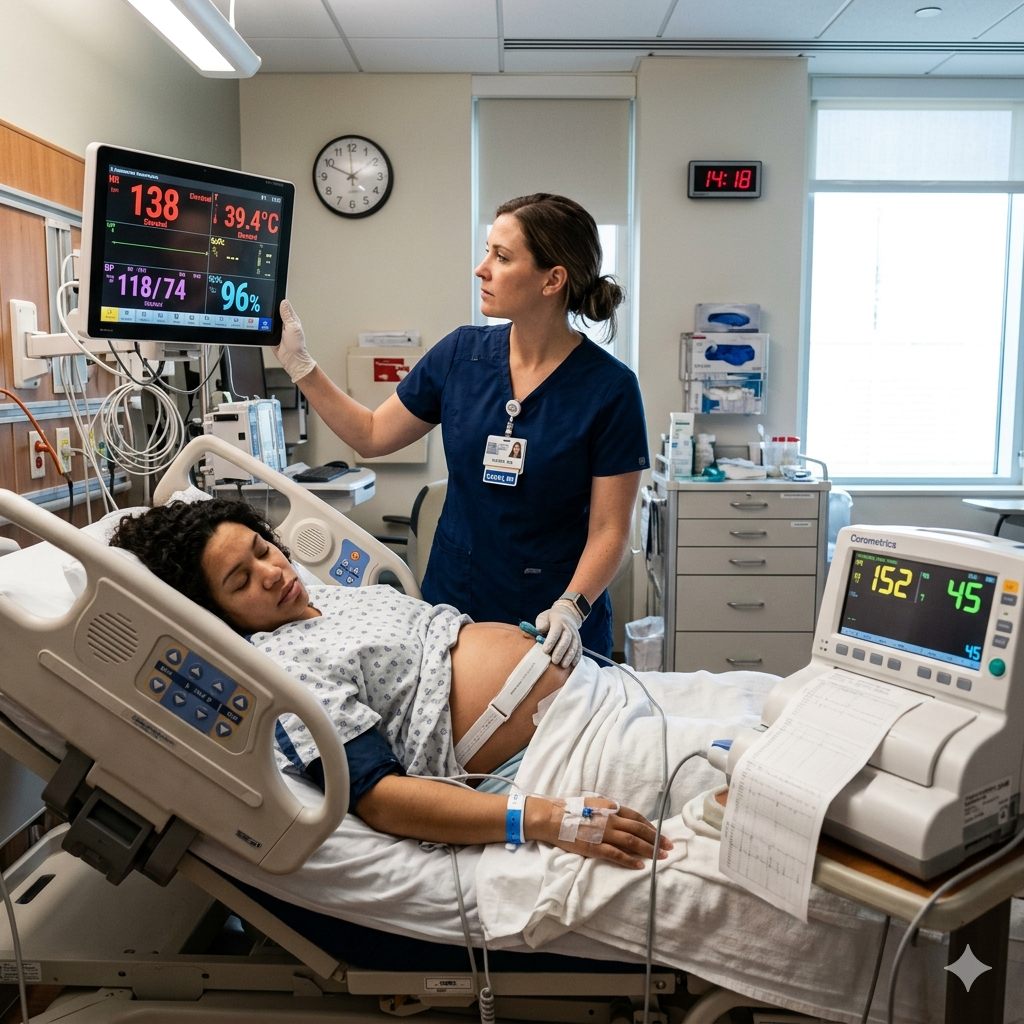
Sepsis remains one of the leading causes of maternal mortality worldwide, yet it is frequently under-recognized in the obstetric setting. The physiologic changes of pregnancy — elevated heart rate, lower blood pressure, and increased respiratory rate — can mask the early warning signs that nurses rely on to detect sepsis in other patient populations. For the registered nurse working in labor and delivery, antepartum, or postpartum units, the ability to identify maternal sepsis recognition in pregnancy quickly is not just an NCLEX competency — it is a life-saving clinical skill. This guide is designed to sharpen that skill, equip nursing students with NCLEX-ready knowledge, and serve as a practical reference for the RN nurse caring for pregnant and postpartum patients.
What Is Maternal Sepsis?
Maternal sepsis is defined as a life-threatening organ dysfunction caused by infection during pregnancy, childbirth, post-abortion, or the postpartum period. It represents an extreme, dysregulated host response to infection and can rapidly progress to septic shock and multi-organ failure.
Common sources of infection in obstetric patients include:
- Chorioamnionitis (intraamniotic infection)
- Endometritis (postpartum uterine infection)
- Urinary tract infections (UTIs) progressing to pyelonephritis
- Wound infections (cesarean incision, episiotomy)
- Pneumonia
- Septic abortion
Every RN nurse must understand that infection in a pregnant patient can escalate within hours. The immune modulation of pregnancy — intended to protect the fetus — may blunt the inflammatory response, making infection harder to detect and easier to underestimate.
Why Pregnancy Makes Sepsis Harder to Recognize
Normal physiologic changes of pregnancy directly overlap with the classic systemic inflammatory response syndrome (SIRS) criteria used to screen for sepsis:
| Parameter | Normal Non-Pregnant Value | Normal in Pregnancy |
|---|---|---|
| Heart Rate | < 100 bpm | May be 90–100 bpm at baseline |
| Respiratory Rate | 12–20 breaths/min | Often 16–20 breaths/min |
| Temperature | 36.5–37.5°C | Slight elevation postpartum is common |
| WBC | 4,500–11,000/μL | Up to 15,000–16,000/μL normally |
Because these values are already shifted toward SIRS criteria in healthy pregnant patients, a nurse relying solely on SIRS to trigger a sepsis alert may miss early maternal sepsis. This is why the qSOFA score and organ dysfunction markers are increasingly emphasized in the obstetric sepsis literature and on the NCLEX.
Maternal Sepsis Recognition: Key Clinical Criteria
The qSOFA (quick Sequential Organ Failure Assessment) score identifies patients at high risk for poor outcomes from sepsis using three bedside criteria:
- Altered mental status (GCS < 15 or confusion)
- Respiratory rate ≥ 22 breaths/min
- Systolic blood pressure ≤ 100 mmHg
A qSOFA score of ≥ 2 should prompt urgent evaluation for sepsis in pregnant and postpartum patients. The registered nurse must communicate these findings immediately using SBAR (Situation, Background, Assessment, Recommendation) to ensure rapid medical response.
Additional clinical signs the RN nurse should monitor include:
- Fever > 38°C (100.4°F) or hypothermia < 36°C (96.8°F)
- Uterine tenderness out of proportion to expected discomfort
- Foul-smelling lochia or purulent discharge
- Fetal tachycardia (a critical early warning sign during labor)
- Decreased urine output (< 0.5 mL/kg/hr), indicating renal involvement
- Skin mottling, cool extremities, or delayed capillary refill (> 2 seconds)
Risk Factors the Nurse Must Assess
Proactive maternal sepsis recognition in pregnancy begins with a thorough risk factor assessment on every patient admission. High-risk indicators include:
- Prolonged rupture of membranes (PROM) > 18 hours
- Multiple vaginal examinations during labor
- Operative delivery (cesarean section)
- Retained products of conception
- Group B Streptococcus (GBS) positive status with inadequate prophylaxis
- Immunosuppression or chronic illness (HIV, diabetes, obesity)
- Recent invasive procedures (cerclage, amniocentesis)
- History of prior pelvic infection
Nursing documentation of these risk factors at admission allows the entire care team to maintain a heightened index of suspicion throughout the patient’s hospital stay.
The Sepsis Bundle: Nursing Interventions Within the First Hour
When maternal sepsis is suspected, the 1-hour sepsis bundle (adapted from the Surviving Sepsis Campaign) guides nursing and interdisciplinary action:
- Obtain blood cultures × 2 (before antibiotic administration when possible)
- Administer broad-spectrum IV antibiotics — commonly ampicillin-sulbactam, piperacillin-tazobactam, or a carbapenem depending on the suspected source
- Measure serum lactate — a lactate ≥ 2 mmol/L signals tissue hypoperfusion; ≥ 4 mmol/L indicates septic shock
- IV fluid resuscitation — 30 mL/kg of crystalloid (typically normal saline or lactated Ringer’s) for hypotension or elevated lactate
- Apply vasopressors if MAP < 65 mmHg despite adequate fluid resuscitation (norepinephrine is first-line; safely used in pregnancy)
- Continuous fetal monitoring — reassess fetal heart rate patterns with every intervention
- Foley catheter insertion for strict intake/output monitoring
- Frequent vital signs — every 15–30 minutes during acute management
The RN nurse is central to executing this bundle rapidly and accurately. Time to antibiotic administration is directly correlated with patient survival — delays of even one hour can significantly worsen outcomes.
💡 NCLEX Tips for Maternal Sepsis
- Priority action: The first nursing intervention when maternal sepsis is suspected is to notify the provider immediately and initiate the sepsis bundle — do not delay antibiotics waiting for cultures.
- A lactate level is a key marker of tissue perfusion; NCLEX questions may ask you to identify this as priority lab.
- Fetal tachycardia (FHR > 160 bpm) in the presence of maternal fever is a red flag for chorioamnionitis — a common NCLEX scenario.
- On NCLEX, hypotension + altered mental status + tachypnea in a postpartum patient = septic shock until proven otherwise.
- The qSOFA score is high-yield: two or more positive criteria warrant immediate escalation.
Postpartum Sepsis: Don’t Overlook the Fourth Trimester
Sepsis does not end at delivery. Postpartum endometritis typically presents within 24–72 hours after cesarean delivery and 5–7 days after vaginal delivery. Nursing assessment in the postpartum period using the BUBBLE-HE framework — Breasts, Uterus, Bladder, Bowel, Lochia, Episiotomy/incision, Homans sign, and Emotional status — provides a systematic approach to detecting early signs of infection.
Any postpartum patient presenting with:
- Fever ≥ 38°C on two separate occasions after the first 24 hours
- Uterine subinvolution (uterus not firming or descending appropriately)
- Increased or foul lochia
- Tachycardia out of proportion to pain or anxiety
…requires immediate nursing escalation and provider notification. The RN nurse who incorporates these assessment cues into every postpartum check contributes directly to early maternal sepsis recognition in pregnancy and beyond.
Quick Reference: Maternal Sepsis Red Flags
| Finding | Clinical Significance |
|---|---|
| Fever > 38°C or hypothermia < 36°C | Classic sepsis criterion |
| HR > 110 bpm (above pregnancy baseline) | Possible compensatory tachycardia |
| RR ≥ 22 breaths/min | qSOFA criterion; respiratory compromise |
| SBP ≤ 100 mmHg | qSOFA criterion; hypoperfusion |
| Lactate ≥ 2 mmol/L | Tissue hypoperfusion |
| UO < 0.5 mL/kg/hr | Renal compromise |
| Fetal tachycardia > 160 bpm | Possible chorioamnionitis |
| Altered mental status | qSOFA criterion; severe sepsis |
| Mottled or cool skin | Peripheral vasoconstriction |
Conclusion
Maternal sepsis is a time-sensitive obstetric emergency that demands rapid nursing assessment, decisive action, and seamless interdisciplinary communication. By mastering the clinical criteria for maternal sepsis recognition in pregnancy — including qSOFA, the sepsis bundle, and postpartum red flags — the registered nurse becomes the first and most critical line of defense for both mother and baby.
For nursing students preparing for the NCLEX, sepsis in obstetric patients is a high-yield topic that tests your ability to prioritize, delegate, and act under pressure. Reinforce your knowledge with targeted practice using the NCLEX practice questions at rn-nurse.com and explore the full nursing bundle of OB/Maternity resources at rn-nurse.com/nursing-courses/ to build the clinical confidence every RN nurse needs at the bedside and on exam day.