High-alert medications are drugs that carry a higher risk of causing serious patient harm if used incorrectly. For every registered nurse, understanding and safely administering these medications is essential. Because of their importance, high-alert medications appear frequently on the NCLEX, inside every nursing bundle, and in daily practice for any RN nurse working in hospitals or clinics.
This article provides a complete and practical Nurse Safety Checklist to help improve safety, reduce medication errors, and support patient outcomes.
⭐ What Are High-Alert Medications?
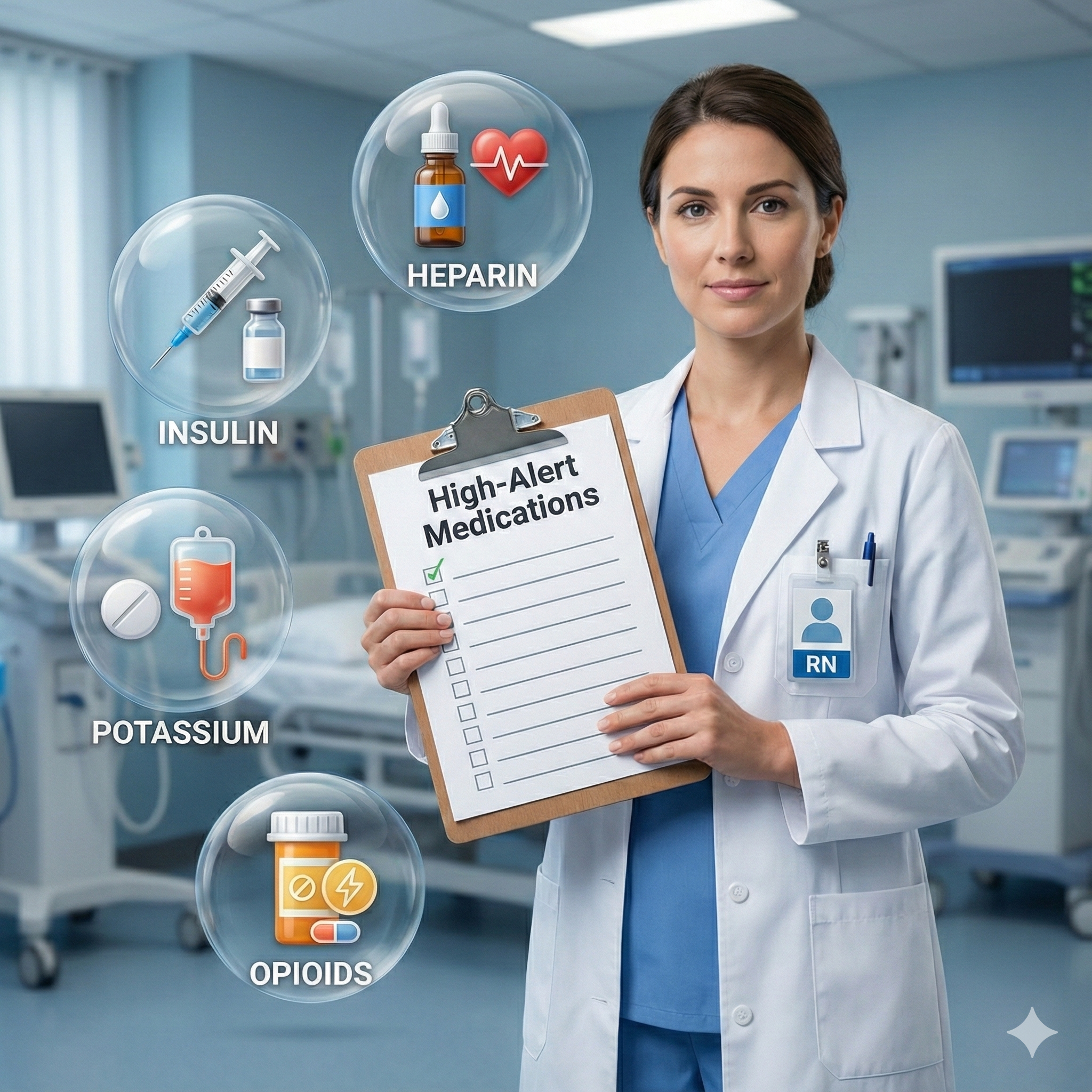
High-alert medications (HAMs) are drugs that require extra caution due to their potent effects, narrow therapeutic ranges, and high risk of causing injury. Common examples include:
- Insulin
- Heparin
- Opioids
- Potassium chloride (IV)
- Neuromuscular blockers
- Chemotherapy drugs
- Concentrated electrolytes
- Anticoagulants
- Magnesium sulfate
Every nurse—especially new graduates preparing for the NCLEX—must master how to store, prepare, and administer these medications safely.
⭐ Why High-Alert Medications Matter in Nursing Practice
High-alert medication errors can lead to hypoglycemia, bleeding, respiratory depression, cardiac arrest, or even death. This is why hospitals implement strict protocols and why the registered nurse plays a critical role in safeguarding patients.
For NCLEX study materials and nursing bundles, these medications are always highlighted because they represent high-risk, high-safety nursing responsibilities.
⭐ High-Alert Medications: Nurse Safety Checklist
Below is a complete, practical checklist that every RN nurse can use during medication administration.
✅ 1. Verify Orders Carefully
Before giving any high-alert medication, the nurse should ensure:
- Complete, clear, and legible order
- Correct drug, dose, dilution, route, and frequency
- No confusing abbreviations
- No missing information
This step is crucial and commonly tested on the NCLEX as a medication-safety priority.
✅ 2. Use the 10 Rights of Medication Administration
For high-alert medications, the 10 rights must be followed strictly:
- Right patient
- Right medication
- Right dose
- Right route
- Right time
- Right documentation
- Right evaluation
- Right education
- Right to refuse
- Right assessment
These rights are fundamental in every nursing bundle and NCLEX prep guide.
✅ 3. Perform Double-Checks with Another Nurse
Many hospitals require an independent double-check by another registered nurse for medications like:
- Insulin
- Heparin
- Opioids
- PCA pumps
- Magnesium sulfate
- Chemotherapy
Both nurses must verify:
✔ Drug
✔ Patient
✔ Pump settings
✔ Concentration
✔ Calculations
This is a major NCLEX safety concept.
✅ 4. Use Smart Pumps and Safety Technology
High-alert medications often require programmable IV pumps. Nurses should:
- Use pre-set drug libraries
- Double-check the programmed dose
- Confirm concentration
- Monitor pump alarms
This reduces error and enhances nursing safety protocols.
✅ 5. Educate the Patient
A registered nurse must teach patients:
- Why the medication is high alert
- What side effects to report
- How the medication works
- Safety instructions relevant to the drug
Patient education is frequently included in NCLEX medication questions.
✅ 6. Monitor Closely After Administration
Monitoring varies depending on the medication but may include:
- Vital signs
- Heart rhythm (ECG)
- Blood glucose levels
- Coagulation labs (INR, aPTT)
- Neurological status
- Respiratory rate
- IV site assessment
This level of vigilance is essential for RN nurse practice.
✅ 7. Document Everything Accurately
Nurses must document:
- Medication name
- Dose
- Time given
- Patient response
- Any adverse effects
- Education provided
Accurate documentation protects the patient and the nurse.
⭐ Examples of NCLEX-Style High-Alert Medication Concepts
The NCLEX often tests:
- Insulin types and peak times
- Heparin vs. warfarin differences
- Safe potassium administration
- PCA safety
- Magnesium sulfate toxicity signs
- Recognizing opioid overdose
For this reason, students often rely on a nursing bundle to review drug safety rules quickly.
⭐ Conclusion
High-alert medications require precision, vigilance, and strong critical-thinking skills. By following this Nurse Safety Checklist, every registered nurse can improve patient safety and reduce life-threatening errors. Mastery of high-alert medications is essential for clinical practice—and a major advantage for NCLEX success.
⭐ FAQ: High-Alert Medications & Nursing Safety
High-alert medications are drugs that have a high risk of causing serious harm if a mistake occurs. These include insulin, heparin, potassium chloride, magnesium sulfate, and opioids. Every registered nurse must handle them with strict protocols. They appear often on the NCLEX and in every major nursing bundle.
A safety checklist helps an RN nurse reduce medication errors, confirm drug accuracy, and ensure patient safety. These checklists are required in most hospitals and are heavily emphasized in nursing education and NCLEX practice.
The NCLEX frequently tests nursing safety for:
Insulin (peaks, mixing, hypoglycemia risk)
Heparin and warfarin
IV potassium chloride
Opioid safety
Magnesium sulfate toxicity
Hospitals often require independent double-checks from two registered nurses to prevent dosage errors. This is essential for drugs like insulin, heparin, and magnesium sulfate. Independent verification is a frequent NCLEX question.