
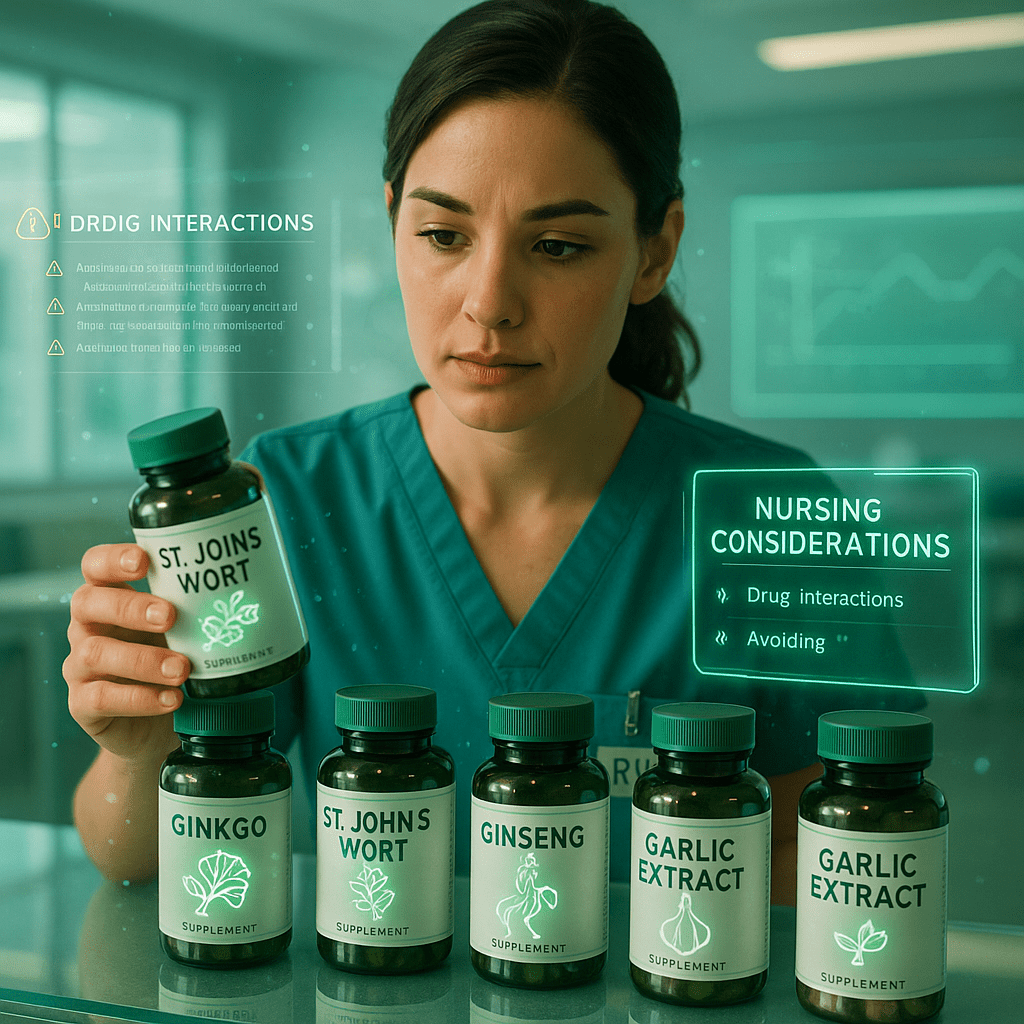
Herbal supplements are widely used by patients seeking natural remedies, yet many individuals are unaware of the potential risks, interactions, and contraindications these products may carry. For every registered nurse (RN), understanding herbal medications is essential—especially because they often interact with prescription drugs and affect clinical outcomes. This topic is heavily tested on the NCLEX, making it vital for every nursing student, practicing RN nurse, and healthcare educator to include it in their nursing bundle of core knowledge.
🌿 Why Herbal Supplements Matter in Nursing Practice
Herbal remedies are available over the counter, and patients frequently use them without consulting healthcare providers. Because of this, nurses must know how these products work, their risks, and what teaching is required to promote safe use. In addition, many supplements influence blood pressure, coagulation, sedation, and glucose levels—key concerns in clinical settings.
Furthermore, NCLEX questions frequently require nurses to identify dangerous drug–herb interactions and appropriate interventions when patients use alternative therapies.
🌿 Common Herbal Supplements and Their Nursing Implications
Below is a breakdown of the most commonly tested supplements and what every registered nurse must screen for.
1. St. John’s Wort
Uses: Mild depression, anxiety
Nursing Alerts:
- Decreases effectiveness of many medications (birth control, HIV meds, anticoagulants).
- Can lead to serotonin syndrome if combined with SSRIs.
RN Implication: Always ask about St. John’s Wort use during medication reconciliation.
2. Ginkgo Biloba
Uses: Memory enhancement, cognition
Nursing Alerts:
- Increases bleeding risk, especially with anticoagulants like warfarin.
- May cause seizures in high doses.
RN Implication: Hold before surgery; monitor for abnormal bleeding.
3. Ginseng
Uses: Energy, stress reduction, immune support
Nursing Alerts:
- Can raise blood pressure and blood sugar.
- Interacts with anticoagulants and insulin.
RN Implication: Avoid in hypertensive or diabetic patients without provider approval.
4. Garlic Supplements
Uses: Cholesterol reduction, blood pressure support
Nursing Alerts:
- Increases bleeding risk.
- Potentiates antihypertensive drugs.
RN Implication: Stop 7 days before surgery; monitor blood pressure closely.
5. Echinacea
Uses: Boosting immunity
Nursing Alerts:
- Avoid long-term use (liver toxicity).
- Interacts with immunosuppressants.
RN Implication: Not recommended for transplant recipients or autoimmune patients.
6. Valerian Root
Uses: Anxiety, insomnia
Nursing Alerts:
- Causes sedation; potentiates CNS depressants.
- Should not be combined with alcohol or benzodiazepines.
RN Implication: Warn patients about impaired coordination and fall risk.
7. Kava
Uses: Anxiety relief
Nursing Alerts:
- Severe liver toxicity risk
- Interacts with sedatives
RN Implication: Discourage use in any patient with liver disease or taking CNS depressants.
🌿 Key NCLEX Nursing Priorities When Assessing Herbal Supplement Use
To improve safety and preparation for the NCLEX, nurses should:
✔️ 1. Assess First
Ask about all supplements during intake. Many NCLEX questions involve identifying hidden causes of symptoms such as bleeding, hypertension, or sedation.
✔️ 2. Identify Interactions
Most herbal-related NCLEX questions test the nurse’s knowledge of interactions with:
- Anticoagulants
- Antihypertensives
- Antidepressants
- Antidiabetics
- Sedatives
✔️ 3. Educate Patients
Registered nurses should teach:
- “Natural” does not mean “safe.”
- Supplements are not regulated like medications.
- Many herbs increase bleeding or cause drug toxicity.
✔️ 4. Monitor for Adverse Effects
The nurse must watch for changes in:
- Coagulation
- Blood pressure
- Consciousness
- Liver function
- Glucose levels
✔️ 5. Collaborate With Providers
Always notify the provider when a patient takes supplements that affect treatment plans—such as before surgery or when starting new medications.
🌿 Nursing Bundle Tip for Students and RNs
Include a personalized herbal supplement chart in your nursing bundle to quickly review:
- Indications
- Side effects
- Interactions
- Contraindications
- NCLEX alerts
This drastically improves test readiness and clinical performance.
✅ Conclusion
Herbal supplements can significantly impact patient safety. For effective nursing care and strong NCLEX performance, every RN nurse must understand these products thoroughly, perform accurate assessments, and teach patients safe use practices. Integrating this knowledge into everyday practice protects patients and strengthens professional nursing skills.
❓ Frequently Asked Questions (FAQ)
Many herbal supplements interact with prescription medications. Registered nurses must assess them to prevent bleeding risks, hypertension, sedation, and toxicity—topics heavily covered on the NCLEX.
Not always. Some herbs (like St. John’s Wort or ginkgo) can cause dangerous interactions. Nurses must evaluate each supplement and notify the provider if risks exist.
Garlic, ginkgo biloba, ginseng, and ginger all increase bleeding risk. RNs should confirm if patients take these before surgery or when prescribed anticoagulants.
Nurses should teach that “natural” does not always mean safe, supplements are not strictly regulated, and combining herbs with certain medications can be harmful.