
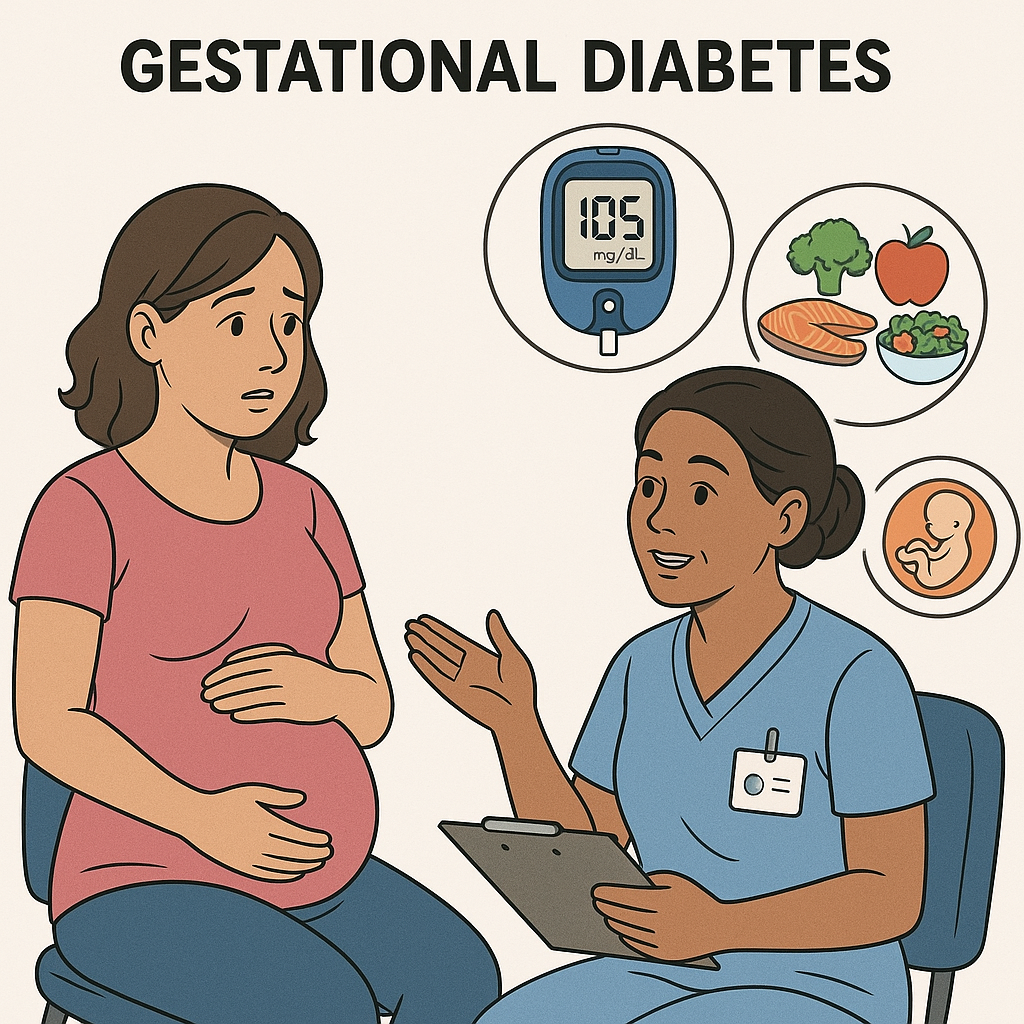
Gestational diabetes mellitus (GDM) is a condition that every nurse, RN, and nursing student must understand. It affects approximately 6–9% of pregnancies. Furthermore, it appears frequently on the NCLEX due to the risks it poses to both mother and baby. Including this topic in your nursing bundle ensures safer, more effective care.
🩺 What is Gestational Diabetes?
GDM occurs when a pregnant woman develops high blood glucose levels caused by insulin resistance during pregnancy. Unlike type 1 or type 2 diabetes, GDM usually resolves after delivery. However, it still presents risks if not managed properly.
Key points for NCLEX and nursing practice:
- Usually develops in the second or third trimester
- Increases risk of macrosomia (large baby)
- Raises chance of birth trauma
- Can cause neonatal hypoglycemia
- Increases maternal risk of developing type 2 diabetes later
🟡 Screening for Gestational Diabetes
Registered nurses should know when and how to screen for GDM.
- Initial screening: around 24–28 weeks gestation
- Two common methods:
- One-step (OGTT): 75g oral glucose tolerance test
- Two-step: 50g glucose challenge, then 100g OGTT if abnormal
NCLEX tip: Memorize normal glucose values to detect abnormalities quickly.
🩹 Nursing Management of GDM
Management aims to keep blood glucose within target ranges. This protects both mother and fetus. Nurses should:
- Encourage dietary changes such as carb control and frequent small meals
- Promote regular physical activity
- Monitor blood glucose frequently
- Teach self-monitoring using glucometers
- Administer insulin if diet and exercise are insufficient
- Schedule regular fetal monitoring (NST, biophysical profile)
In addition, nursing priorities include preventing complications like preeclampsia, macrosomia, and shoulder dystocia.
👩⚕️ Patient Teaching for Gestational Diabetes
Patient education is essential. Nurses should explain:
- Why blood sugar control matters
- How to check glucose
- Signs of hypo- or hyperglycemia
- Importance of healthy eating
- Benefits of exercise
- Need for postpartum glucose follow-up
Consequently, empowering the patient and family improves outcomes.
📝 NCLEX Reminders
- Screen all pregnant patients between 24–28 weeks
- Control glucose with diet and exercise first
- Recognize when insulin may be necessary
- Watch for complications such as preeclampsia and macrosomia
- Add GDM content to your nursing bundle for maternal health review
💡 Cheat Sheet for Nursing Students
- GDM = glucose intolerance in pregnancy
- Screen with OGTT at 24–28 weeks
- Monitor and educate patients consistently