Diabetes mellitus is one of the most common chronic conditions every nurse will encounter in practice. Whether you are preparing for the NCLEX, working as a registered nurse (RN nurse), or building your nursing bundle, understanding the difference between Type 1 and Type 2 diabetes is essential. This quick guide will help you compare, recognize, and confidently manage diabetes in clinical settings.
🩺 What is Diabetes?
Diabetes is a metabolic disorder characterized by high blood glucose levels due to defects in insulin production, insulin action, or both. This can cause serious complications if not managed properly.
Type 1 Diabetes: Key Points for Nurses
Type 1 diabetes is an autoimmune condition where the pancreas stops producing insulin completely. It usually begins in childhood or young adulthood.
Causes:
✅ Autoimmune destruction of beta cells
✅ Genetic predisposition
Signs & Symptoms:
- Sudden weight loss
- Polyuria (excessive urination)
- Polydipsia (excessive thirst)
- Polyphagia (increased hunger)
- Fatigue
- Risk of diabetic ketoacidosis (DKA)
Nursing Care Priorities for Type 1 Diabetes:
- Administer insulin (lifelong therapy)
- Monitor for hypoglycemia
- Educate about blood glucose monitoring
- Teach carb-counting for diet control
- Prepare to recognize and treat DKA
Type 2 Diabetes: Key Points for Nurses
Type 2 diabetes is caused by insulin resistance and eventual decreased insulin production. It is more common in adults and strongly linked to lifestyle factors.
Causes:
✅ Obesity
✅ Sedentary lifestyle
✅ Family history
✅ Metabolic syndrome
Signs & Symptoms:
- Often asymptomatic at first
- Fatigue
- Slow-healing wounds
- Blurred vision
- Recurrent infections
Nursing Care Priorities for Type 2 Diabetes:
- Encourage lifestyle changes (healthy diet, exercise)
- Teach about oral antidiabetic medications
- Monitor blood glucose regularly
- Educate about preventing long-term complications
- Recognize signs of hyperosmolar hyperglycemic state (HHS)
NCLEX Quick Facts: Diabetes
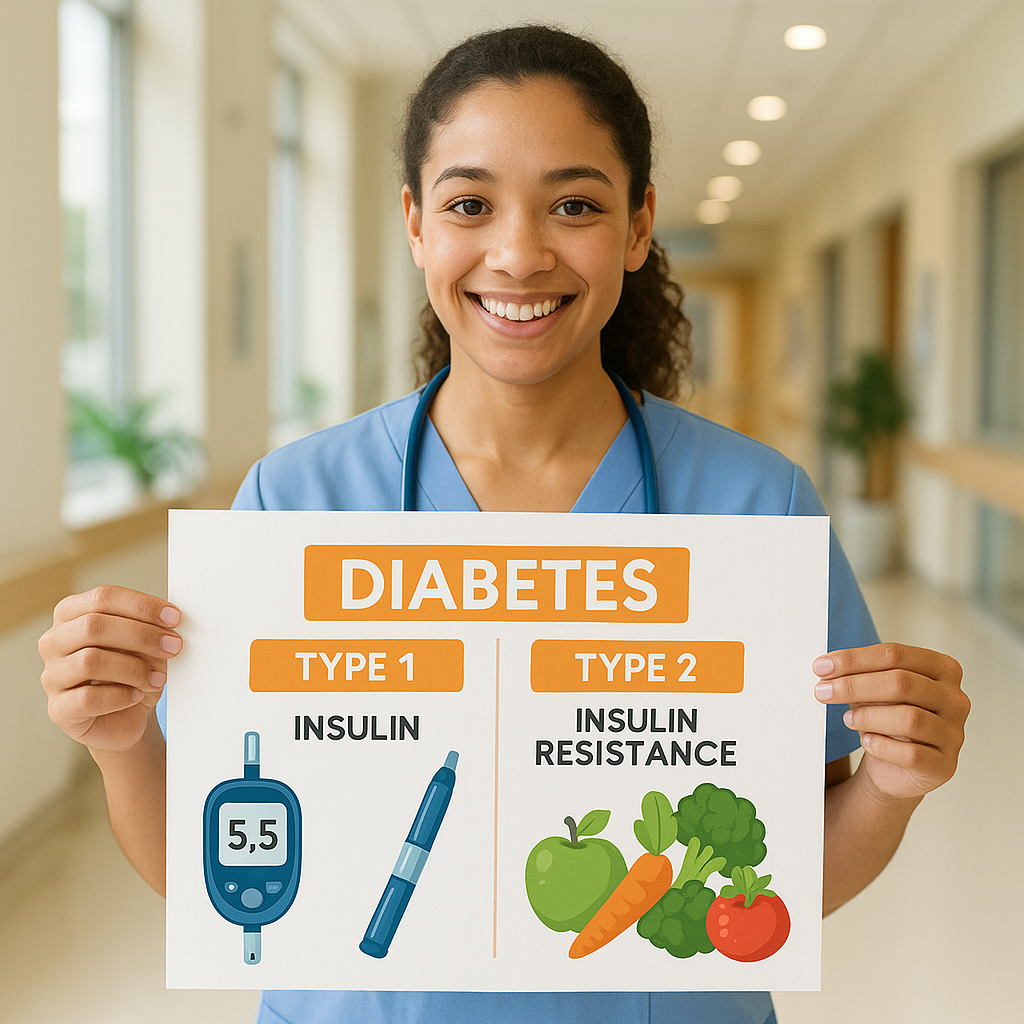
✅ Type 1 = autoimmune, no insulin, younger onset
✅ Type 2 = insulin resistance, adult onset, linked to obesity
✅ Always monitor for hypoglycemia with insulin or oral meds
✅ Check A1C levels regularly to measure long-term control
✅ Include sick-day management in patient teaching
These facts are high-yield for the NCLEX and should be included in every nursing bundle.
👩⚕️ Registered Nurse Nursing Actions
As an RN nurse, your role includes:
✅ Patient education about diet, glucose monitoring, and foot care
✅ Coordinating referrals with dietitians and diabetes educators
✅ Performing frequent assessments for complications
✅ Administering medications and monitoring their effects
✅ Supporting the patient emotionally and helping them manage lifestyle changes
🧩 Differences at a Glance
| Feature | Type 1 Diabetes | Type 2 Diabetes |
|---|---|---|
| Age of Onset | Usually childhood/teen | Usually adulthood |
| Insulin | Required for survival | May not require initially |
| Body Type | Often lean | Often overweight |
| Ketoacidosis Risk | High | Low (but risk of HHS) |
| Treatment | Insulin | Lifestyle + oral meds ± insulin |
📚 Patient Education Tips
✅ Inspect feet daily to prevent ulcers
✅ Learn to recognize hypoglycemia signs (sweating, confusion, tremors)
✅ Stay hydrated and stick to meal plans
✅ Never skip insulin doses (for Type 1)
✅ Have a sick-day protocol to prevent DKA or HHS
These teaching points will help you shine on the NCLEX and in real-world nursing practice.