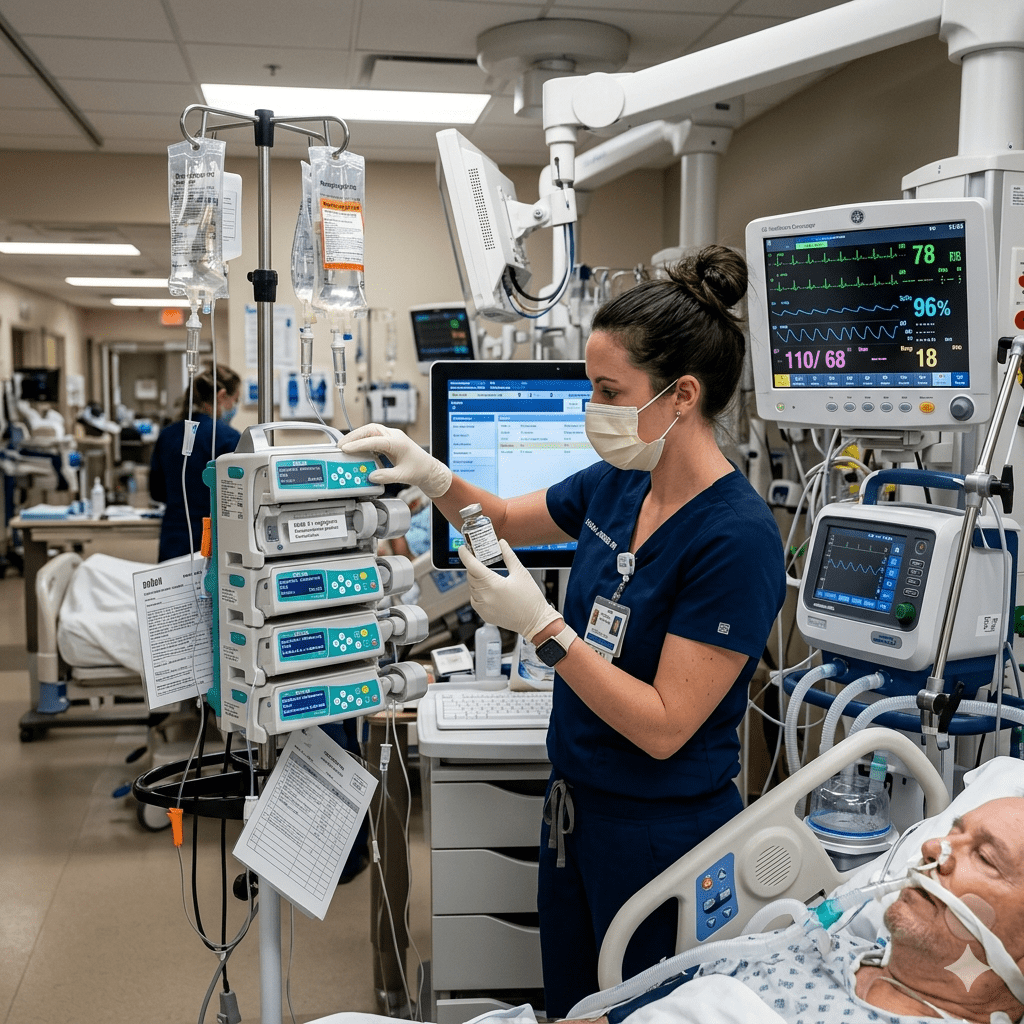
High-Alert Medication Double-Check Systems: A Nursing Safety Guide

High-Alert Medication

Medication safety is a critical part of patient care in hospitals and healthcare facilities. Some medications carry a higher risk of causing serious harm if used incorrectly. These medications are known as high-alert medications. Because of their potential risks, healthcare institutions often require special safety procedures such as double-check systems before administering them. For every … Read more


Drug-Induced QT Prolongation: A Nursing Guide

Drug-Induced QT Prolongation

Drug-induced QT prolongation is an important cardiovascular safety concern in modern healthcare. Certain medications can delay the heart’s electrical repolarization, which increases the QT interval on an electrocardiogram (ECG). When the QT interval becomes too long, patients may develop dangerous heart rhythm disturbances. For a registered nurse, recognizing medications that prolong the QT interval and … Read more

Beta-Blockers in Acute vs Chronic Settings: A Nursing Guide

Beta-Blockers in Acute vs Chronic

Beta-blockers are among the most commonly prescribed medications for cardiovascular conditions. These drugs are widely used to treat hypertension, heart failure, arrhythmias, and ischemic heart disease. However, the way beta-blockers are used in acute situations differs significantly from their use in chronic long-term treatment. For every registered nurse, understanding the differences between acute and chronic … Read more

Opioid-Induced Respiratory Depression Management: A Nursing Guide

opioid induced respiratory depression

Opioid medications are commonly used in hospitals to manage moderate to severe pain, especially after surgery, trauma, or during critical illness. While these medications are effective for pain control, they can also cause a dangerous complication known as opioid-induced respiratory depression. Respiratory depression occurs when opioids slow the brain’s respiratory center, causing breathing to become … Read more

Therapeutic Drug Monitoring in Critical Care: A Nursing Guide

Therapeutic Drug Monitoring

In intensive care units, patients often receive powerful medications that require careful monitoring to ensure safety and effectiveness. One of the most important strategies used in critical care is Therapeutic Drug Monitoring (TDM). This process helps healthcare professionals maintain drug levels within a safe and effective range. For a registered nurse working in the ICU, … Read more

Titration of Vasopressors and Sedatives: A Critical Care Nursing Guide

Titration of Vasopressors

In intensive care units, critically ill patients often require medications that must be carefully adjusted to maintain stable vital functions. Two important medication groups frequently used in ICU settings are vasopressors and sedatives. Because these drugs have powerful physiological effects, they must be titrated carefully based on patient response. For every registered nurse working in … Read more

Pharmacokinetics vs Pharmacodynamics in ICU Drugs: A Nursing Guide

Pharmacokinetics vs Pharmacodynamics

In critical care units, medications must work quickly, safely, and precisely. Understanding how drugs move through the body and how they affect the body is essential for every registered nurse working in intensive care. Two key concepts that guide safe medication administration are pharmacokinetics and pharmacodynamics. For nursing students preparing for the NCLEX and practicing … Read more

Handling and Disposal of Hazardous Drugs: A Nursing Guide

Handling and Disposal of Hazardous Drugs

Handling and disposing of hazardous drugs safely represents a critical responsibility in modern nursing practice. Every nurse, especially a registered nurse preparing for the NCLEX, must understand how these medications pose risks not only to patients but also to healthcare workers. Therefore, safe handling protects the RN nurse, the healthcare team, and the environment while … Read more

Time-Critical Medications Nurses Must Know

Time-Critical Medications

Time-critical medications play a vital role in patient safety and clinical outcomes. Nurses must administer these medications within a specific time frame to prevent serious complications, treatment failure, or even death. For every nurse, registered nurse, and RN nurse, understanding time-critical medications is essential for daily nursing practice and NCLEX success. The NCLEX frequently tests … Read more

Medication Teaching for Low-Literacy Patients

Medication Teaching

Medication teaching is a critical part of nursing care. However, many patients struggle to understand medication instructions because of low health literacy. For this reason, nurses and registered nurses must adapt their teaching strategies to ensure safety, understanding, and adherence. For nursing students and RN nurses preparing for the NCLEX, learning how to teach medications … Read more