Pediatric Respiratory Distress Assessment: A Nursing Guide for NCLEX and Clinical Practice

pediatric respiratory distress assessment

Respiratory distress is one of the most urgent and high-stakes presentations a nurse will encounter in pediatric care. Unlike adults, children have unique anatomical and physiological features that make them especially vulnerable to rapid deterioration — a child who appears mildly distressed can decompensate within minutes. For the registered nurse, early recognition through systematic pediatric … Read more

Congenital Heart Disease Shunt Physiology: A Nursing Guide to Left-to-Right vs Right-to-Left Defects

congenital heart disease shunt physiology

Congenital heart defects affect approximately 1 in 100 live births, making them the most common congenital anomalies seen in pediatric nursing practice. For the registered nurse caring for these patients — or the nursing student preparing for the NCLEX — understanding shunt physiology is foundational. A shunt is an abnormal communication between the left and … Read more

Pediatric Early Warning Score (PEWS): A Nursing Guide for NCLEX and Clinical Practice

Pediatric Early Warning Score nursing

Recognizing clinical deterioration in a pediatric patient before it becomes a crisis is one of the most critical skills a registered nurse can develop. Children compensate remarkably well. Then they decompensate fast. The Pediatric Early Warning Score (PEWS) is a structured, evidence-based tool. It helps nurses identify early signs of deterioration and escalate care before … Read more

Meningitis in Children: Early Warning Signs Every Nurse Should Know

Meningitis in Children

Meningitis is a serious and potentially life-threatening infection that affects the protective membranes surrounding the brain and spinal cord. Because the condition can progress rapidly in pediatric patients, early recognition is critical. Therefore, every nurse and registered nurse (RN nurse) must understand the warning signs of meningitis in children. For students preparing for the NCLEX, … Read more

Pediatric Fluid Calculation Formulas Explained for Nurses

Pediatric Fluid Calculation Formulas

Fluid management is one of the most essential skills every nurse must master when caring for children. Because pediatric patients have a higher percentage of body water, they are especially vulnerable to fluid imbalances. Therefore, even small fluid losses can quickly lead to dehydration if not addressed properly. For this reason, accurate fluid calculations remain … Read more

Intussusception Recognition and Emergency Care

Intussusception Nursing Care

Intussusception is a serious pediatric emergency that occurs when one segment of the intestine slides into another segment, much like a telescope collapsing into itself. As a result, the intestine becomes obstructed, blood flow can be compromised, and tissue damage may occur if treatment is delayed. Because the condition can progress quickly, early recognition by … Read more

Pediatric Diabetic Ketoacidosis (DKA) Management

Pediatric DKA Management

Pediatric Diabetic Ketoacidosis (DKA) is a serious and potentially life-threatening complication of diabetes in children. It occurs when the body lacks enough insulin to use glucose for energy, forcing it to break down fat instead. This process produces ketones, which accumulate in the blood and lead to metabolic acidosis. For every registered nurse, recognizing and … Read more

Neonatal Abstinence Syndrome (NAS)

Neonatal Abstinence Syndrome

Neonatal Abstinence Syndrome (NAS) is a group of withdrawal symptoms that occur in newborns who were exposed to certain substances, especially opioids, during pregnancy. After birth, the baby no longer receives the substance through the placenta, which leads to withdrawal symptoms. For a registered nurse, understanding NAS is essential because these infants often require close … Read more

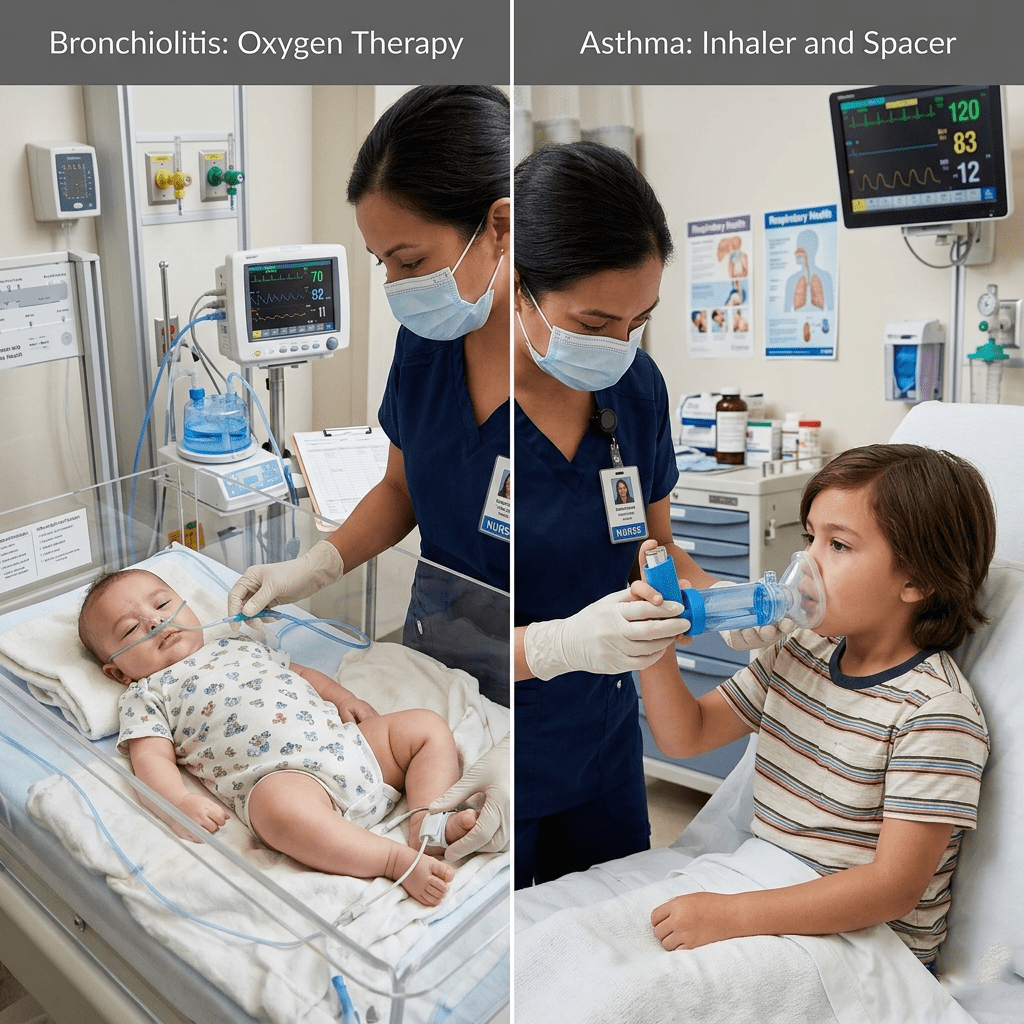
Bronchiolitis vs Asthma: Clinical Differentiation

Bronchiolitis vs Asthma

Respiratory illnesses are among the most common conditions affecting pediatric patients. Two conditions that often cause confusion are bronchiolitis and asthma, because both can produce symptoms such as wheezing, coughing, and difficulty breathing. However, these diseases have different causes, treatments, and clinical management strategies. For a registered nurse, understanding the differences between bronchiolitis and asthma … Read more

Pediatric Sepsis Protocols: A Nursing Guide

Pediatric Sepsis Protocols

Pediatric sepsis is a life-threatening medical emergency that occurs when the body has an overwhelming response to infection. In children, sepsis can progress rapidly and lead to severe complications such as septic shock, organ failure, or death if not treated quickly. For a registered nurse, recognizing pediatric sepsis early and initiating proper treatment protocols is … Read more