Electrical Alternans and Cardiac Tamponade Clues: NCLEX Guide for Nurses

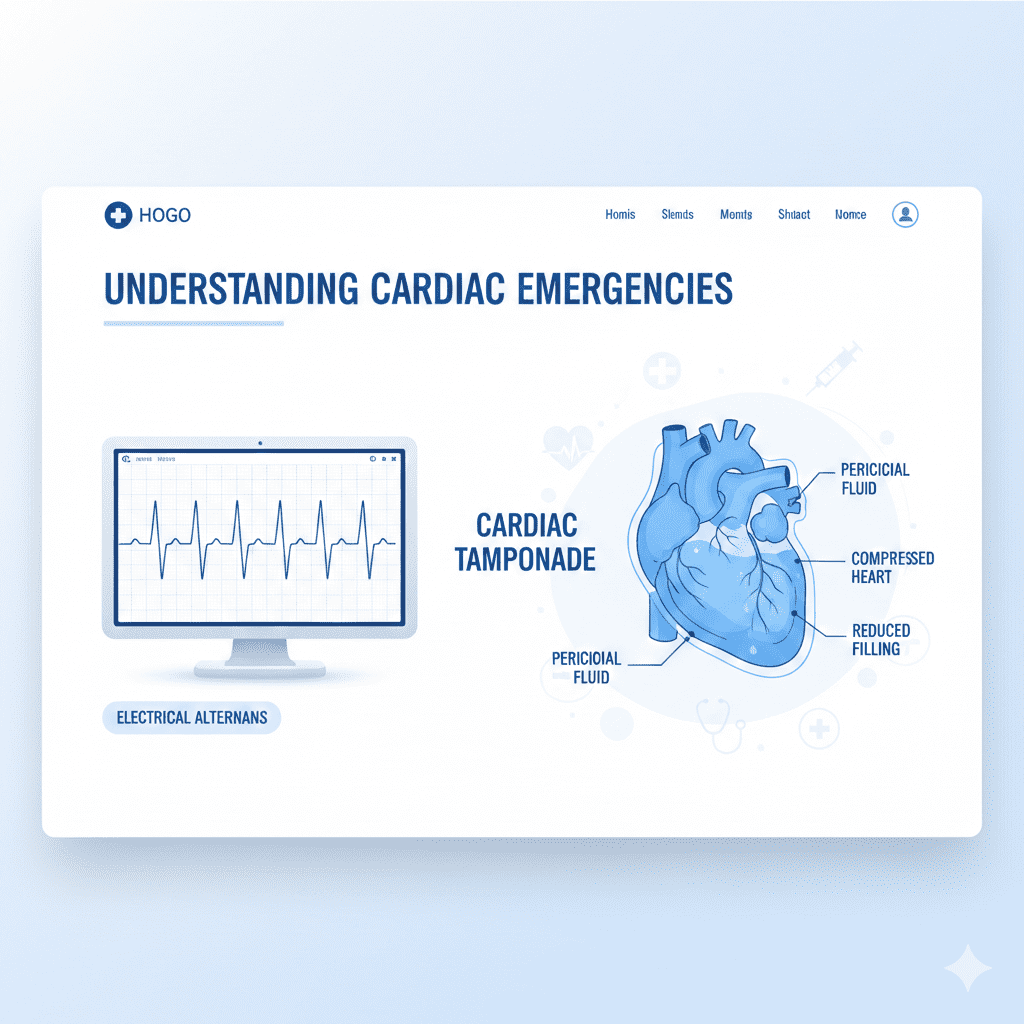
Electrical Alternans & Cardiac Tamponade

Electrical alternans is a classic ECG finding that every nurse must recognize. It is strongly associated with cardiac tamponade, a life-threatening emergency frequently tested on the NCLEX. Electrical alternans plus hypotension and jugular venous distention should immediately make a nurse suspect cardiac tamponade. Whether you are a nursing student, a new registered nurse, or reviewing … Read more

Hyperkalemia vs MI ECG Differences: NCLEX Guide for Nurses

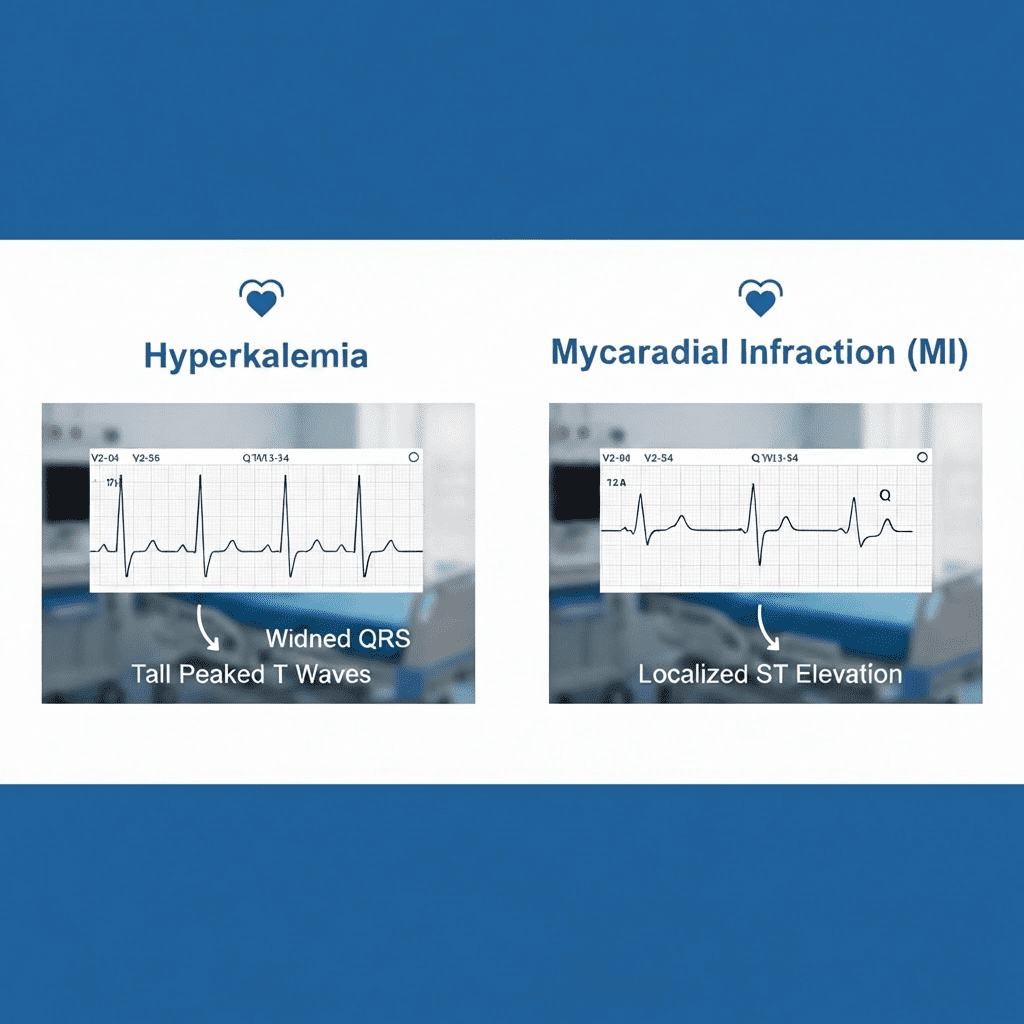
Hyperkalemia vs MI ECG Differences

Understanding hyperkalemia vs MI ECG differences is critical for every nurse, especially when preparing for the NCLEX. These two life-threatening conditions can produce similar ECG findings — but the treatments are completely different. Differentiating hyperkalemia from myocardial infarction (MI) on ECG can prevent fatal treatment errors and save a patient’s life. Whether you’re a nursing … Read more

Pacemaker Malfunction Recognition on ECG

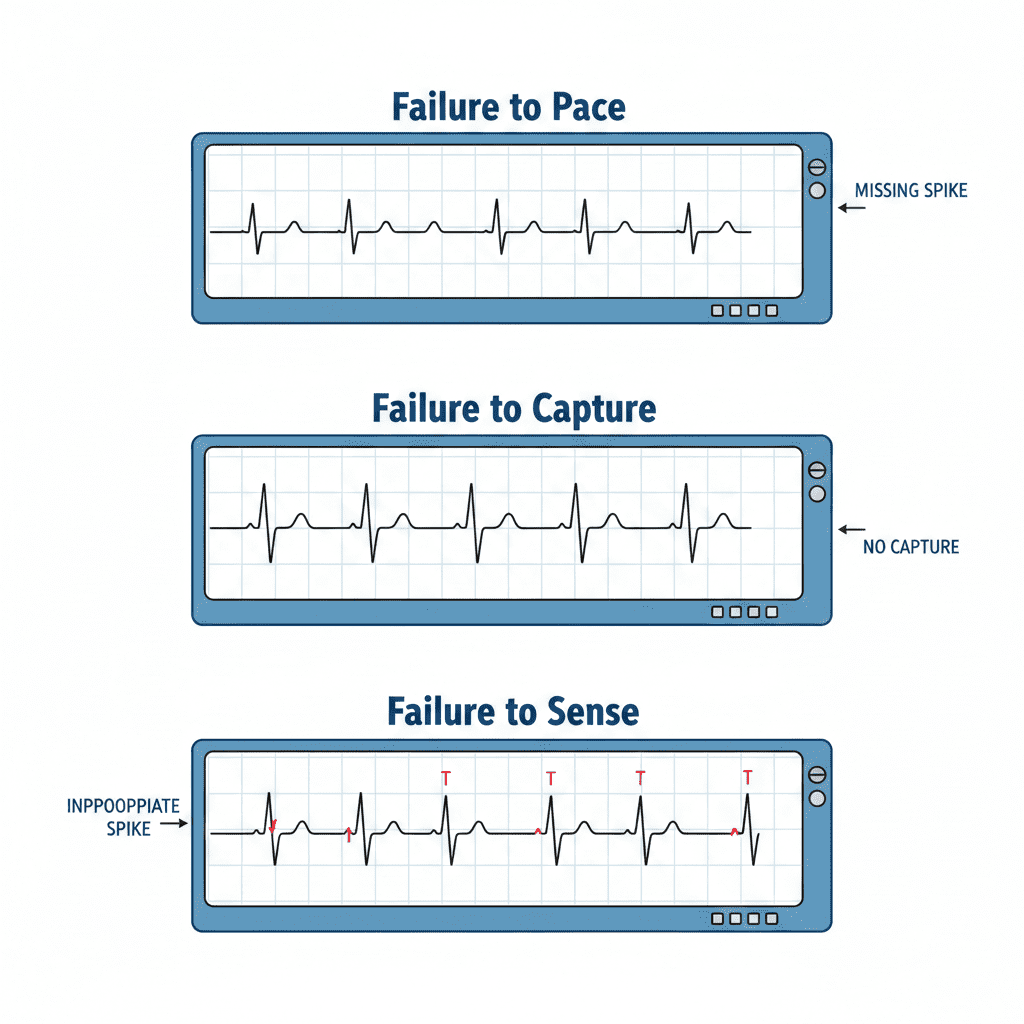
Pacemaker Malfunction on ECG

A High-Yield NCLEX Guide for the Nurse, Registered Nurse, and RN Nurse Pacemaker malfunction is identified on ECG by failure to pace, failure to capture, or failure to sense — and rapid recognition by the nurse can prevent hemodynamic collapse. For every nurse, registered nurse, and RN nurse, recognizing pacemaker malfunction on ECG is a … Read more

Atrial Flutter vs Atrial Fibrillation: Subtle Differences

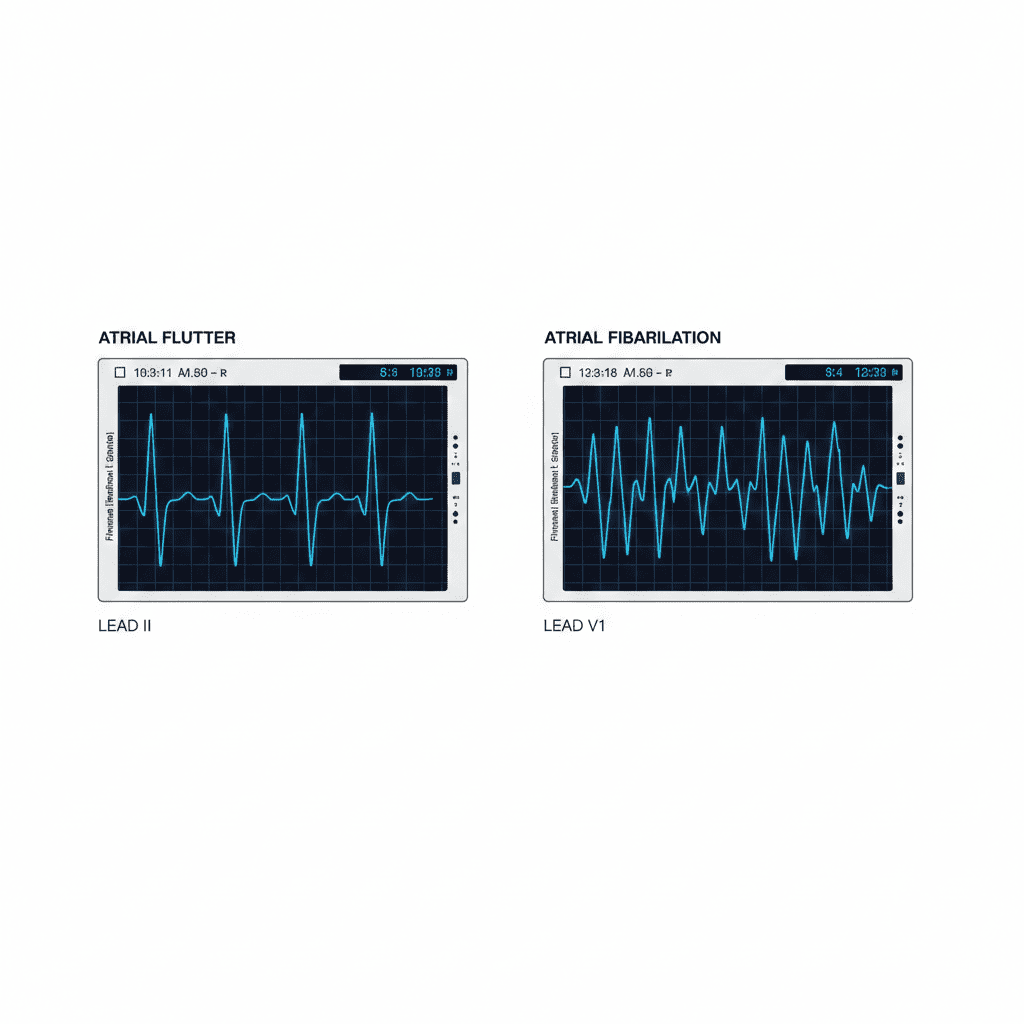
Atrial Flutter vs Atrial Fibrillation

A High-Yield NCLEX Guide for the Nurse, Registered Nurse, and RN Nurse Atrial flutter is regular and sawtooth-shaped, while atrial fibrillation is irregularly irregular with no visible P waves. For every nurse, registered nurse, and RN nurse, distinguishing atrial flutter (AFL) from atrial fibrillation (AFib) is a critical ECG interpretation skill. Both are supraventricular arrhythmias, … Read more

Long QT Syndrome and Torsades de Pointes

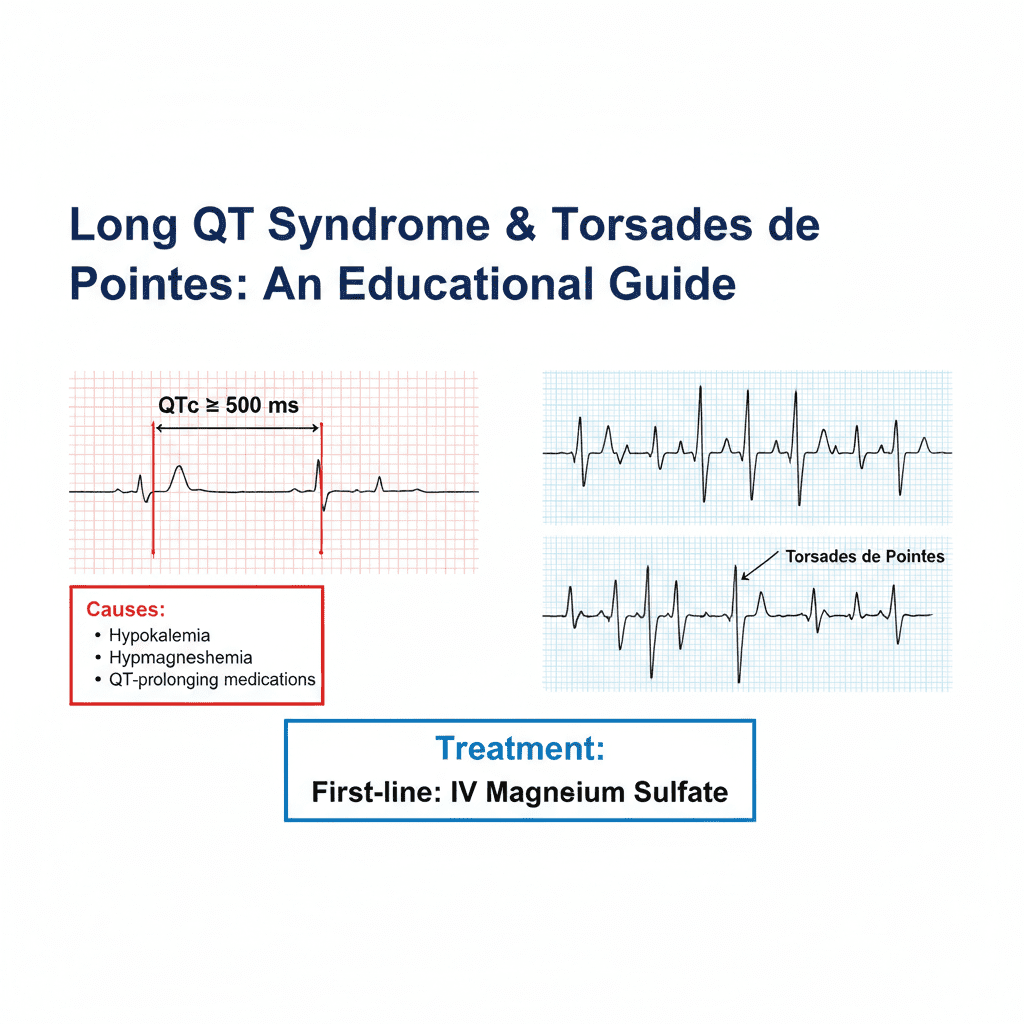
Long QT Syndrome and Torsades de Pointes

A High-Yield NCLEX Guide for the Nurse, Registered Nurse, and RN Nurse Long QT Syndrome prolongs ventricular repolarization, increasing the risk for Torsades de Pointes—a life-threatening polymorphic ventricular tachycardia. For every nurse, registered nurse, and RN nurse, recognizing prolonged QT intervals and the dangerous rhythm Torsades de Pointes (TdP) is critical in emergency, telemetry, and … Read more

Brugada Syndrome ECG Pattern Explained

Brugada Syndrome ECG

A High-Yield NCLEX Guide for the Nurse, Registered Nurse, and RN Nurse Brugada syndrome is identified on ECG by ST elevation in V1–V3 with a characteristic “coved” or “saddleback” pattern and a high risk for sudden ventricular arrhythmias. For every nurse, registered nurse, and RN nurse, recognizing dangerous ECG patterns is critical. Brugada syndrome is … Read more

Recognizing STEMI Locations Using 12-Lead ECG

Recognizing STEMI Locations

A Practical NCLEX Guide for the Nurse, Registered Nurse, and RN Nurse STEMI location is determined by identifying ST elevation in specific contiguous ECG leads—each lead group corresponds to a different wall of the heart. For every nurse, registered nurse, and RN nurse, recognizing ST-elevation myocardial infarction (STEMI) patterns on a 12-lead ECG is a … Read more

Differentiating SVT Types Using P Wave Morphology

Differentiating SVT Types

A Clinical ECG Guide for the Nurse, Registered Nurse, and RN Nurse Preparing for NCLEX P wave morphology is the key to distinguishing types of SVT—especially when the rhythm is narrow-complex and fast. Supraventricular tachycardia (SVT) is a broad term that describes tachycardias originating above the ventricles. For the nurse, registered nurse, and RN nurse, … Read more

Axis Deviation: How to Determine and What It Means Clinically

Axis Deviation

A Practical NCLEX Guide for the Nurse, Registered Nurse, and RN Nurse Axis deviation is determined by evaluating QRS direction in leads I and aVF—and it can quickly signal ventricular hypertrophy, conduction blocks, or pulmonary disease. For every nurse, registered nurse, and RN nurse, understanding ECG axis deviation is a core cardiac interpretation skill. Whether … Read more

Night-Shift Telemetry: Common Rhythm Changes

Night-Shift Telemetry Rhythm Changes

Night shifts bring unique challenges for every nurse, especially when monitoring cardiac telemetry. During nighttime hours, physiological changes, medications, sleep patterns, and reduced activity levels can all influence heart rhythms. For the registered nurse and RN nurse, recognizing these rhythm changes is essential for patient safety and NCLEX success. This guide explains the most common … Read more