Lactic Acidosis and Lactate Monitoring in Critical Care
Lactic acidosis is a serious complication in critically ill patients. Learn how to identify it, monitor lactate, and respond quickly to improve outcomes.
Explore advanced critical care topics like shock, sepsis, and emergency protocols. Great for ICU prep and nursing student success.
Lactic acidosis is a serious complication in critically ill patients. Learn how to identify it, monitor lactate, and respond quickly to improve outcomes.
The first two minutes of a Code Blue can mean the difference between life and death. Here’s what every nurse should do immediately during a cardiac arrest.
Discover how nurses play a vital role in managing ARDS in the ICU. Learn key interventions, ventilator tips, and how to support patients and families.
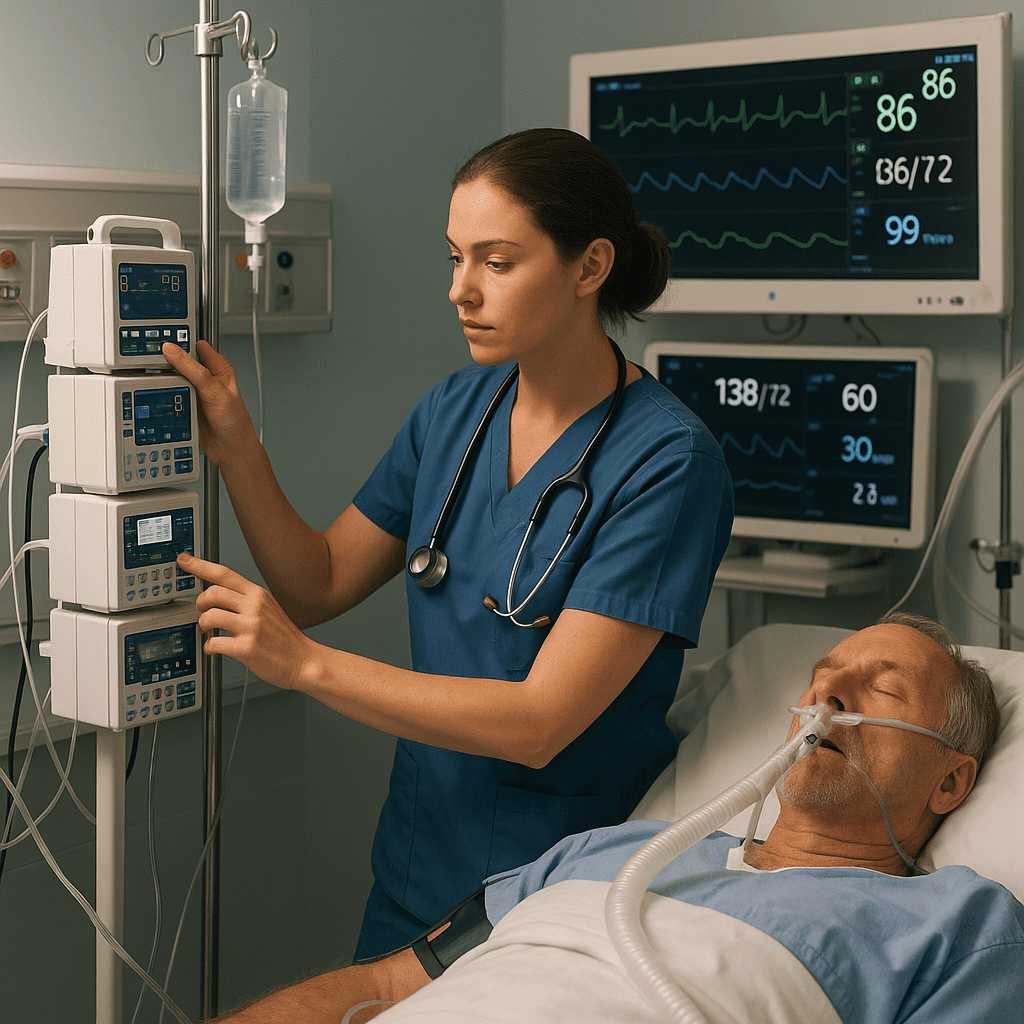
Master the basics of vasoactive drips, including how to titrate pressors like norepinephrine and epinephrine. Essential guide for ICU and emergency nurses.
Understanding the crash cart is essential for quick, confident response in emergencies. Discover what it contains and how to use it like a pro.
Understanding the types of shock is vital for nurses and healthcare providers. Learn how to recognize symptoms quickly and apply the right interventions.
Sepsis remains one of the most critical challenges in intensive care. In 2025, updated protocols demand that nurses stay informed, responsive, and well-prepared to act fast. Here’s what every nurse should know.
Explore the impact of active listening in healthcare. Learn how nurses can use this powerful skill to improve communication, trust, and patient outcomes.
Critical care nursing is a highly specialized field that involves providing life-saving support to critically ill patients. Nurses working in critical care settings must possess advanced clinical skills, quick decision-making abilities, and the capacity to work efficiently in high-pressure environments. In this article, we will cover the key aspects of critical care nursing, including essential … Read more