
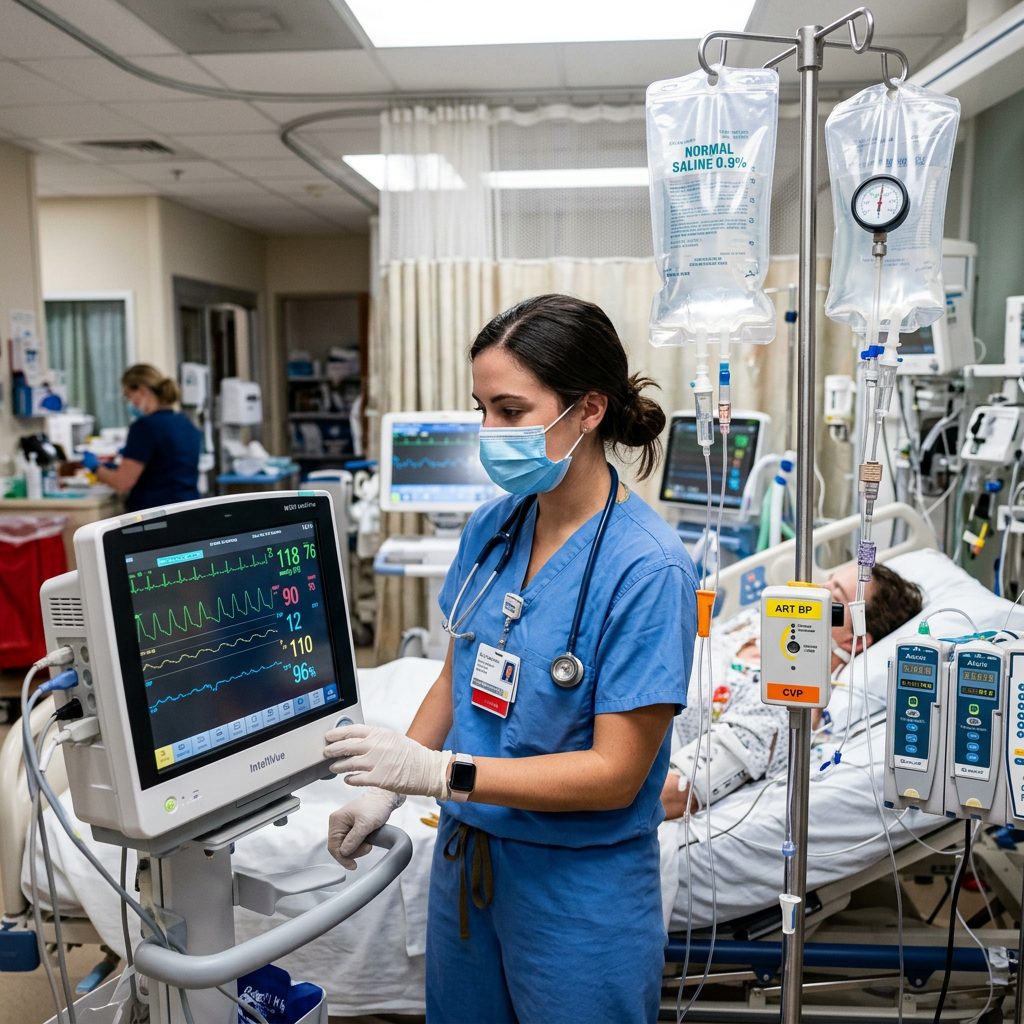
A patient in the cardiac ICU suddenly becomes restless, their blood pressure drops, and their heart sounds grow faint. Within minutes, this can progress from a subtle warning sign to full cardiovascular collapse. Cardiac tamponade is one of the few true cardiac emergencies where early recognition by a registered nurse can be the difference between a controlled pericardiocentesis and a code blue. For NCLEX preparation and real-world nursing practice, understanding this condition is non-negotiable — it appears repeatedly on exams and in critical care units alike. Every nurse working in critical care, emergency, or post-cardiac-surgery settings needs a working knowledge of cardiac tamponade nursing interventions to protect patients before decompensation occurs.
Understanding the Pathophysiology
Cardiac tamponade occurs when fluid, blood, or clots accumulate in the pericardial sac, compressing the heart and preventing adequate ventricular filling. As pressure builds around the heart, stroke volume and cardiac output fall sharply. The body initially compensates through tachycardia and vasoconstriction, but this compensation fails quickly once pericardial pressure exceeds the heart’s ability to fill.
Key contributing mechanisms include:
- Reduced diastolic filling due to external compression
- Equalization of pressures across all four heart chambers
- Progressive drop in cardiac output despite tachycardia
- Rapid decompensation once compensatory mechanisms are exhausted
Because the pericardium is a relatively rigid, fibrous sac, even a small amount of rapidly accumulating fluid — as little as 100–200 mL — can cause tamponade if it develops quickly, whereas chronic, slow accumulation may allow for much larger volumes before symptoms appear.
Common Causes Every Nurse Should Know
Recognizing at-risk patients is central to prevention-focused nursing care. Common causes include:
- Penetrating or blunt chest trauma
- Cardiac surgery or invasive cardiac procedures
- Malignancy with pericardial metastasis
- Pericarditis from infection or autoimmune disease
- Aortic dissection
- Anticoagulant therapy in a patient with pericardial effusion
Post-cardiac-surgery patients deserve particular vigilance in the first 24–48 hours, as mediastinal chest tube output that suddenly decreases while the patient’s hemodynamics worsen may signal tamponade from clot obstruction rather than resolving bleeding.
Beck’s Triad and Priority Assessment Findings
The classic presentation, known as Beck’s triad, includes three components that every RN nurse should memorize for both clinical practice and the NCLEX:
- Hypotension
- Jugular venous distention (JVD)
- Muffled heart sounds
Additional findings that strengthen suspicion include pulsus paradoxus (a drop in systolic blood pressure greater than 10 mmHg during inspiration), narrowing pulse pressure, tachycardia, and electrical alternans on the ECG — a beat-to-beat alternation in QRS amplitude caused by the heart swinging within the fluid-filled pericardium.
Nurses should trend hemodynamic data continuously rather than relying on a single reading. A narrowing pulse pressure combined with rising central venous pressure is often an earlier and more reliable warning sign than Beck’s triad, which may not present in its classic full form until late in the process.
Priority Nursing Interventions
Once tamponade is suspected, rapid, coordinated action is essential. Priority cardiac tamponade nursing interventions include:
- Notifying the provider immediately and preparing for emergent pericardiocentesis or surgical drainage
- Continuous cardiac monitoring and frequent vital sign assessment
- Establishing or confirming two large-bore IV access sites for fluid resuscitation
- Administering IV fluids cautiously as ordered to temporarily support preload while awaiting drainage
- Positioning the patient to optimize venous return, often semi-Fowler’s
- Preparing pericardiocentesis equipment and assisting the provider during the procedure
- Continuously monitoring for post-procedure complications such as recurrent effusion, dysrhythmia, or myocardial puncture
A structured nursing bundle for suspected tamponade — combining hemodynamic monitoring, rapid provider notification, and pericardiocentesis readiness — helps ensure no critical step is missed under pressure. Many critical care units build this bundle directly into their post-cardiac-surgery order sets.
Nursing Considerations During Pericardiocentesis
During the procedure itself, the nurse plays a central monitoring and safety role. Continuous ECG monitoring is essential, since needle advancement too far can cause ventricular puncture or dysrhythmia. The nurse should have emergency resuscitation equipment readily available, document fluid characteristics and volume withdrawn, and reassess hemodynamics immediately after drainage — patients often show rapid improvement in blood pressure and heart sounds once pericardial pressure is relieved.
💡 NCLEX Tips for Cardiac Tamponade
- Remember Beck’s triad: hypotension, JVD, muffled heart sounds
- Pulsus paradoxus greater than 10 mmHg is a key finding to prioritize
- Sudden decrease in chest tube drainage after cardiac surgery + hemodynamic instability = suspect tamponade
- Pericardiocentesis is the definitive emergency treatment
- Continuous ECG monitoring during pericardiocentesis is a priority safety action
Quick Reference: Cardiac Tamponade Findings
| Assessment Finding | Description |
|---|---|
| Blood pressure | Hypotension, narrowing pulse pressure |
| Heart sounds | Muffled or distant |
| Neck veins | Jugular venous distention |
| Pulse | Pulsus paradoxus (>10 mmHg drop on inspiration) |
| ECG | Electrical alternans, tachycardia |
| Chest tube output (post-op) | Sudden decrease with worsening hemodynamics |
Conclusion
Cardiac tamponade demands rapid recognition and decisive action from every nurse at the bedside. Mastering Beck’s triad, pulsus paradoxus, and the priority interventions surrounding pericardiocentesis prepares both students and practicing RN nurses to intervene before cardiac arrest occurs. This topic frequently appears on the NCLEX, so reinforcing it with practice questions and a dedicated nursing bundle for critical care emergencies builds lasting clinical confidence. Strengthen your readiness further by testing your knowledge with practice questions at the NCLEX QCM hub or deepening your critical care skills through the nursing courses available on RN-Nurse.com.