
Introduction
C. diff is one of those infections nurses learn about early and then keep relearning the details of, because the precautions genuinely differ from other contact-precaution organisms in one crucial way: alcohol hand sanitizer doesn’t work against it. Since antibiotic use is the single biggest driver of C. diff infection, and hospitalized patients are almost constantly exposed to antibiotics, this stays a persistent infection-control priority. This guide covers what actually protects patients and staff, and the exam-ready details this topic reliably tests.
Table of Contents
- What Is C. difficile?
- Risk Factors
- Signs and Symptoms
- Diagnostic Testing
- Contact Precautions: What’s Different About C. diff
- Environmental Cleaning
- Treatment
- Nursing Interventions and Skin Care
- Duration of Precautions
- Complications
- NCLEX Tips and Memory Tricks
- Clinical Pearls
- Key Takeaways
- FAQs
- References
What Is C. difficile?
Clostridioides difficile (C. diff) is a spore-forming, gram-positive anaerobic bacterium that produces two exotoxins, toxin A and toxin B, which damage the lining of the colon and cause inflammation. It’s a common cause of antibiotic-associated diarrhea, accounting for roughly 15 to 25% of all such cases, and it can range from mild diarrhea to life-threatening colitis.
Risk Factors
- Antibiotic exposure, particularly fluoroquinolones, third- or fourth-generation cephalosporins, clindamycin, and carbapenems
- Previous history of C. diff infection
- Older age (65 and older)
- Recent healthcare setting stay, such as a hospital or nursing home, within the past several months
- Serious underlying illness or immunocompromising conditions
Signs and Symptoms
- Watery diarrhea, often frequent, is the hallmark presenting sign
- Abdominal pain and cramping
- Fever
- Loss of appetite
- Nausea
- In severe cases: signs of colitis, dehydration, or systemic illness
Diagnostic Testing
Because both overtesting and undertesting create real problems, current guidance favors targeted testing of patients with clear symptoms consistent with C. diff infection, rather than universal testing of anyone with GI symptoms. This distinction matters clinically too: patients with discordant results (PCR-positive but toxin-negative) may represent colonization rather than active infection, which requires clinical judgment when deciding whether to continue precautions and treatment.
Contact Precautions: What’s Different About C. diff
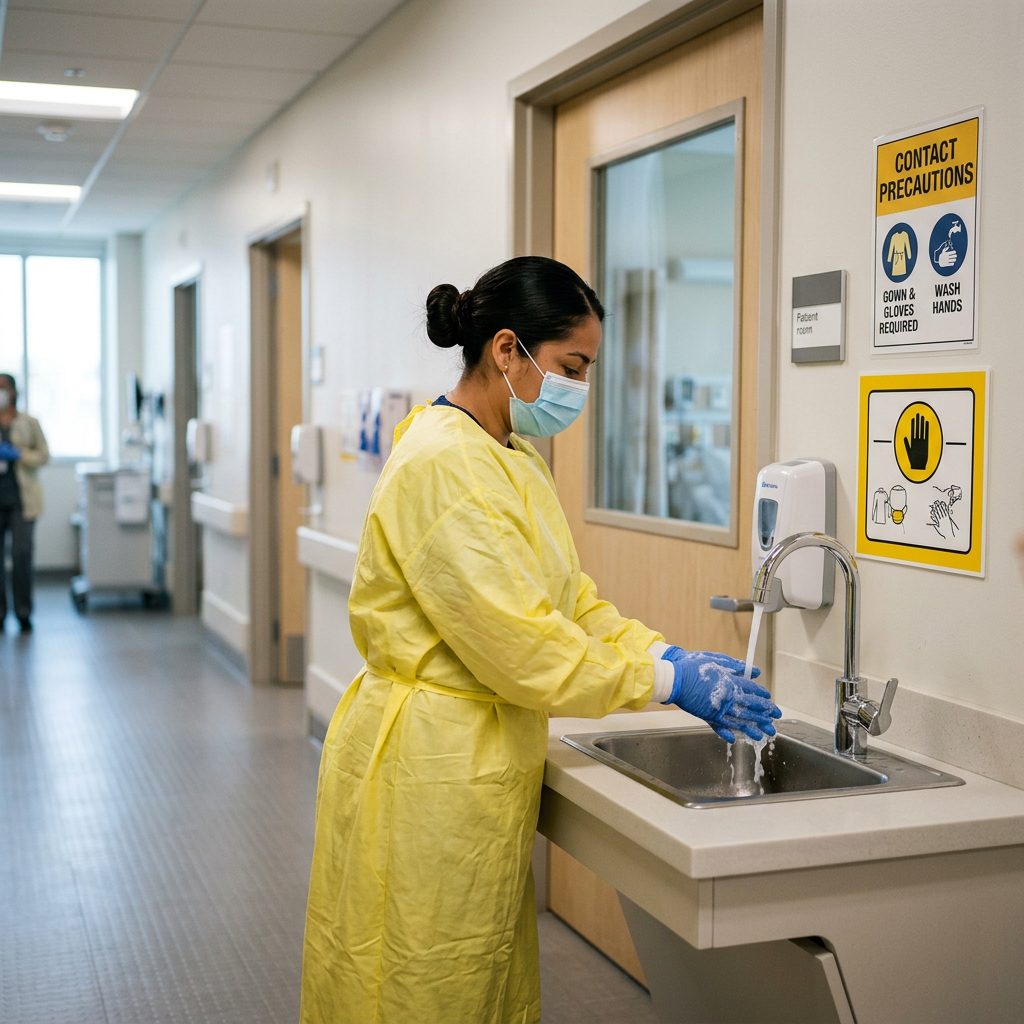
This is the detail that trips up even experienced nurses: hand sanitizer does not kill C. diff spores. Because of this, nursing precautions for C. diff differ meaningfully from standard contact precautions:
- Wash hands with soap and water, not alcohol-based sanitizer, before and after every patient contact
- Wear a gown and gloves for all patient contact, even brief visits, since gloves matter precisely because hand sanitizer alone isn’t sufficient
- Use a private room whenever possible; cohort patients by CDI status if private rooms aren’t available
- Dedicate equipment to the patient’s room when possible, since C. diff contaminates multiple body sites and nearby surfaces (bed rails, tables, phones, call buttons)
Environmental Cleaning
- Use EPA-registered disinfectants specifically effective against C. diff spores (List K) for room cleaning, since standard disinfectants aren’t always sufficient
- Clean and disinfect high-touch surfaces frequently
- Ensure terminal cleaning after discharge follows the same spore-specific disinfectant protocol
- Reinforce to visitors and ancillary staff why standard hand sanitizer at the doorway isn’t enough for this particular organism
Treatment
- Discontinue the causative antibiotic when clinically appropriate, since ongoing exposure to the triggering antibiotic can perpetuate the infection
- Start a C. diff-specific antibiotic per current guidelines
- Support hydration and nutrition, since significant fluid losses from diarrhea are common
- Surgery may be required in severe cases involving significant colonic damage
- Fecal microbiota transplant is an option for recurrent, refractory cases per current specialist guidance
Nursing Interventions and Skin Care
- Monitor stool frequency, consistency, and volume closely, and track hydration status
- Encourage oral fluid intake or manage IV fluids as ordered to prevent dehydration
- Administer prescribed antibiotics and monitor for treatment response
- Provide meticulous perineal skin care, since frequent watery diarrhea irritates the skin and can cause breakdown or pressure injury — keep the area clean, dry, and soothed, and apply barrier creams for incontinent patients
- Educate the patient and family on hand hygiene technique, emphasizing soap and water specifically
- Reinforce precautions with anyone entering the room, including reminding visitors and staff to clean hands if you don’t observe them doing so
Duration of Precautions
Guidance on duration varies somewhat by local incidence rates. At minimum, isolation is generally recommended for at least 48 hours after symptom resolution, and in high-incidence settings, precautions may be extended through discharge. Following your specific facility protocol for discontinuation criteria matters, since this is an area where practice genuinely varies.
Complications
- Severe dehydration and electrolyte imbalance
- Fulminant colitis
- Toxic megacolon
- Bowel perforation
- Sepsis
- Recurrent infection, which occurs in a meaningful proportion of patients after initial treatment
NCLEX Tips and Memory Tricks
- Hand sanitizer does NOT kill C. diff spores — one of the most consistently tested infection-control facts, and a genuine practice-changer compared to other contact precaution organisms.
- Remember: soap and water, gown, and gloves for every C. diff patient contact, even a quick check-in.
- If a question describes recent antibiotic use (especially fluoroquinolones, clindamycin, or cephalosporins) followed by watery diarrhea, think C. diff first.
- Mnemonic — “DIFF”: Dedicated equipment and private room, Isolate with contact precautions, Frequent soap-and-water hand hygiene, Fluids and skin care for the patient.
Clinical Pearls
- Discordant testing (PCR-positive, toxin-negative) can represent colonization rather than active infection — this genuinely matters for deciding whether ongoing precautions and treatment are appropriate, and it’s a growing focus of diagnostic stewardship efforts.
- Perineal skin breakdown from frequent diarrhea is a real, preventable complication — proactive barrier cream use matters as much as the infection control side of care.
- Because C. diff contaminates so many nearby surfaces, dedicating equipment to the room (rather than sharing items like blood pressure cuffs) meaningfully reduces transmission risk.
Key Takeaways
- C. diff is a spore-forming bacterium and a leading cause of antibiotic-associated diarrhea, most strongly linked to fluoroquinolones, cephalosporins, clindamycin, and carbapenems.
- Alcohol-based hand sanitizer does not kill C. diff spores — soap and water hand hygiene is essential.
- Contact precautions (private room, gown, gloves) continue for at least 48 hours after symptom resolution, longer in high-incidence settings.
- Meticulous perineal skin care and hydration support are core nursing interventions alongside infection control.
FAQs
Why doesn’t hand sanitizer work on C. diff?
C. diff forms spores that are resistant to alcohol-based hand sanitizer; only mechanical removal through soap-and-water handwashing effectively removes them.
How long do C. diff contact precautions need to stay in place?
At minimum, 48 hours after symptom resolution, though precautions may extend through discharge in high-incidence settings depending on facility protocol.
What are the signs and symptoms of C. diff infection?
Watery diarrhea, abdominal pain and cramping, fever, loss of appetite, and nausea; severe cases can involve colitis and systemic illness.
What antibiotics commonly cause C. diff infection?
Fluoroquinolones, third- or fourth-generation cephalosporins, clindamycin, and carbapenems carry the strongest associations.
How is C. diff infection treated?
Discontinuing the causative antibiotic when possible, starting a C. diff-specific antibiotic, and supporting hydration; severe or recurrent cases may require additional interventions like fecal microbiota transplant or surgery.
References
- CDC — C. diff: Facts for Clinicians (2026)
- CDC — C. diff Infection Prevention for Healthcare Professionals (2026)
- CDC — Preventing C. diff
- PMC — Hospital Infection Control: Clostridioides difficile
- NursingCE Central — A Nurse’s Guide to C Diff Management
RELATED ARTICLES:
- https://rn-nurse.com/proper-hand-hygiene-prevent-infections/
- https://rn-nurse.com/infection-control-standard-vs-transmission-based-precautions-nclex-nursing-guide/
- https://rn-nurse.com/standard-vs-transmission-based-precautions/
- https://rn-nurse.com/central-line-care/
- https://rn-nurse.com/high-alert-medications-nurses/
- https://rn-nurse.com/lab-value-cheats/
- https://rn-nurse.com/sepsis-management/