Recognizing STEMI Locations Using 12-Lead ECG
Recognizing STEMI Locations

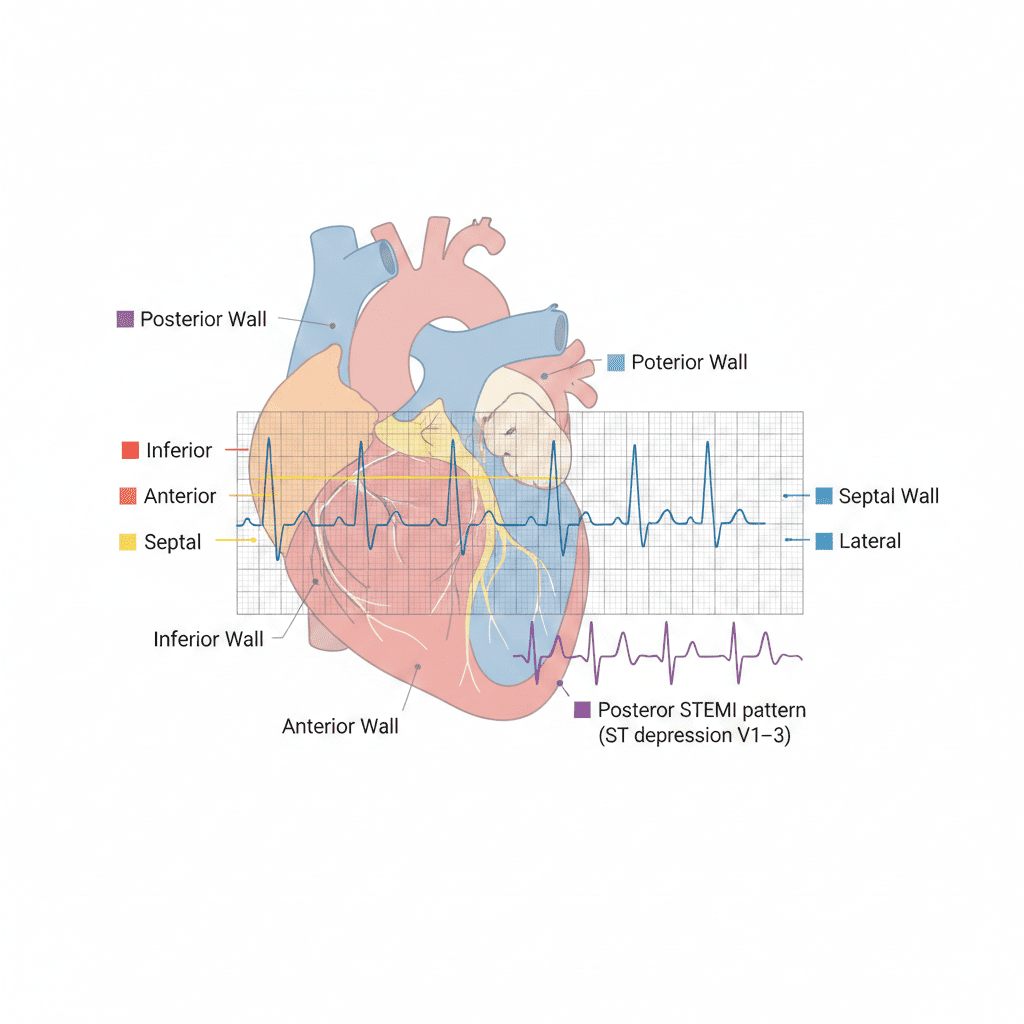
A Practical NCLEX Guide for the Nurse, Registered Nurse, and RN Nurse STEMI location is determined by identifying ST elevation in specific contiguous ECG leads—each lead group corresponds to a different wall of the heart. For every nurse, registered nurse, and RN nurse, recognizing ST-elevation myocardial infarction (STEMI) patterns on a 12-lead ECG is a … Read more
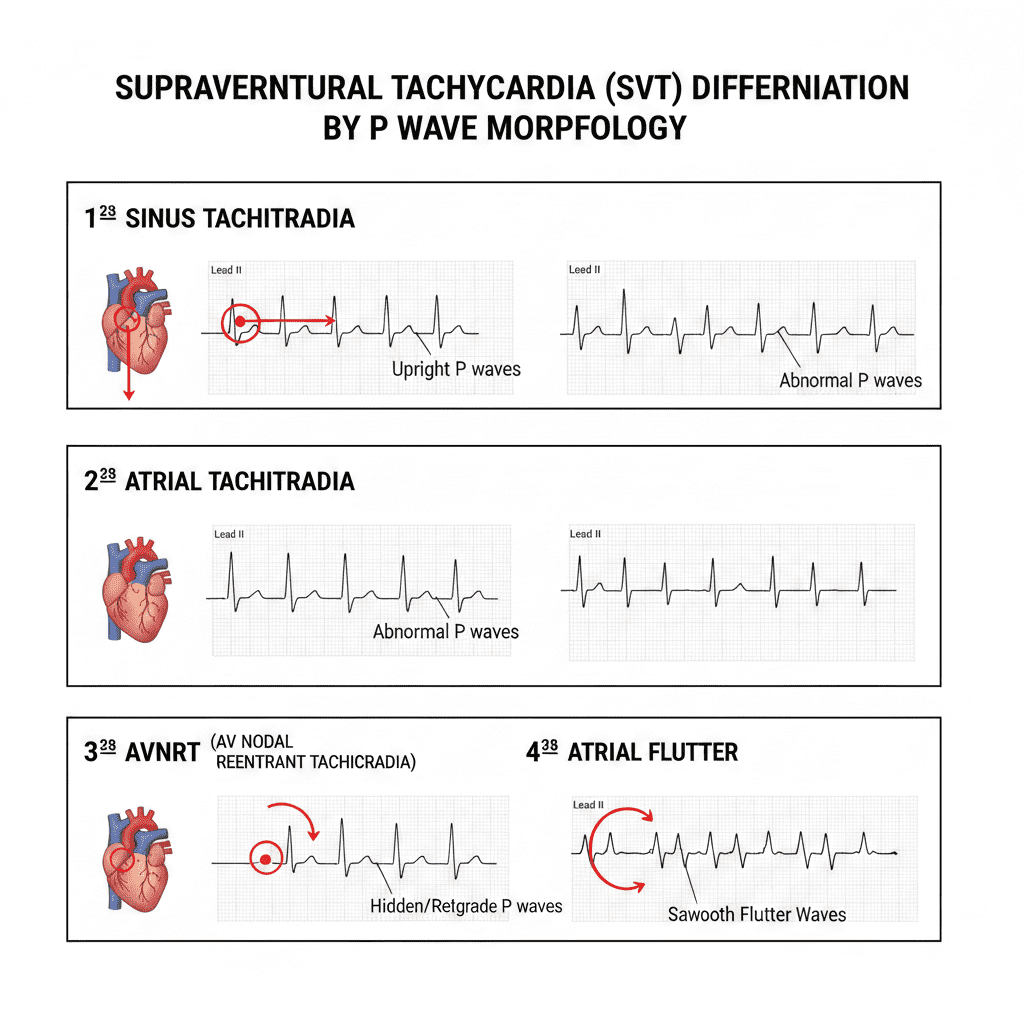
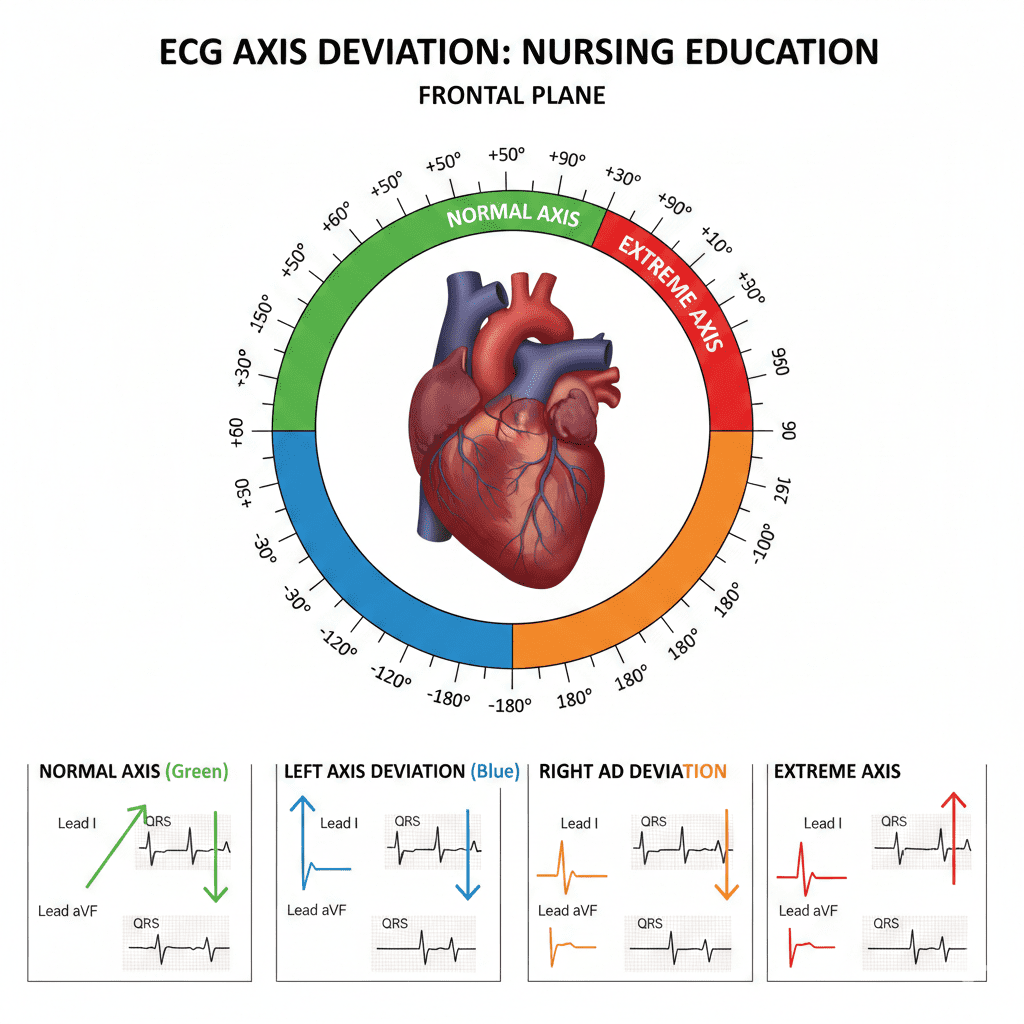
Differentiating SVT Types Using P Wave Morphology

Differentiating SVT Types

A Clinical ECG Guide for the Nurse, Registered Nurse, and RN Nurse Preparing for NCLEX P wave morphology is the key to distinguishing types of SVT—especially when the rhythm is narrow-complex and fast. Supraventricular tachycardia (SVT) is a broad term that describes tachycardias originating above the ventricles. For the nurse, registered nurse, and RN nurse, … Read more

Axis Deviation: How to Determine and What It Means Clinically

Axis Deviation

A Practical NCLEX Guide for the Nurse, Registered Nurse, and RN Nurse Axis deviation is determined by evaluating QRS direction in leads I and aVF—and it can quickly signal ventricular hypertrophy, conduction blocks, or pulmonary disease. For every nurse, registered nurse, and RN nurse, understanding ECG axis deviation is a core cardiac interpretation skill. Whether … Read more

Electrolyte Monitoring During Diabetic Ketoacidosis Treatment

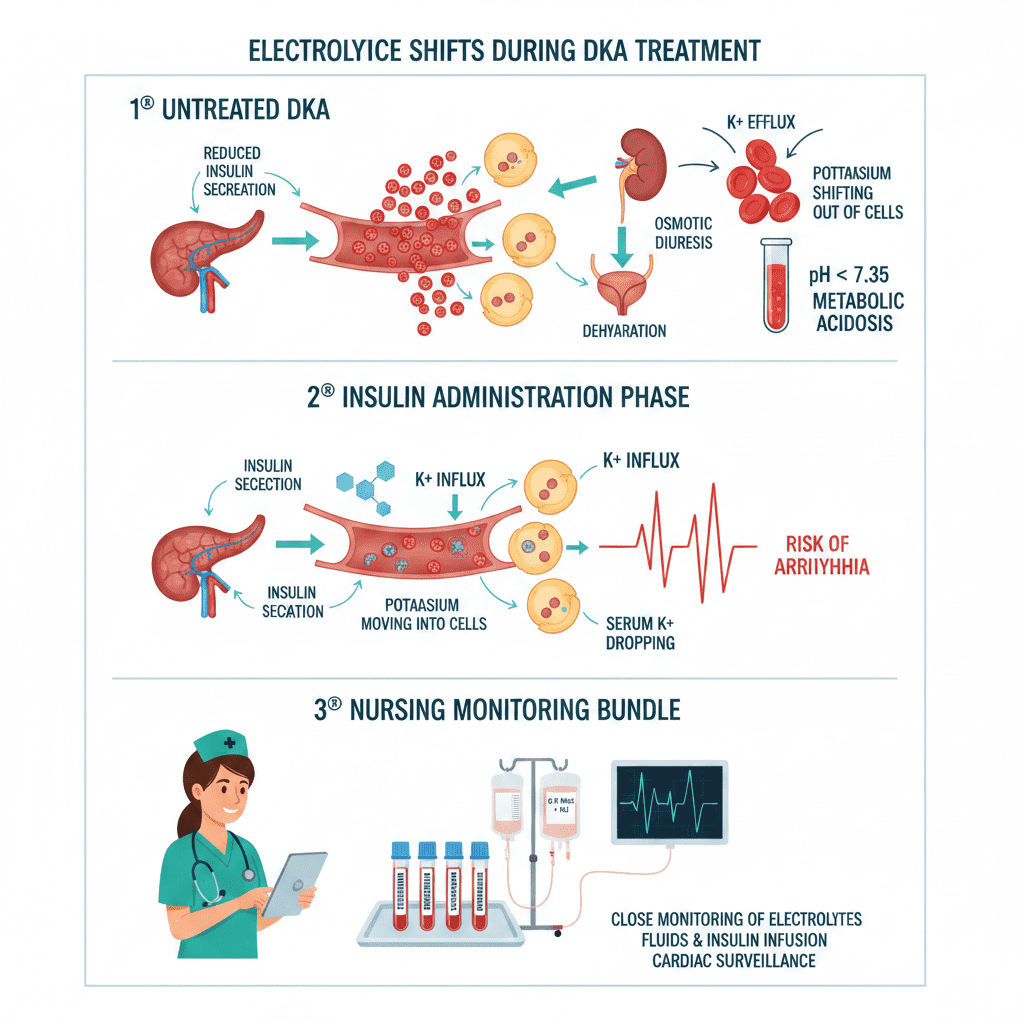
Electrolyte monitoring during DKA treatment

A Critical Care Guide for the Nurse and Registered Nurse Preparing for NCLEX Electrolyte shifts during DKA treatment can be more dangerous than the acidosis itself—especially rapid potassium drops after insulin administration. Diabetic ketoacidosis (DKA) is not just a glucose problem — it is a life-threatening electrolyte crisis. For the nurse, registered nurse, and RN … Read more

Phosphate Imbalance in ICU Patients

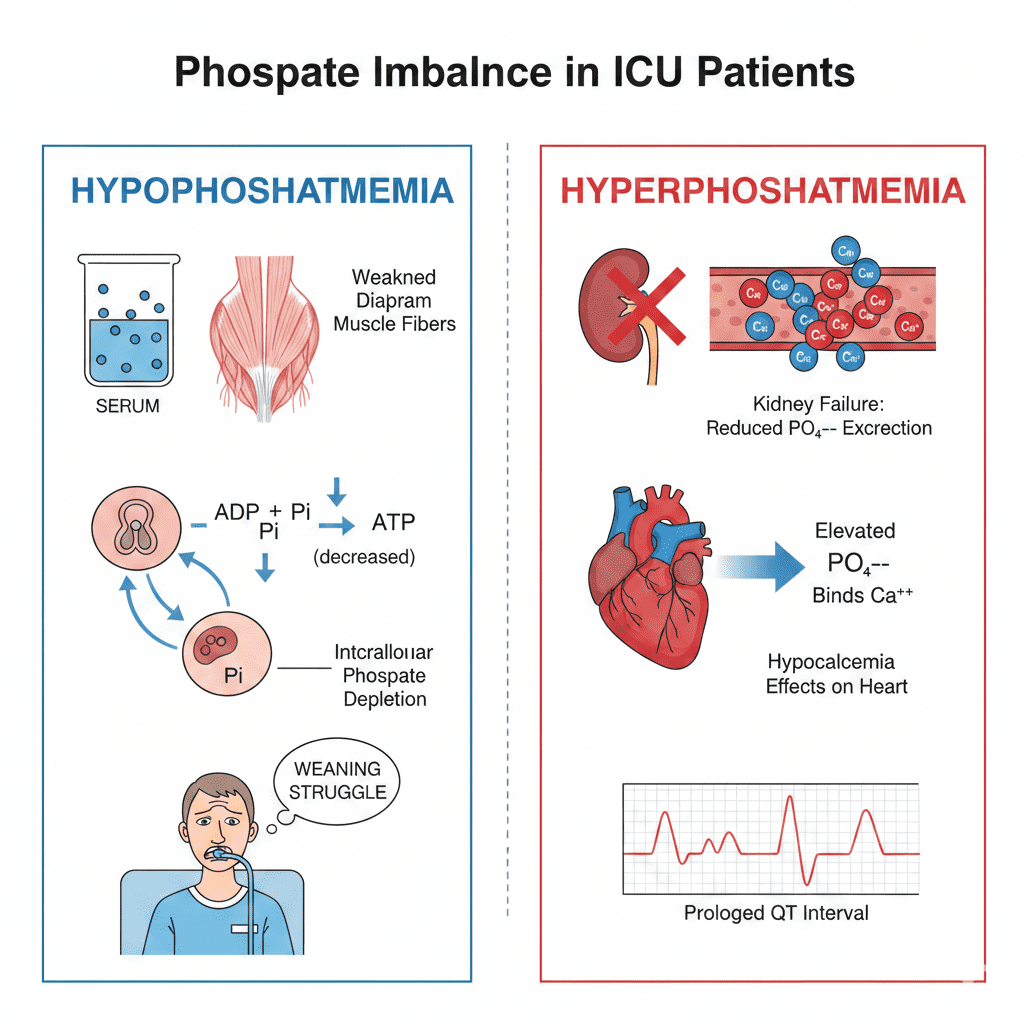
Phosphate imbalance in ICU

Phosphate is often overlooked compared to potassium or sodium, yet in the ICU it can become a silent threat. For every nurse, especially the critical care registered nurse (RN nurse), understanding phosphate imbalance is essential for preventing respiratory failure, cardiac instability, and neuromuscular collapse. Because electrolyte disorders are heavily tested on the NCLEX, phosphate disturbances … Read more

Hyperkalemia ECG Progression: From Peaked T Waves to Arrest

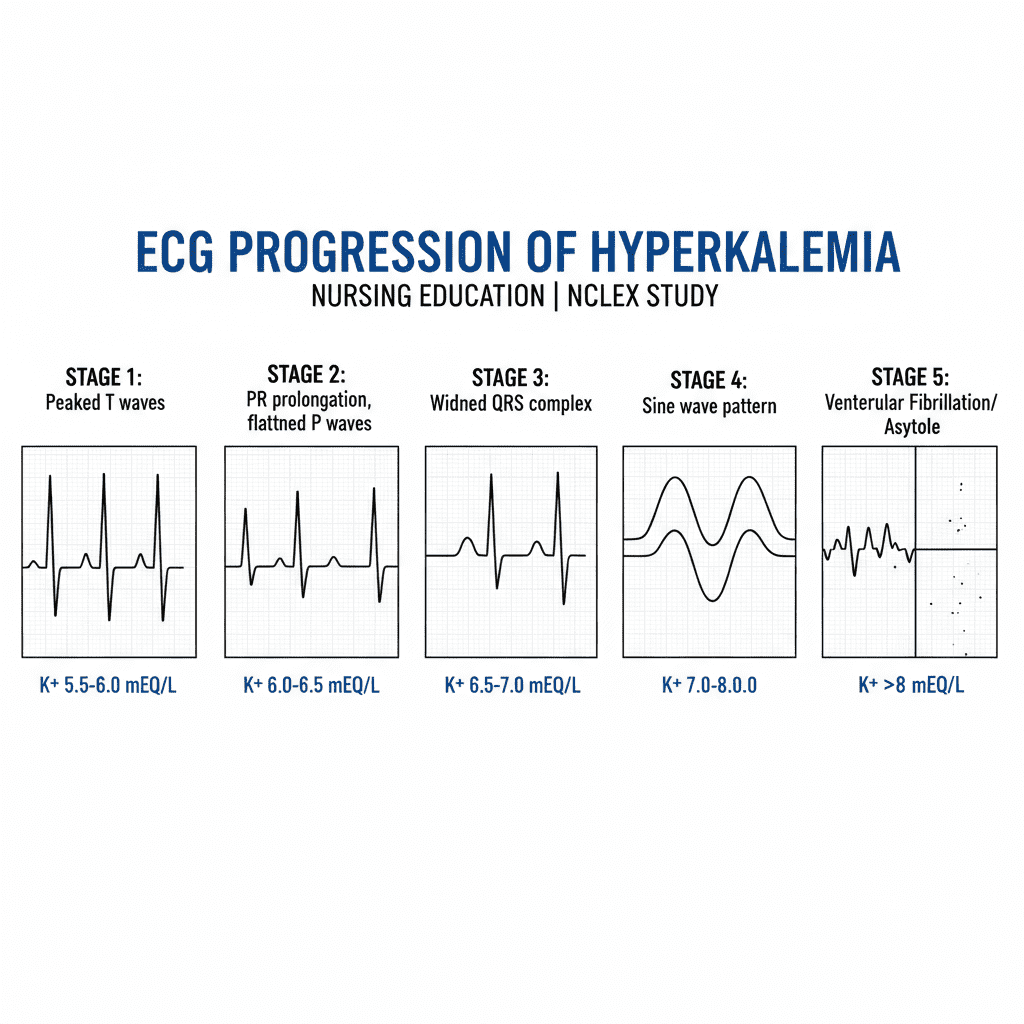
Hyperkalemia ECG

Hyperkalemia is one of the most dangerous electrolyte emergencies in clinical practice. For any nurse, especially an ICU or telemetry registered nurse (RN nurse), recognizing the ECG progression of hyperkalemia can mean the difference between rapid intervention and cardiac arrest. Because potassium disorders are heavily tested on the NCLEX, mastering ECG changes associated with rising … Read more

Rapid Sodium Correction and Osmotic Demyelination Syndrome

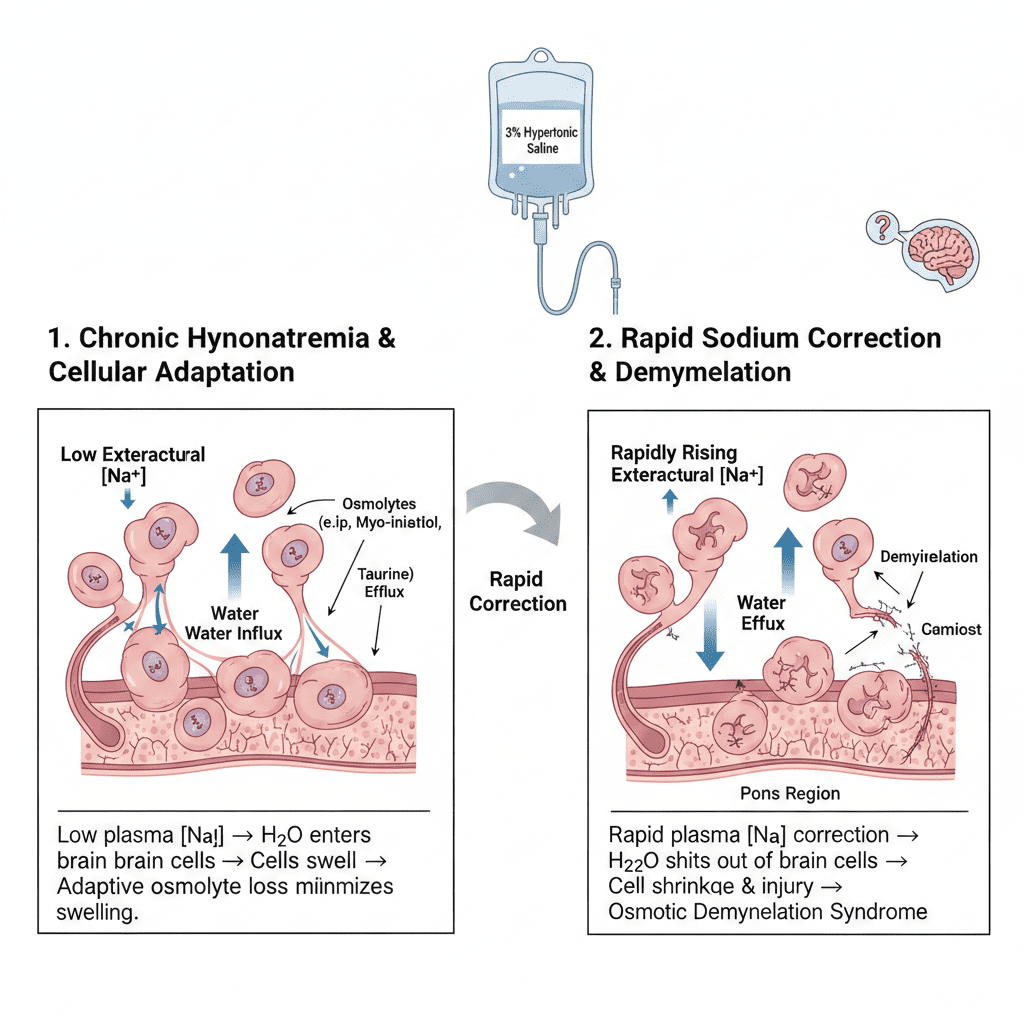
Rapid Sodium Correction

Sodium imbalances are among the most dangerous electrolyte disorders in clinical practice. However, what is often even more dangerous than hyponatremia itself is correcting it too quickly. Rapid sodium correction can lead to Osmotic Demyelination Syndrome (ODS) — a devastating neurologic complication. For every nurse, especially the ICU registered nurse (RN nurse), understanding this condition … Read more

Electrolyte Disturbances in End-Stage Renal Disease

Electrolyte imbalances in end-stage renal disease

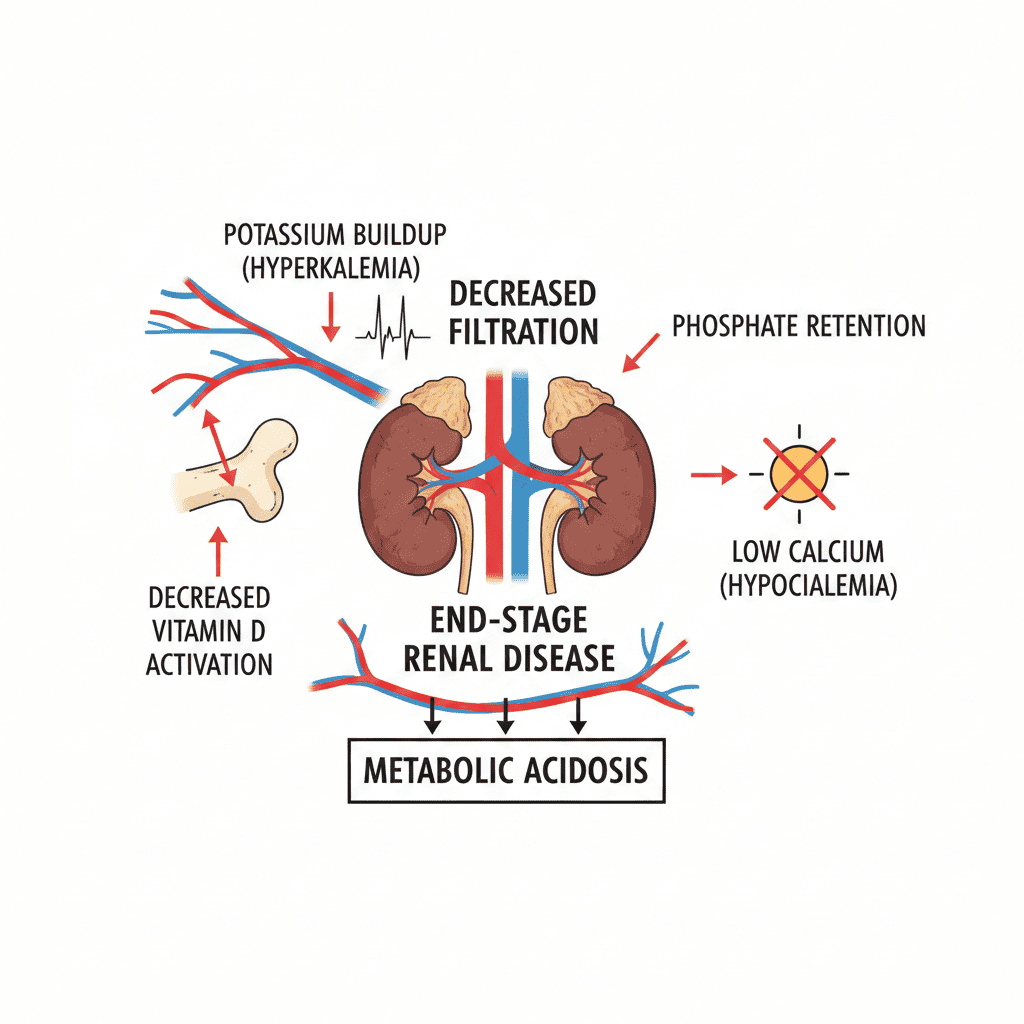
End-stage renal disease (ESRD) profoundly disrupts electrolyte balance, making it one of the most critical topics for any nurse, especially the dialysis or ICU registered nurse (RN nurse). Because the kidneys regulate sodium, potassium, calcium, phosphate, and acid-base balance, kidney failure results in complex, life-threatening imbalances. These disturbances are heavily tested on the NCLEX and … Read more

Refeeding Syndrome: Electrolyte Collapse Explained

Refeeding syndrome

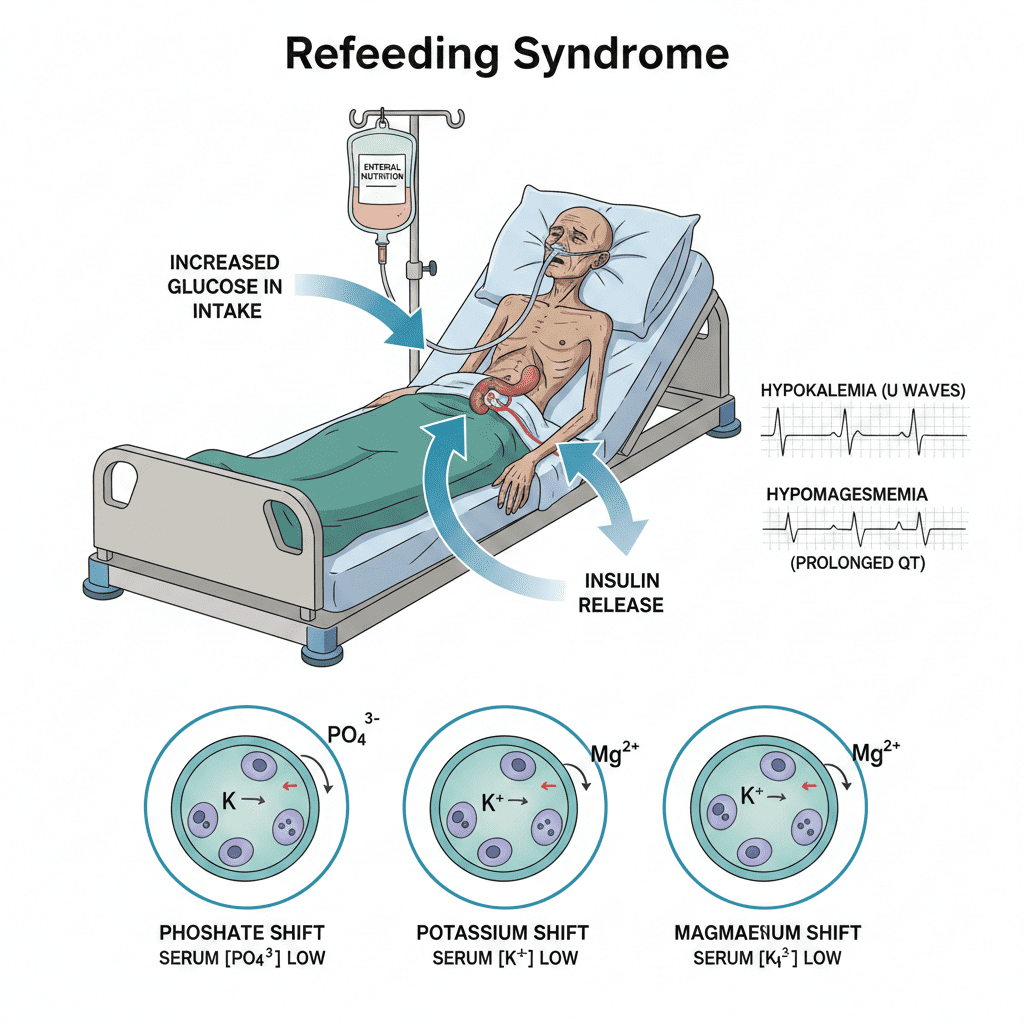
Refeeding syndrome is one of the most dangerous — and often overlooked — electrolyte emergencies in clinical practice. For any nurse, especially a critical care registered nurse (RN nurse), recognizing early signs of refeeding syndrome can prevent cardiac arrest, respiratory failure, and sudden death. Because it involves rapid electrolyte shifts, it is a high-yield concept … Read more

Calcium Regulation: Parathyroid Hormone and Vitamin D in Clinical Practice

Calcium Regulation

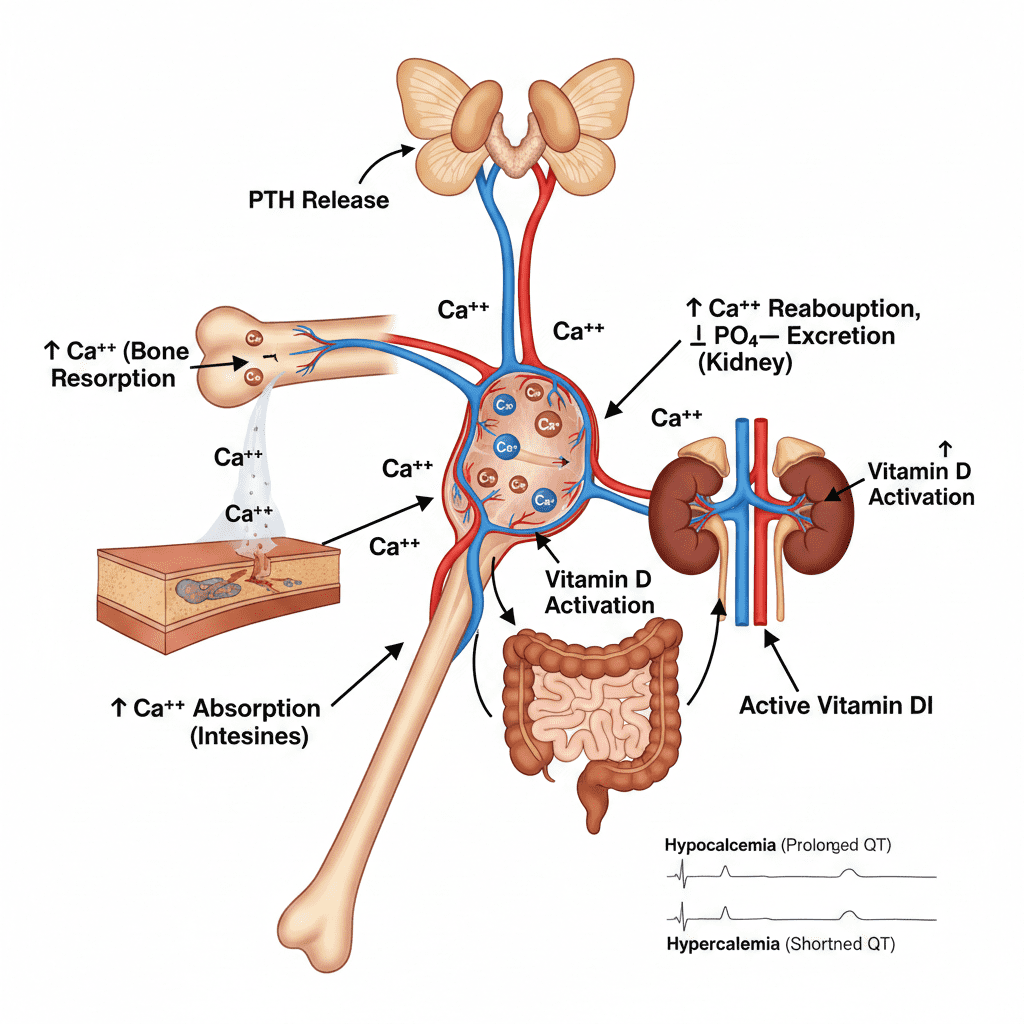
Calcium regulation is one of the most frequently tested endocrine and electrolyte topics on the NCLEX, and for good reason. Calcium directly affects cardiac function, neuromuscular activity, blood clotting, and bone stability. For every nurse, especially the critical care registered nurse (RN nurse), understanding how parathyroid hormone (PTH) and vitamin D regulate calcium is essential … Read more