
Introduction
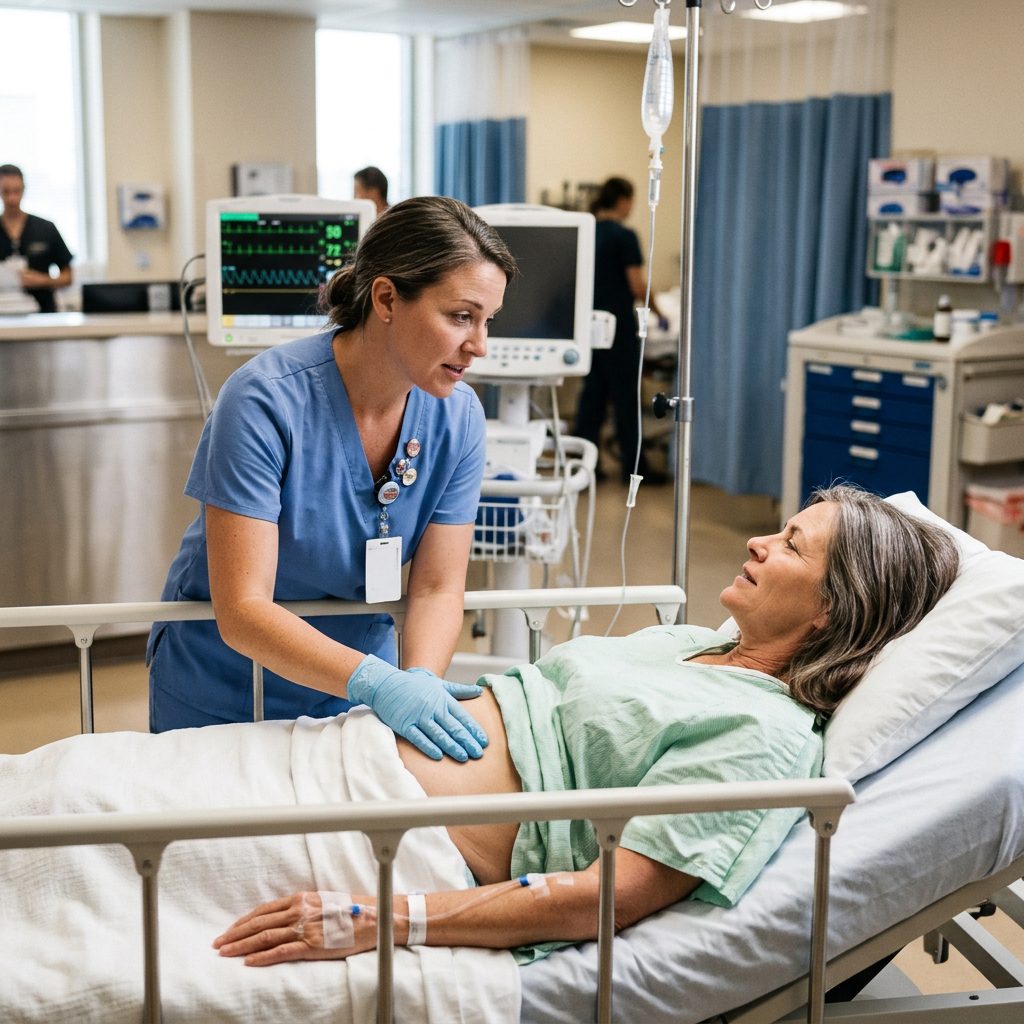
Acute appendicitis is the leading cause of emergency abdominal surgery. It’s common, it’s usually curable, and it can turn dangerous quickly when it goes unrecognized. Nurses often make the first assessment, so sharp observation matters. This guide covers the classic and atypical presentations, the preoperative priorities, and the postoperative care that prevents complications.
Table of Contents
- What Is Appendicitis?
- Pathophysiology
- Signs and Symptoms
- Atypical Presentations
- Nursing Assessment
- Diagnostic Workup
- Treatment Options
- Preoperative Nursing Care
- Postoperative Nursing Care
- Patient Education
- Complications
- NCLEX Tips and Memory Tricks
- Clinical Pearls
- Key Takeaways
- FAQs
- References
What Is Appendicitis?
Appendicitis means inflammation of the appendix, a small pouch that extends from the cecum. It affects an estimated 228 per 100,000 people each year. Clinicians divide it into two groups. Uncomplicated appendicitis involves inflammation without perforation or abscess. Complicated appendicitis includes gangrene, perforation, phlegmon, or abscess, and it carries a higher risk of complications and longer hospital stays.
Pathophysiology
Most cases begin with obstruction of the appendiceal lumen. A fecalith, lymphoid hyperplasia, or, less often, a tumor can cause it. Mucus then builds up behind the blockage, pressure rises, and bacteria multiply. Blood flow eventually drops, and the wall can die and rupture. Because this sequence can unfold over 24 to 48 hours, delays raise the risk of perforation.
Signs and Symptoms
The classic story follows a pattern:
- Vague periumbilical pain that begins first
- Migration of the pain to the right lower quadrant (RLQ), often at McBurney’s point
- Anorexia, which is one of the most consistent early signs
- Nausea and vomiting, usually after the pain begins
- Low-grade fever
- Tenderness, guarding, and rebound tenderness over the RLQ
- Pain that worsens with coughing, walking, or movement
Specific exam signs can support the diagnosis:
- Rovsing’s sign: palpating the left lower quadrant causes RLQ pain
- Psoas sign: pain when the patient extends the right hip
- Obturator sign: pain when the examiner rotates the flexed right hip internally
Atypical Presentations
The classic pattern doesn’t appear in every patient. Watch carefully in these groups:
- Older adults: they show higher perforation rates, higher mortality, lower diagnostic accuracy, and longer delays between symptom onset and admission, so a vague belly complaint deserves attention
- Children: young children can’t describe pain well, so look for guarding, refusal to move, or irritability
- Pregnant patients: the appendix shifts upward, so pain may appear higher than the RLQ
- Patients with a retrocecal appendix: pain may feel flank-based or less localized
Nursing Assessment
- Assess pain with a standard scale, noting location, onset, and any migration
- Take vital signs, and watch for tachycardia and fever, which suggest worsening infection
- Inspect and gently palpate the abdomen, noting guarding and rebound tenderness
- Ask about appetite, nausea, vomiting, and last bowel movement
- Monitor for hypotension and tachycardia, which can signal sepsis in advanced cases
- Review allergies and last oral intake before surgery
- Note any sudden change in pain character, since that can signal rupture
Diagnostic Workup
- CBC: leukocytosis supports the diagnosis
- CRP: helps stratify uncomplicated and complicated disease
- Urinalysis: helps rule out a urinary cause
- Pregnancy test: for patients who can become pregnant, before imaging
- Imaging: ultrasound is often first in children and pregnant patients, while CT with contrast is common in adults
- Clinical scoring systems such as the Alvarado score can support decision-making
Treatment Options
- Appendectomy, usually laparoscopic, remains the standard treatment
- Antibiotics alone are an option for select patients with uncomplicated appendicitis, based on guideline criteria and shared decision-making
- IV antibiotics are given for complicated disease, and clinicians may drain an abscess
- Evidence shows that following guidelines matters. In one large cohort, postoperative complications reached 36% with noncompliant care and 16% with partially compliant care, compared with 7.3% with fully guideline-compliant care
Preoperative Nursing Care
- Keep the patient NPO and start IV fluids as ordered
- Give analgesia and antiemetics per orders, because adequate pain control is part of care
- Avoid applying heat, since it may increase tissue congestion and raise rupture risk
- Avoid laxatives and enemas, since they stimulate peristalsis and could trigger perforation
- Position the patient comfortably, often in semi-Fowler’s with knees slightly flexed
- Give preoperative antibiotics on time
- Complete the preoperative checklist, consent verification, and patient teaching
- Reassess pain and abdominal findings often, and report any sudden relief of pain at once
Postoperative Nursing Care
- Monitor vital signs frequently at first, then at intervals the unit protocol sets
- Manage pain with prescribed analgesics, and reassess response
- Assess the incision for redness, swelling, drainage, or separation
- Encourage deep breathing and incentive spirometry to prevent atelectasis and pneumonia
- Promote early ambulation, which supports bowel function and lowers clot risk
- Advance the diet as tolerated once bowel function returns
- Track intake and output, and watch for signs of hypovolemia such as low blood pressure, fast heart rate, and low urine output
- Give postoperative antibiotics as prescribed, especially after perforation
- Monitor temperature and white blood cell trends for infection
- Check drain output if the surgeon placed a drain
About 9% of patients develop complications after appendectomy, so consistent monitoring matters.
Patient Education
- Teach the patient how to splint the incision when coughing
- Review activity and lifting restrictions according to the surgeon’s instructions
- Explain wound care and bathing guidance
- Discuss pain control and return to normal diet
- Provide clear return precautions: fever, worsening pain, vomiting, wound redness or drainage, or abdominal swelling
Complications
- Perforation and peritonitis
- Intra-abdominal abscess
- Surgical site infection
- Sepsis
- Postoperative ileus
- Adhesions and, later, small bowel obstruction
- Delayed recovery in older adults and patients with complicated disease
NCLEX Tips and Memory Tricks
- Sudden relief of pain followed by worsening may mean rupture. The pressure releases, then peritonitis develops.
- No heat, no laxatives, no enemas before surgery.
- RLQ pain at McBurney’s point is the classic location.
- Keep the patient NPO until the surgical plan is clear.
- Fever, rigid abdomen, and tachycardia suggest peritonitis and need immediate escalation.
- Mnemonic — “APPEND”: Anorexia and abdominal pain, Pain migrates to RLQ, Peritonitis if pain suddenly stops, Enema and heat avoided, NPO status, Document and report changes.
Clinical Pearls
- Don’t be reassured when severe pain suddenly eases. Reassess the abdomen and vital signs right away.
- In older adults, a mild presentation can hide advanced disease, so keep a low threshold for escalation.
- Pain relief doesn’t hide the diagnosis in modern practice, so don’t withhold ordered analgesia just to “keep the exam clean.”
Key Takeaways
- Appendicitis usually starts with periumbilical pain that migrates to the RLQ, along with anorexia and nausea.
- Atypical presentations are common in older adults, children, and pregnant patients.
- Before surgery, keep the patient NPO and avoid heat, laxatives, and enemas.
- After surgery, focus on pain control, incision care, breathing exercises, early ambulation, and infection surveillance.
FAQs
What are the classic signs of appendicitis?
Periumbilical pain that moves to the right lower quadrant, anorexia, nausea, vomiting, low-grade fever, and RLQ tenderness with guarding or rebound.
What does sudden relief of abdominal pain mean in appendicitis?
It may signal rupture, because the pressure inside the appendix suddenly releases. Peritonitis often follows, so report this change immediately.
Why should nurses avoid heat, laxatives, and enemas with suspected appendicitis?
Heat can increase tissue congestion, while laxatives and enemas stimulate bowel activity and may raise the risk of perforation.
What nursing care does a patient need after an appendectomy?
Pain control, vital sign monitoring, incision checks, incentive spirometry, early ambulation, diet advancement, antibiotic administration, and monitoring for infection, abscess, and ileus.
Can appendicitis be treated without surgery?
Some patients with uncomplicated appendicitis can receive antibiotics alone under current guidelines, though the surgical team decides based on imaging, clinical findings, and patient preference.
References
- World Society of Emergency Surgery (WSES) — Jerusalem Guidelines for the Diagnosis and Management of Acute Appendicitis
- PMC — Clinical Practice Selectively Follows Acute Appendicitis Guidelines (ESTES SnapAppy cohort)
- PMC — SIFIPAC/WSES/SICG/SIMEU Guidelines for Acute Appendicitis in the Elderly
- IntechOpen — Nursing Management of Patients with Appendicitis
- Nurseslabs — Appendectomy (Appendicitis) Nursing Care Plans
RELATED ARTICLES: