
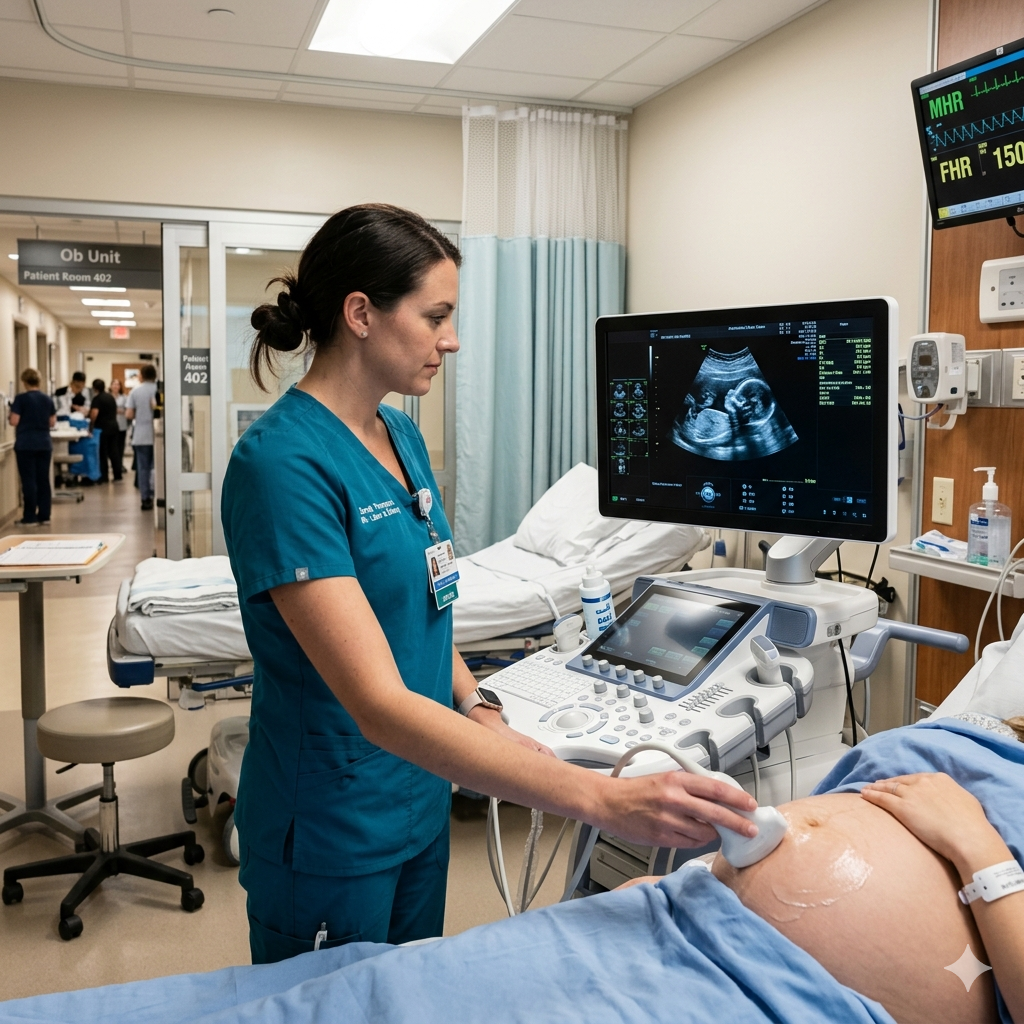
Amniotic fluid is far more than a cushion for the developing fetus — it is a dynamic, metabolically active environment that reflects fetal kidney function, swallowing activity, and overall well-being. For any registered nurse working in labor and delivery or antepartum care, understanding AFI interpretation is a high-yield clinical skill. Furthermore, it appears as a tested concept on the NCLEX, making it essential knowledge for every nursing student preparing for licensure. When nurses master the amniotic fluid index, they recognize deviations early, communicate findings using SBAR, and initiate timely interventions that directly impact maternal and fetal outcomes. Whether building a clinical foundation or working through a nursing bundle on OB topics, this guide provides the clear, evidence-based framework every nurse needs.
What Is the Amniotic Fluid Index?
The Amniotic Fluid Index (AFI) is a sonographic measurement that clinicians use to estimate the total volume of amniotic fluid surrounding the fetus. During an ultrasound examination, the provider divides the uterus into four equal quadrants, measures the deepest vertical pocket of fluid in each quadrant in centimeters, and then adds the four values together to produce the AFI score.
Normal amniotic fluid volume changes across gestation. At term (37–40 weeks), a normal AFI falls between 8 cm and 24 cm, with an optimal range often cited as 10–20 cm. Additionally, some institutions use the Single Deepest Pocket (SDP) method, which measures only the largest fluid pocket. A normal SDP sits between 2 cm and 8 cm.
After 16 weeks gestation, the fetus primarily produces amniotic fluid through urination. The fetus then reabsorbs it through swallowing and membrane absorption. Consequently, any disruption in this production-reabsorption cycle — whether from fetal, placental, or maternal causes — alters the AFI and signals a potential complication requiring nursing assessment and prompt medical follow-up.
Understanding AFI Values: Normal, Low, and High
Interpreting an AFI result requires the nurse to understand the clinical significance of each range. Moreover, context always matters — gestational age, maternal history, and fetal movement patterns all factor into the overall assessment. The table below provides a quick-reference summary.
| AFI Value | Interpretation | Clinical Term |
|---|---|---|
| < 5 cm | Critically low | Oligohydramnios |
| 5–7.9 cm | Borderline low | Decreased fluid, monitor closely |
| 8–24 cm | Normal range | Normal amniotic fluid volume |
| > 24–25 cm | Elevated | Polyhydramnios |
These values guide clinical decision-making at every level. Because a single AFI reading never tells the full story, nurses must bring all relevant clinical data to the care team’s attention rather than interpreting an AFI in isolation.
Oligohydramnios: Causes, Risks, and Nursing Considerations
Oligohydramnios is an AFI of less than 5 cm. It signals dangerously reduced amniotic fluid and carries significant fetal risk. Specifically, the following conditions most commonly drive this finding.
Common Causes
- Fetal renal anomalies (e.g., bilateral renal agenesis — Potter sequence)
- Uteroplacental insufficiency, which decreases fetal perfusion and urine output
- Prolonged rupture of membranes (PROM)
- Post-term pregnancy (after 42 weeks, fluid volume naturally declines)
- Maternal dehydration or use of NSAIDs and ACE inhibitors
Fetal and Maternal Risks
Oligohydramnios raises the risk of umbilical cord compression, which in turn produces variable decelerations on fetal heart monitoring. Beyond cord compression, the condition also associates with intrauterine growth restriction (IUGR), fetal skeletal deformities from chronic compression, pulmonary hypoplasia, and — in severe cases — fetal demise.
Nursing Interventions
The RN nurse caring for a patient with oligohydramnios must act swiftly and systematically. First, initiate continuous electronic fetal monitoring (EFM) and watch closely for variable decelerations. Next, position the patient in a left lateral position to relieve vena cava compression and improve placental blood flow. Additionally, encourage oral hydration if not contraindicated, as maternal fluid intake can temporarily increase the AFI. Nurses should also prepare for potential amnioinfusion — the infusion of warmed normal saline through an intrauterine catheter to reduce cord compression — and anticipate possible induction of labor or cesarean delivery depending on gestational age and fetal status. Throughout all of this, document findings thoroughly and use SBAR to communicate any changes to the provider.
Polyhydramnios: Causes, Risks, and Nursing Considerations
Polyhydramnios refers to an AFI greater than 24–25 cm. It reflects an excess of amniotic fluid and, therefore, warrants careful investigation into the underlying etiology.
Common Causes
- Gestational diabetes or poorly controlled Type 1/2 diabetes — fetal hyperglycemia drives polyuria
- Fetal gastrointestinal anomalies (e.g., esophageal atresia, duodenal atresia) — because the fetus cannot swallow normally, fluid reabsorption fails
- Neural tube defects that impair the swallowing reflex
- Multiple gestation, particularly twin-to-twin transfusion syndrome
- Idiopathic causes — no identifiable etiology in up to 50% of mild cases
Fetal and Maternal Risks
Polyhydramnios stretches the uterus beyond its typical capacity. As a result, several serious complications emerge:
- Preterm labor due to uterine overdistension
- Premature rupture of membranes (PROM)
- Placental abruption
- Umbilical cord prolapse — especially at the moment of rupture
- Postpartum hemorrhage from uterine atony following overdistension
- Fetal malpresentation, since the fetus has excess room to reposition
Nursing Interventions
Nursing care for polyhydramnios depends on severity; however, several core actions apply broadly. The registered nurse should monitor consistently for signs of preterm labor — specifically contractions, cervical changes, and pelvic pressure. Because malpresentation and cord prolapse risk remain elevated, nurses must assess fetal presentation frequently. In addition, patient education is essential: the patient needs to understand the signs of rupture of membranes and know when to seek emergency care. If the patient has diabetes, reinforcing blood glucose control addresses a modifiable contributing factor. Finally, nurses should prepare for potential amnioreduction (therapeutic amniocentesis to remove excess fluid) if ordered, and monitor closely postpartum for uterine atony and hemorrhage.
AFI Monitoring: When and How Often
Clinicians typically assess AFI as part of a Biophysical Profile (BPP) or Non-Stress Test (NST) workup. Specifically, a BPP evaluates five parameters: fetal breathing movements, gross body movement, fetal tone, reactive NST, and amniotic fluid volume. Each parameter earns a score of 0 or 2, for a maximum total of 10. The AFI earns a component score of 2 when a single deepest pocket measures ≥ 2 cm.
Providers recommend AFI surveillance in high-risk pregnancies, including those involving:
- Post-term pregnancies (≥ 41 weeks)
- Gestational or pregestational diabetes
- Hypertensive disorders of pregnancy
- Fetal growth restriction
- History of stillbirth or prior fetal anomaly
Throughout this process, nursing plays a critical role. Nurses prepare patients for these tests, explain the purpose of fetal surveillance in accessible terms, and ensure the care team receives results in a timely manner. Importantly, any abnormal finding demands prompt escalation.
💡 NCLEX Tips for AFI Interpretation
- An AFI < 5 cm = oligohydramnios; an AFI > 24 cm = polyhydramnios — memorize these thresholds for NCLEX
- Oligohydramnios + variable decelerations on fetal monitor = think cord compression → left lateral position + notify provider
- Polyhydramnios + sudden ROM = priority concern is cord prolapse → check for cord at vaginal opening immediately
- Bilateral renal agenesis (Potter sequence) causes severe oligohydramnios — a classic NCLEX association
- A BPP score of ≤ 4 out of 10 is abnormal and requires immediate nursing escalation
Quick Reference: AFI Interpretation Summary
| Finding | AFI | Key Complication | Priority Nursing Action |
|---|---|---|---|
| Oligohydramnios | < 5 cm | Cord compression, IUGR | Left lateral position, continuous EFM, hydration |
| Normal | 8–24 cm | None | Routine monitoring |
| Polyhydramnios | > 24–25 cm | Cord prolapse, preterm labor | Monitor for labor signs, assess presentation |
| Borderline low | 5–7.9 cm | Increased surveillance needed | Notify provider, increase monitoring frequency |
Conclusion
AFI interpretation stands as a cornerstone of antepartum fetal surveillance, and every nurse working in obstetrics must recognize abnormal values and respond swiftly. From identifying oligohydramnios and initiating continuous fetal monitoring to anticipating cord prolapse in the setting of polyhydramnios, the clinical stakes are high — and the NCLEX consistently reflects this reality. As a result, strengthening knowledge of AFI values, their causes, and the nursing interventions they demand is a direct investment in both exam success and patient safety. To go further, explore the full nursing bundle for OB/Maternity topics at rn-nurse.com/nursing-courses and sharpen test-taking skills with NCLEX practice questions at rn-nurse.com/nclex-qcm. The patients every RN nurse cares for depend on the knowledge built today.