
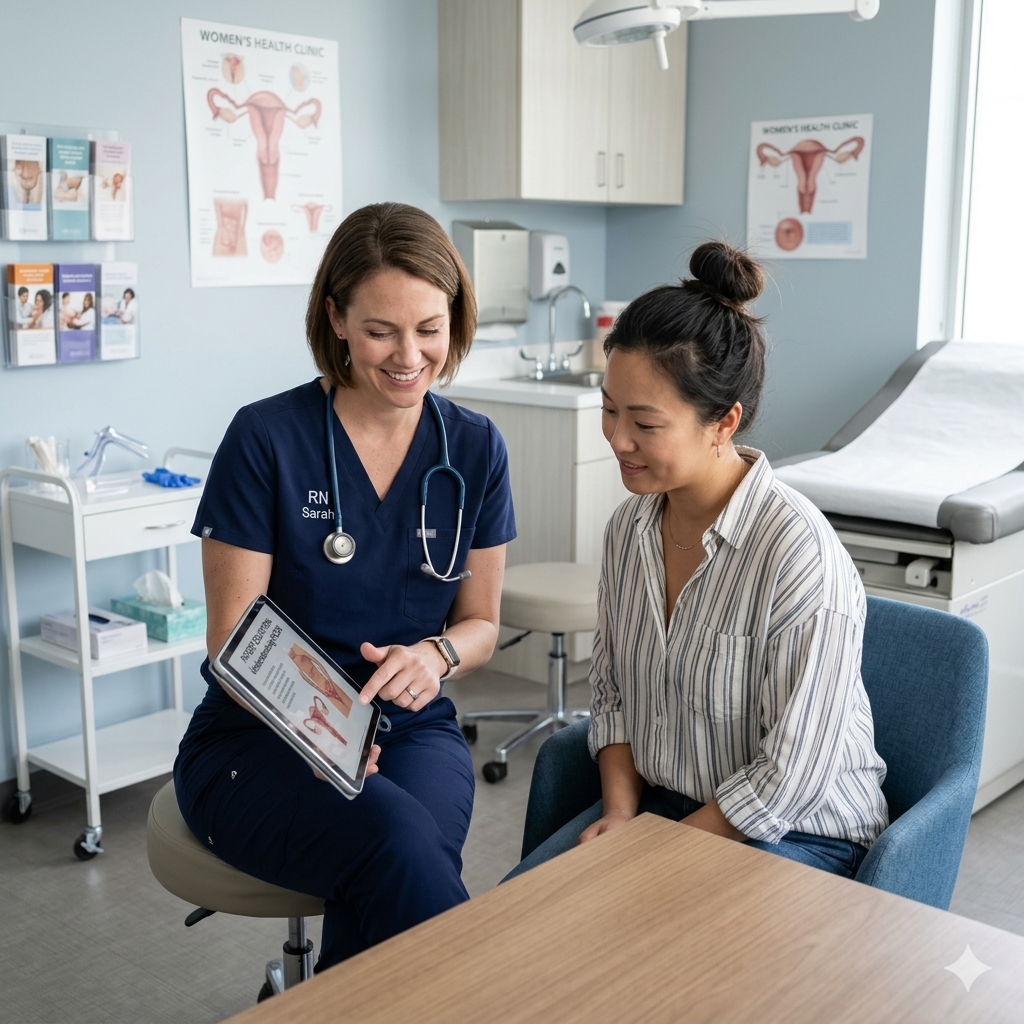
Two of the most clinically significant yet frequently confused gynecological conditions — adenomyosis and endometriosis — appear on the NCLEX and in everyday nursing practice. Both involve ectopic endometrial tissue, both cause debilitating pelvic pain, and both disproportionately impact women of reproductive age. Yet they are distinct pathologies with different anatomical locations, diagnostic approaches, and nursing management strategies. A confident registered nurse must be able to differentiate between them, recognize their overlapping presentations, and deliver targeted, evidence-based care. This guide breaks down the key distinctions to sharpen your adenomyosis vs endometriosis nursing knowledge for both the bedside and the NCLEX exam.
Understanding the Pathophysiology: What Makes Them Different?
Both conditions share one defining feature: endometrial tissue growing where it does not belong. The critical difference lies in where that tissue migrates.
Endometriosis occurs when endometrial-like tissue implants outside the uterus — on the ovaries, fallopian tubes, peritoneum, bladder, or bowel. These implants respond to the hormonal fluctuations of the menstrual cycle just as normal endometrium does: they proliferate, break down, and bleed. Because the blood has nowhere to escape, it causes inflammation, adhesions, and scar tissue formation.
Adenomyosis, by contrast, occurs when endometrial glands and stroma invade the myometrium — the muscular wall of the uterus itself. This causes the uterus to become enlarged, globular, and boggy. The myometrium thickens abnormally as displaced tissue bleeds within the uterine wall during each menstrual cycle.
A registered nurse reviewing these conditions for NCLEX preparation should anchor this distinction clearly: endometriosis is outside the uterus; adenomyosis is inside the uterine muscle.
Risk Factors and Who Is Affected
Nursing assessment begins with recognizing which patients are at greatest risk.
Endometriosis risk factors:
- Family history (first-degree relative with endometriosis)
- Early menarche or late menopause
- Short menstrual cycles (less than 27 days)
- Nulliparity
- Low body mass index
- Mullerian anomalies or outflow tract obstruction
Adenomyosis risk factors:
- Multiparous women (most commonly affects women who have had children)
- Age 40–50 (perimenopausal women)
- Prior uterine surgery (cesarean section, myomectomy, dilation and curettage)
- History of endometriosis (the two conditions frequently co-exist)
- High estrogen levels
Endometriosis typically presents in women ages 25–35, while adenomyosis more commonly affects women in their 40s approaching menopause. However, both conditions can occur across a wide age range. For the NCLEX, remembering that adenomyosis is associated with multiparity and prior uterine trauma — while endometriosis is linked to nulliparity and retrograde menstruation — is a high-yield distinction.
Clinical Presentation: Comparing Signs and Symptoms
Both conditions cause significant menstrual-related symptoms, but their specific presentations offer clinical clues the nurse must recognize.
Endometriosis Signs and Symptoms:
- Dysmenorrhea — cyclic pelvic pain that typically begins before menstruation
- Dyspareunia — deep pain during sexual intercourse
- Dyschezia — painful bowel movements, especially during menses
- Dysuria — painful urination if bladder is involved
- Chronic pelvic pain (non-cyclic)
- Infertility (affects up to 40% of women with endometriosis)
- Irregular or heavy menstrual bleeding
Adenomyosis Signs and Symptoms:
- Menorrhagia — heavy, prolonged menstrual bleeding (hallmark symptom)
- Severe dysmenorrhea — cramping that worsens with age
- Enlarged, tender, boggy uterus on palpation
- Pelvic pressure or sensation of bloating
- Dyspareunia
- Iron-deficiency anemia secondary to chronic blood loss
A key clinical pearl: the classic adenomyosis triad for nursing assessment is menorrhagia, dysmenorrhea, and an enlarged boggy uterus. Endometriosis more distinctively features the “4 Ds” — dysmenorrhea, dyspareunia, dyschezia, and dyschezia/dysuria, plus infertility.
Diagnosis: What the Nurse Needs to Know
Neither condition is diagnosed by symptoms alone, and the definitive diagnostic tools differ significantly.
Endometriosis:
- Suspected based on history and pelvic exam
- Laparoscopy with biopsy is the gold standard for definitive diagnosis
- Transvaginal ultrasound may identify ovarian endometriomas (“chocolate cysts”)
- MRI provides additional detail when complex disease or deep infiltrating endometriosis is suspected
- CA-125 may be elevated but is non-specific
Adenomyosis:
- Transvaginal ultrasound (TVUS) is the first-line imaging tool — findings include an enlarged uterus with heterogeneous myometrium and myometrial cysts
- MRI is the most accurate non-invasive diagnostic tool, revealing thickening of the junctional zone (>12mm is diagnostic)
- Definitive diagnosis is histological — confirmed on hysterectomy specimen
- No blood test is diagnostic
The RN nurse preparing for NCLEX should note: laparoscopy = endometriosis gold standard; MRI/TVUS = adenomyosis first-line imaging.
Nursing Interventions and Medical Management
Effective nursing care for both conditions centers on pain management, patient education, emotional support, and monitoring for complications such as anemia and infertility-related distress.
Pharmacological Management
| Treatment | Endometriosis | Adenomyosis |
|---|---|---|
| NSAIDs | First-line for pain | First-line for pain |
| Combined oral contraceptives | Yes — suppress ovulation | Yes — reduce bleeding |
| Progestins (e.g., norethindrone) | Yes | Yes — levonorgestrel IUD especially effective |
| GnRH agonists (e.g., leuprolide) | Yes — induces medical menopause | Yes |
| Aromatase inhibitors | Yes (refractory cases) | Yes (refractory cases) |
| Tranexamic acid | No | Yes — reduces menorrhagia |
The levonorgestrel-releasing IUD (Mirena) is a highly effective, non-surgical option for adenomyosis, significantly reducing menorrhagia and dysmenorrhea. For the nurse, monitoring for side effects of GnRH agonists — hot flashes, bone density loss, mood changes — is an essential part of the nursing bundle for hormonal management.
Surgical Management
- Endometriosis: Laparoscopic excision or ablation of lesions; oophorectomy in severe cases
- Adenomyosis: Hysterectomy is the only definitive cure; uterine-sparing procedures (endometrial ablation, uterine artery embolization) may be options for those who wish to preserve fertility
Key Nursing Interventions for Both Conditions:
- Assess pain using a validated pain scale; document character, timing, and severity
- Monitor hemoglobin and hematocrit — both conditions risk iron-deficiency anemia
- Administer and educate on prescribed analgesics and hormonal therapies
- Provide emotional support — acknowledge the chronic nature of these conditions and their impact on fertility and quality of life
- Educate on medication adherence and expected side effects of hormonal therapy
- Collaborate with the interdisciplinary team — gynecology, pain management, mental health, and reproductive endocrinology as indicated
- Document menstrual history — cycle length, flow volume, associated symptoms, and pain patterns
💡 NCLEX Tips: Adenomyosis vs Endometriosis Nursing
- Endometriosis = ectopic tissue outside the uterus → laparoscopy is the gold standard for diagnosis
- Adenomyosis = endometrial tissue inside the myometrium → boggy, enlarged uterus is the classic exam finding
- Both conditions are estrogen-dependent → GnRH agonists induce therapeutic hypoestrogenism
- The levonorgestrel IUD is a high-yield, first-line option for adenomyosis menorrhagia
- Watch for iron-deficiency anemia in any patient with menorrhagia — check CBC and assess fatigue, pallor, tachycardia
- Infertility is a major complication of endometriosis — the NCLEX may test therapeutic communication around this topic
Patient Education: What Every RN Nurse Must Teach
Patient education is a cornerstone of nursing practice for chronic gynecological conditions. Key teaching points include:
- Symptom tracking: Encourage use of a menstrual diary or app to document pain intensity, bleeding volume, and associated symptoms
- Medication compliance: Hormonal therapies require consistent use; stopping abruptly may cause symptom recurrence
- Heat therapy: Application of heat to the lower abdomen provides non-pharmacological pain relief
- Dietary considerations: Some evidence supports anti-inflammatory diets; avoiding excess red meat and trans fats may reduce estrogen-driven inflammation
- Mental health support: Chronic pain and infertility carry significant psychological burden; normalize referral to counseling
- Fertility planning: Refer early to reproductive endocrinology if the patient desires pregnancy
- Follow-up compliance: Regular gynecologic follow-up is essential for monitoring disease progression
The registered nurse is uniquely positioned to provide this education in both inpatient and outpatient settings, strengthening the nurse-patient relationship and improving long-term outcomes.
Conclusion
Adenomyosis and endometriosis are two distinct but clinically overlapping conditions that every nurse — student or practicing RN nurse — must be able to differentiate. Endometriosis involves ectopic endometrial tissue outside the uterus, confirmed by laparoscopy, and presenting with the hallmark “4 Ds.” Adenomyosis involves endometrial invasion of the myometrium, presenting with a boggy uterus and menorrhagia, and managed definitively with hysterectomy. Mastering the adenomyosis vs endometriosis nursing distinctions — from pathophysiology to patient education — is essential for NCLEX success and compassionate clinical care.
Deepen your knowledge with targeted practice at RN-Nurse.com NCLEX Questions or explore our comprehensive nursing courses and study bundles to build the clinical confidence you need.