
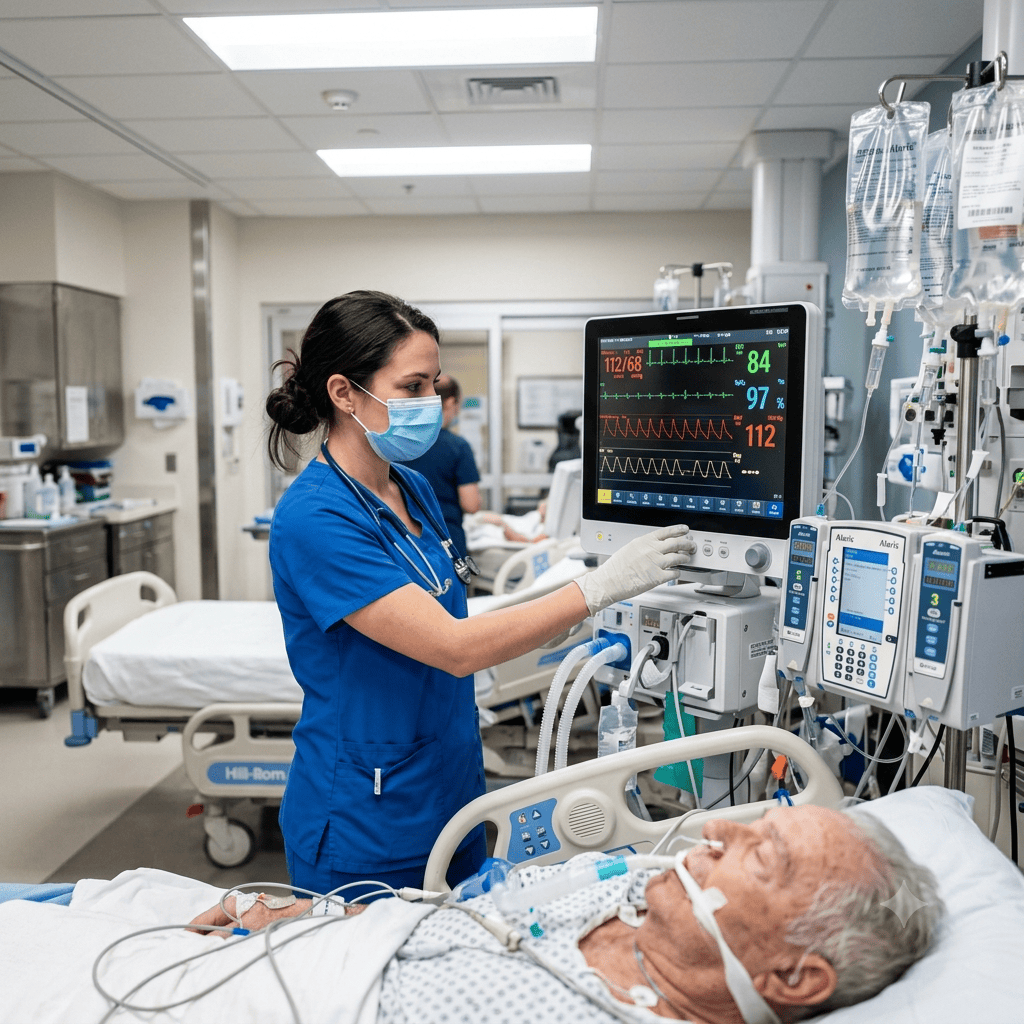
A patient describes sudden, tearing chest pain radiating to the back — and every second that passes without action increases the risk of death. Understanding acute aortic dissection nursing priorities is essential for any nurse working in critical care, the emergency department, or medical-surgical units, and it is a high-yield topic for the NCLEX. Whether you are a student preparing for boards or a registered nurse refining your critical thinking, recognizing this life-threatening emergency quickly can save a life.
What Is Acute Aortic Dissection?
Acute aortic dissection occurs when a tear develops in the inner layer of the aortic wall, allowing blood to surge between the layers and split them apart. This creates a false lumen that can compromise blood flow to vital organs, rupture the aorta, or cause cardiac tamponade. Dissections are classified using the Stanford system:
- Type A: Involves the ascending aorta — a surgical emergency
- Type B: Involves the descending aorta only — often managed medically unless complications arise
Risk factors include uncontrolled hypertension, Marfan syndrome, bicuspid aortic valve, cocaine use, and blunt chest trauma. Recognizing these risk factors quickly supports the priority nursing assessment discussed in every nursing bundle for cardiovascular emergencies.
Recognizing the Clinical Presentation
The hallmark symptom is sudden, severe, tearing or ripping chest pain, often radiating to the back, neck, or abdomen. Unlike the crescendo pain of myocardial infarction, dissection pain is typically maximal at onset. Additional findings include:
- Blood pressure discrepancy between arms (more than 20 mmHg difference)
- Diminished or absent peripheral pulses
- Syncope or altered mental status
- Diaphoresis and pallor
- New aortic regurgitation murmur
Any RN nurse who identifies these findings must escalate immediately, since delayed recognition is directly linked to increased mortality. This presentation is a frequent focus of NCLEX priority-setting questions.
Priority Nursing Assessment
The first priority nursing action is a rapid, focused assessment following the ABCDE approach — airway, breathing, circulation, disability, exposure. Key assessment priorities include:
- Obtain bilateral blood pressures and compare pulses in all four extremities
- Assess pain characteristics using OPQRST (onset, provocation, quality, radiation, severity, timing)
- Monitor for signs of organ malperfusion: decreased urine output, altered mentation, abdominal pain, or extremity ischemia
- Auscultate heart sounds for a new murmur suggesting aortic valve involvement
- Continuously monitor cardiac rhythm and hemodynamic status
Nurses must document findings precisely and communicate changes using SBAR to the rapid response or cardiothoracic surgery team without delay.
Emergency Nursing Interventions
Once acute aortic dissection is suspected or confirmed, nursing interventions center on preventing extension of the tear and stabilizing the patient for diagnostic imaging or surgery.
- Strict blood pressure and heart rate control: IV beta-blockers (e.g., esmolol or labetalol) are first-line to reduce shear stress on the aortic wall; target heart rate is typically below 60 bpm before adding vasodilators
- Pain management: IV opioids reduce sympathetic stimulation that would otherwise raise blood pressure further
- Avoid anticoagulants and thrombolytics, which can worsen bleeding into the false lumen
- Prepare for emergent imaging such as CT angiography or transesophageal echocardiography
- Establish two large-bore IV lines and prepare for possible massive transfusion in case of rupture
- Maintain strict bed rest and minimize activity to reduce hemodynamic stress
These interventions form a core component of the cardiovascular nursing bundle used in critical care units nationwide, and mastery of this sequence is essential for safe, effective nursing practice.
Preparing for Surgery and Postoperative Care
Type A dissections typically require emergent surgical repair. The nurse’s role includes rapid preoperative preparation: obtaining informed consent, verifying type and crossmatch, inserting a Foley catheter, and providing clear, calm patient and family education despite the time pressure. Postoperatively, priorities shift to monitoring for bleeding, stroke, renal injury, and recurrent malperfusion, along with strict blood pressure control to protect the surgical repair.
Common Nursing Diagnoses and Patient Education
Nursing care for acute aortic dissection extends beyond the immediate emergency response. Appropriate nursing diagnoses guide the plan of care and help the registered nurse prioritize ongoing interventions. Common diagnoses include:
- Acute pain related to aortic wall tearing and ischemia
- Decreased cardiac output related to impaired blood flow through the true lumen
- Risk for ineffective tissue perfusion related to malperfusion of vital organs
- Anxiety related to the sudden, life-threatening nature of the diagnosis
- Deficient knowledge related to disease process, treatment plan, and long-term follow-up
Patient education is a critical, often overlooked, nursing priority. Once the patient is stabilized, the nurse should reinforce the importance of lifelong blood pressure control, since uncontrolled hypertension is the leading modifiable risk factor for both initial dissection and recurrence. Teaching points should include:
- Taking antihypertensive medications exactly as prescribed, even when feeling well
- Avoiding strenuous isometric activities such as heavy lifting, which spike blood pressure suddenly
- Recognizing warning signs of recurrent dissection, including new chest or back pain
- Attending all follow-up imaging appointments to monitor the aorta for aneurysm formation
- Smoking cessation and cardiovascular risk factor modification
Family members should also be included in discharge teaching, since early recognition of recurring symptoms by both the patient and caregivers can prevent a delayed return to care. This educational component is a standard part of any comprehensive cardiovascular nursing bundle and reflects the holistic role of the nurse in both acute and long-term patient management.
Interprofessional Collaboration
Managing acute aortic dissection requires seamless interprofessional collaboration. The nurse functions as a central communicator between the emergency physician, cardiothoracic surgeon, intensivist, and radiology team. Efficient SBAR communication ensures that time-sensitive information — such as changes in pulse quality, new neurological deficits, or hemodynamic instability — reaches the appropriate provider without delay. In many institutions, activation of a dedicated aortic emergency response team streamlines this process, and nursing staff play a key role in initiating and coordinating that response. Understanding this collaborative workflow is valuable not only for direct patient care but also for NCLEX questions that test prioritization and delegation within a multidisciplinary team.
💡 NCLEX Tips for Acute Aortic Dissection
- Sudden, tearing chest or back pain plus unequal pulses = suspect aortic dissection, not MI
- Beta-blockers are given before vasodilators to control heart rate first
- Anticoagulants and thrombolytics are contraindicated
- A BP discrepancy between arms is a classic NCLEX distractor finding
- Type A = surgical emergency; Type B = often medical management
Quick Reference: Aortic Dissection Priorities
| Assessment/Intervention | Key Point |
|---|---|
| Pain description | Sudden, tearing, maximal at onset |
| BP finding | Discrepancy between arms >20 mmHg |
| First-line medication | IV beta-blocker (esmolol, labetalol) |
| Contraindicated therapy | Anticoagulants, thrombolytics |
| Stanford Type A | Ascending aorta — surgical emergency |
| Stanford Type B | Descending aorta — often medical management |
| Diagnostic imaging | CT angiography, TEE |
Conclusion
Recognizing acute aortic dissection nursing priorities allows the nurse to intervene before a treatable emergency becomes a fatal one. From identifying tearing chest pain and pulse discrepancies to initiating strict blood pressure control and preparing for surgery, every step matters. Strengthen your clinical judgment and confidence for the NCLEX by practicing prioritization scenarios and reviewing the complete cardiovascular nursing bundle. Ready to test your knowledge? Explore more NCLEX-style questions at rn-nurse.com/nclex-qcm/ or deepen your critical care skills with rn-nurse.com/nursing-courses/.