
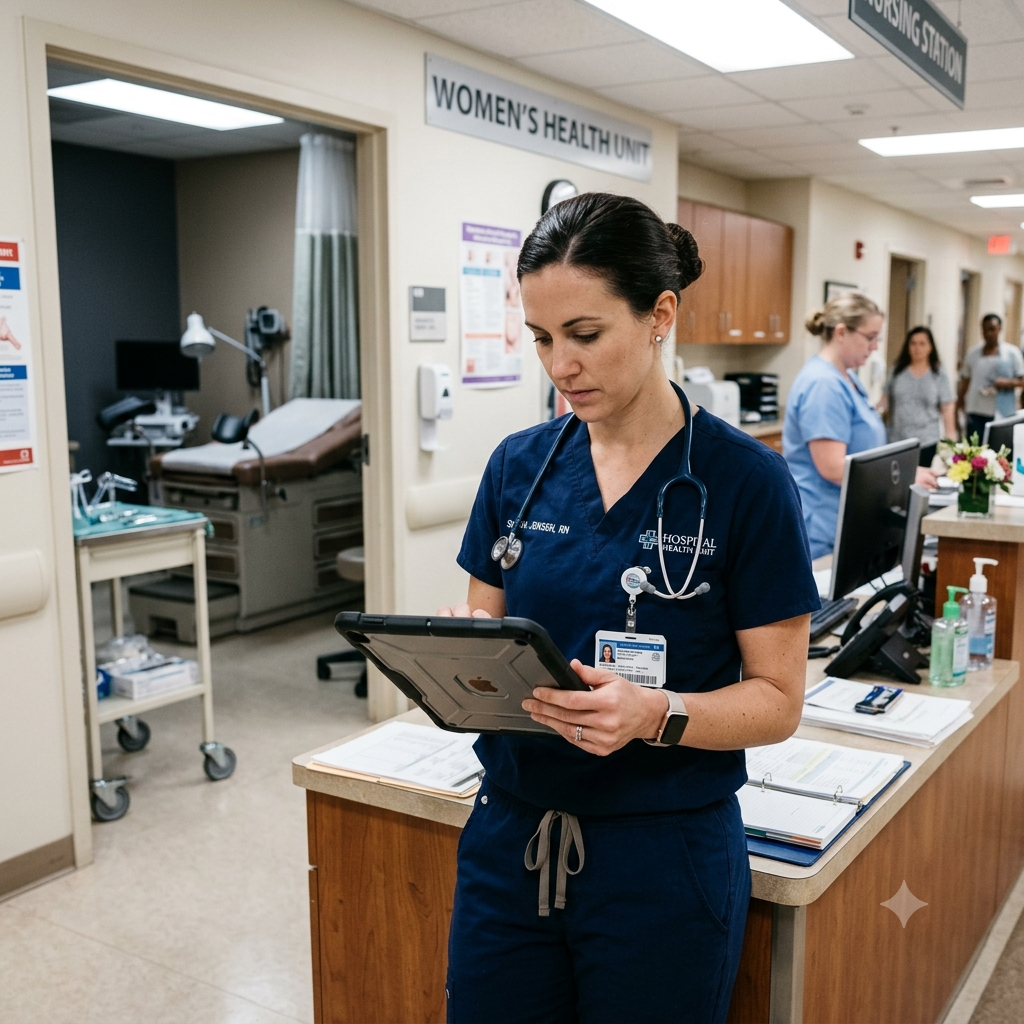
Abnormal uterine bleeding (AUB) is one of the most common gynecological complaints encountered in clinical practice — and a high-yield topic for the NCLEX. Whether working in a women’s health clinic, an emergency department, or a medical-surgical unit, the registered nurse must recognize the various presentations of AUB, understand the underlying etiologies, and implement timely, evidence-based interventions. Mastery of this content is essential not only for passing the NCLEX but for delivering safe, competent nursing care in real-world settings.
Defining Abnormal Uterine Bleeding: What Nurses Must Know
Normal menstrual bleeding occurs every 24–38 days, lasts 4–8 days, and involves a total blood loss of less than 80 mL per cycle. Any deviation from these parameters warrants further evaluation.
The term abnormal uterine bleeding encompasses a broad spectrum of menstrual disorders, including:
- Menorrhagia: Heavy or prolonged bleeding (>80 mL or >8 days) during regular cycles
- Metrorrhagia: Irregular bleeding between menstrual periods
- Menometrorrhagia: Heavy and irregular bleeding combined
- Oligomenorrhea: Infrequent cycles occurring more than 35 days apart
- Amenorrhea: Absence of menstruation for 3 or more months in a previously menstruating patient
- Postcoital bleeding: Spotting after sexual intercourse
- Postmenopausal bleeding: Any uterine bleeding occurring 12 months after the last menstrual period — always considered abnormal and requires urgent evaluation
Understanding these definitions helps the RN nurse accurately document and communicate findings using standardized terminology, which is critical for NCLEX priority-setting questions.
PALM-COEIN: The Framework Every Nurse Should Know
The International Federation of Gynecology and Obstetrics (FIGO) classification system, known as PALM-COEIN, organizes the causes of AUB into structural and non-structural categories. This is a high-yield framework for NCLEX and clinical practice alike.
Structural Causes (PALM):
- P — Polyp (endometrial or cervical polyps)
- A — Adenomyosis (endometrial tissue within the myometrium)
- L — Leiomyoma (uterine fibroids — the most common structural cause)
- M — Malignancy (endometrial, cervical, or uterine cancer) and hyperplasia
Non-Structural Causes (COEIN):
- C — Coagulopathy (e.g., von Willebrand disease, thrombocytopenia)
- O — Ovulatory dysfunction (e.g., PCOS, thyroid disorders, hyperprolactinemia)
- E — Endometrial causes (primary endometrial disorders)
- I — Iatrogenic (anticoagulants, hormonal contraceptives, IUDs)
- N — Not yet classified
Nursing documentation should capture all medications the patient takes — particularly anticoagulants, NSAIDs, and hormonal therapies — as these are common iatrogenic contributors to AUB.
Nursing Assessment of the Patient with AUB
A thorough nursing assessment is the foundation of the clinical approach to abnormal uterine bleeding. The registered nurse performs a structured evaluation that includes both subjective and objective data.
History
- Onset, duration, frequency, and quantity of bleeding (ask about pad/tampon saturation and clot passage)
- Last menstrual period (LMP) and menstrual cycle regularity
- Obstetric history (gravida, para, recent deliveries or miscarriages)
- Sexual activity, contraceptive use, and STI history
- Family history of bleeding disorders or gynecologic cancers
- Current medications, including supplements and herbal remedies
Physical Assessment
- Vital signs: Tachycardia and hypotension suggest significant blood loss
- Skin: Pallor, diaphoresis, or signs of anemia
- Abdomen: Uterine tenderness or palpable masses
- Pelvic exam (performed by provider; nurse assists and supports patient): assess for cervical lesions, polyps, or discharge
Diagnostic Workup (Nurse Facilitates and Monitors)
- CBC: Hemoglobin and hematocrit for anemia assessment; platelets for coagulopathy
- Pregnancy test (β-hCG): Mandatory in reproductive-age patients — rule out ectopic pregnancy
- TSH: Thyroid dysfunction is a common reversible cause of AUB
- Coagulation studies: PT, aPTT, von Willebrand panel if coagulopathy suspected
- Transvaginal ultrasound (TVUS): First-line imaging to evaluate the uterus and ovaries
- Endometrial biopsy: Indicated in patients over 45 or those with risk factors for endometrial cancer
- Hysteroscopy: Direct visualization of the uterine cavity when indicated
💡 NCLEX Tips for Abnormal Uterine Bleeding
- Always rule out pregnancy first in any reproductive-age patient with abnormal bleeding — ectopic pregnancy is a life-threatening emergency.
- Postmenopausal bleeding is cancer until proven otherwise — prioritize patient education and expedited workup.
- Heavy bleeding with pad saturation every hour for 2+ consecutive hours indicates hemorrhage — escalate immediately per SBAR.
- Von Willebrand disease is the most common inherited coagulopathy causing AUB in adolescent females — think of it when heavy periods begin at menarche.
- Leiomyomas (fibroids) are the most common structural cause — expect submucosal fibroids to cause the heaviest bleeding.
Nursing Interventions and Clinical Management
The nursing interventions for AUB depend on the severity of bleeding, the underlying cause, and the patient’s hemodynamic stability.
Acute Hemorrhage Management
When a patient presents with heavy, uncontrolled bleeding and signs of hemodynamic instability, the RN nurse initiates emergency interventions:
- Establish IV access — large-bore, two sites if possible
- Administer IV fluid resuscitation per provider orders
- Obtain type and screen in preparation for potential transfusion
- Monitor vital signs every 15 minutes until stable
- Prepare for blood transfusion if hemoglobin falls below threshold
- Administer IV tranexamic acid or high-dose estrogen as ordered — both are used in acute hemorrhagic AUB
- Assist with intrauterine balloon tamponade or surgical intervention (D&C) if conservative measures fail
Pharmacological Management
The registered nurse administers and monitors the following drug classes commonly used in AUB:
| Medication Class | Example | Purpose |
|---|---|---|
| Combined oral contraceptives | Ethinyl estradiol/norethindrone | Cycle regulation, reduce blood loss |
| Progestins | Medroxyprogesterone acetate | Oppose estrogen, treat endometrial hyperplasia |
| NSAIDs | Ibuprofen, mefenamic acid | Reduce prostaglandin-mediated blood loss |
| Antifibrinolytics | Tranexamic acid (Lysteda) | Inhibit fibrinolysis during heavy bleeding |
| GnRH agonists | Leuprolide (Lupron) | Suppress ovarian function; pre-surgical fibroid management |
| Levonorgestrel IUD | Mirena | First-line for long-term AUB management |
Nurses should teach patients on tranexamic acid that it is taken only during menses, not daily, and that it does not function as a contraceptive.
Surgical Interventions (Nurse’s Role: Preparation and Post-Op Care)
- Dilation and curettage (D&C): Both diagnostic and therapeutic; nursing care includes pre-op teaching, post-op monitoring for cramping, bleeding, and infection
- Endometrial ablation: Destroys the uterine lining; not appropriate for patients desiring future pregnancy
- Myomectomy or hysterectomy: Reserved for refractory cases or confirmed malignancy
Patient Education: What the Nurse Must Teach
Patient education is a nursing priority for AUB. A well-informed patient is more likely to adhere to treatment and recognize warning signs early. The RN nurse reviews the following with every patient:
- Track bleeding patterns: Use a menstrual diary or app to document cycle length, duration, and pad/tampon use
- Iron-rich diet: Encourage foods like lean meat, legumes, and leafy greens to combat iron-deficiency anemia
- Medication adherence: Stress the importance of taking hormonal therapies consistently
- Warning signs to report immediately:
- Soaking more than one pad per hour for two or more hours
- Fever, chills, or foul-smelling discharge (suggests infection)
- Dizziness, syncope, or shortness of breath
- Passage of large clots (greater than a quarter in size)
- Follow-up compliance: Emphasize the importance of scheduled ultrasounds and biopsies
Nurses caring for adolescent patients should approach conversations with sensitivity and ensure privacy, as young patients may underreport symptoms due to embarrassment. Involving the family (with patient consent) can support better outcomes.
Quick Reference: AUB Assessment Findings by Etiology
| Cause | Key Assessment Findings | Priority Nursing Action |
|---|---|---|
| Uterine fibroids | Pelvic pressure, heavy cyclic bleeding, enlarged uterus | Monitor CBC; prepare for ultrasound |
| Endometrial cancer | Postmenopausal bleeding, obesity, hypertension, DM | Urgent provider notification; biopsy facilitation |
| Ectopic pregnancy | Unilateral pelvic pain, missed period, positive β-hCG | Emergent escalation; prepare for surgical intervention |
| Coagulopathy | History of heavy bleeding since menarche, bruising | Coagulation labs; hematology consult |
| PCOS | Oligomenorrhea, hirsutism, weight gain | TSH and glucose labs; education on ovulatory dysfunction |
| IUD-related | Recent IUD insertion, cramping | Assess IUD placement; provider notification if displaced |
Conclusion
Abnormal uterine bleeding nursing care demands both clinical precision and compassionate communication. From the first assessment through discharge teaching, the registered nurse serves as the central coordinator of the patient’s evaluation and management. Understanding the PALM-COEIN classification, recognizing signs of hemorrhagic emergency, and delivering clear patient education are the pillars of effective AUB care — and they are directly tested on the NCLEX.
Build confidence in OB/maternity nursing by strengthening your knowledge through a comprehensive nursing bundle that covers women’s health, pharmacology, and clinical reasoning. Practice NCLEX-style questions at rn-nurse.com/nclex-qcm/ to reinforce your understanding of AUB scenarios, and explore additional OB/Maternity content through rn-nurse.com/nursing-courses/. The RN nurse who masters this content is prepared not just for the exam — but for the bedside.