
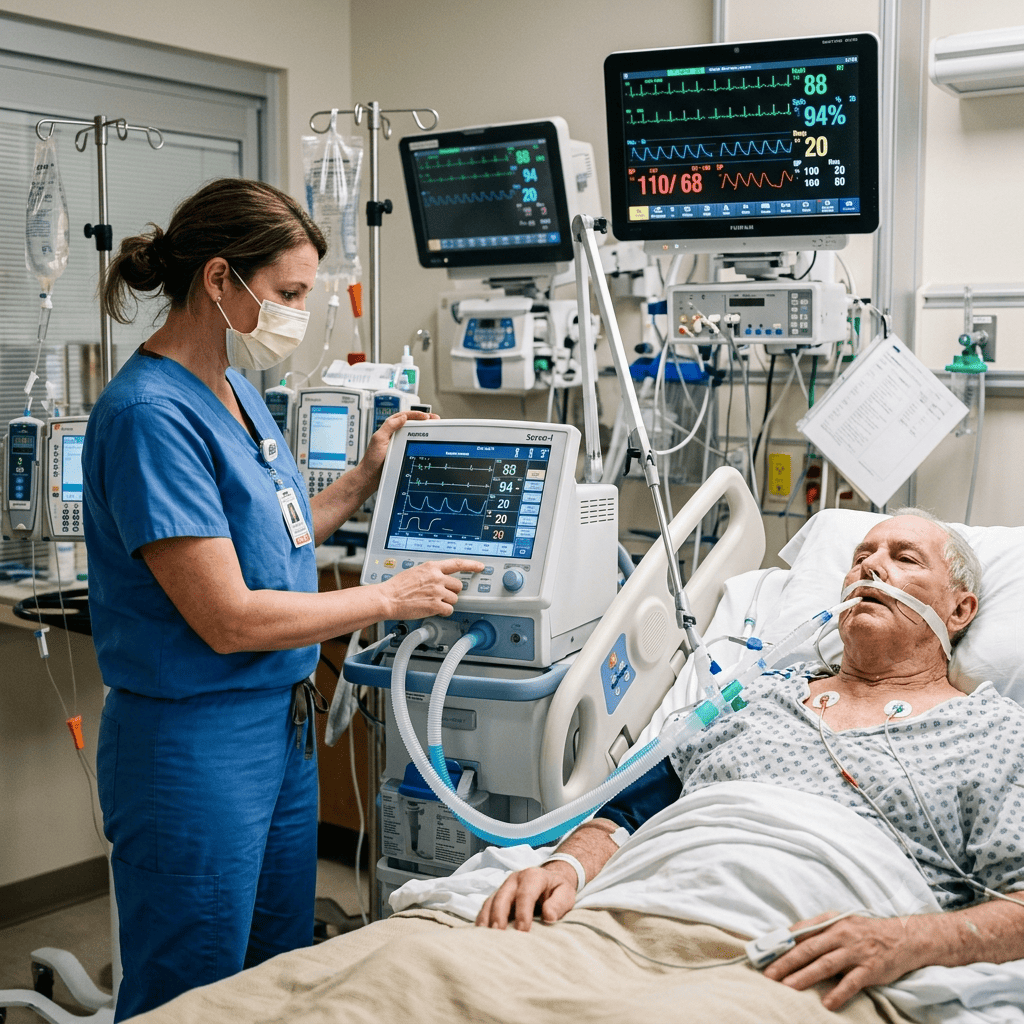
A patient’s oxygen saturation is dropping despite climbing FiO2, the chest X-ray shows bilateral infiltrates, and the physician mentions “ARDS.” For every nurse working in critical care, knowing how to apply the ARDS Berlin Criteria quickly and confidently can change a patient’s outcome. This diagnostic framework isn’t just a favorite on the NCLEX — it’s the backbone of how a registered nurse recognizes and responds to acute respiratory distress syndrome in real time. Whether you’re a student nurse or a practicing RN nurse, understanding this criteria set sharpens your assessment skills and prepares you for one of the most tested topics in critical care nursing.
What Is Acute Respiratory Distress Syndrome?
Acute respiratory distress syndrome (ARDS) is a life-threatening form of respiratory failure caused by widespread inflammation and increased permeability of the alveolar-capillary membrane. Fluid leaks into the alveoli, collapsing lung units and severely impairing gas exchange. Common triggers include:
- Sepsis (the leading cause)
- Pneumonia (bacterial or viral)
- Aspiration of gastric contents
- Trauma or pulmonary contusion
- Massive blood transfusion (TRALI)
- Pancreatitis
Because ARDS can develop rapidly, nursing vigilance and early recognition using a standardized framework — the Berlin Criteria — are essential for every nursing team member managing high-acuity patients.
The ARDS Berlin Criteria Explained
Established in 2012 to replace the older American-European Consensus Conference definition, the ARDS Berlin Criteria gives clinicians four clear diagnostic components. Every nurse preparing for the NCLEX should memorize these:
1. Timing
Respiratory symptoms must have an acute onset within one week of a known clinical insult or new/worsening respiratory symptoms.
2. Chest Imaging
Bilateral opacities on chest X-ray or CT scan that are not fully explained by effusions, lobar/lung collapse, or nodules.
3. Origin of Edema
Respiratory failure must not be fully explained by cardiac failure or fluid overload. An echocardiogram may be used to rule out a cardiogenic cause if no clear risk factor for ARDS is present.
4. Oxygenation Severity
The PaO2/FiO2 ratio (P/F ratio) is used to classify ARDS severity, measured with a minimum of 5 cm H2O of positive end-expiratory pressure (PEEP):
- Mild: P/F ratio 201–300 mmHg
- Moderate: P/F ratio 101–200 mmHg
- Severe: P/F ratio ≤ 100 mmHg
Understanding these four pillars gives every RN nurse a structured lens for interpreting labs, imaging, and hemodynamics together rather than in isolation.
Nursing Assessment Findings in ARDS
Recognizing early clinical signs allows the nursing team to escalate care before decompensation. Key assessment findings include:
- Tachypnea and increased work of breathing
- Refractory hypoxemia despite increasing supplemental oxygen
- Diffuse crackles on auscultation
- Use of accessory muscles, nasal flaring, retractions
- Restlessness, confusion, or altered mental status from hypoxia
- Decreased lung compliance (“stiff lungs”)
A nursing bundle approach — combining early sepsis screening, lung-protective ventilation checks, and hourly respiratory assessments — helps standardize care and reduce ARDS-related mortality across ICU teams.
Priority Nursing Interventions
Once ARDS is suspected or confirmed, nursing interventions focus on optimizing oxygenation while minimizing further lung injury:
- Position the patient prone (prone positioning) when ordered, which improves ventilation-perfusion matching in moderate-to-severe ARDS
- Monitor lung-protective ventilation settings — low tidal volumes (6 mL/kg predicted body weight) and plateau pressures under 30 cm H2O
- Titrate PEEP and FiO2 per protocol to maintain adequate oxygenation while avoiding oxygen toxicity
- Maintain a conservative fluid strategy unless the patient is hemodynamically unstable
- Assess for barotrauma (subcutaneous emphysema, sudden desaturation) which may indicate pneumothorax
- Provide sedation and comfort measures per protocol to reduce ventilator dyssynchrony
- Monitor arterial blood gases (ABGs) and trend the P/F ratio to track severity
Every registered nurse managing a ventilated ARDS patient should communicate P/F ratio trends clearly during SBAR handoffs, since this single value drives major treatment decisions.
💡 NCLEX Tips for ARDS Berlin Criteria
- Remember the acronym T-I-O-O: Timing, Imaging (bilateral), Origin (not cardiac), Oxygenation (P/F ratio)
- A P/F ratio ≤ 100 mmHg = severe ARDS — prioritize this patient first in a multi-patient NCLEX question
- Bilateral infiltrates + acute onset + hypoxemia NOT explained by heart failure = classic ARDS stem
- Prone positioning is tested frequently — know the contraindications (spinal instability, facial trauma, pregnancy)
- Low tidal volume ventilation (6 mL/kg) is the evidence-based standard of care for ARDS
Quick Reference Table: ARDS Berlin Criteria Severity
| Severity | P/F Ratio (with PEEP ≥ 5 cm H2O) | Approximate Mortality |
|---|---|---|
| Mild | 201–300 mmHg | ~27% |
| Moderate | 101–200 mmHg | ~32% |
| Severe | ≤ 100 mmHg | ~45% |
NCLEX-Style Practice Question
Stem: A client develops acute respiratory distress three days after a diagnosis of septic shock. Chest X-ray shows bilateral infiltrates. ABG results reveal a PaO2 of 68 mmHg on an FiO2 of 0.8, with PEEP set at 8 cm H2O. Which severity classification should the nurse anticipate based on the ARDS Berlin Criteria?
A. Mild ARDS B. Moderate ARDS C. Severe ARDS D. Cardiogenic pulmonary edema
Correct Answer: C. Severe ARDS
Rationale: The P/F ratio is calculated as 68 ÷ 0.8 = 85 mmHg, which falls below 100 mmHg — meeting the Berlin Criteria threshold for severe ARDS. The client also meets the timing criterion (within one week of a septic insult), the bilateral infiltrates criterion, and the non-cardiac origin criterion, since septic shock is the identified trigger rather than heart failure.
Bringing It All Together
The ARDS Berlin Criteria transforms a complex, high-mortality condition into four assessable components that every nurse can apply at the bedside: timing, imaging, origin, and oxygenation. Mastering this framework not only prepares nursing students for the NCLEX but strengthens clinical judgment in real ICU settings where rapid recognition saves lives. Pairing this knowledge with a structured nursing bundle for early sepsis and ventilator care ensures consistent, evidence-based management for every ARDS patient.
Ready to test your critical care knowledge further? Practice with more scenario-based questions at the NCLEX quiz center or deepen your skills with our comprehensive nursing courses.