
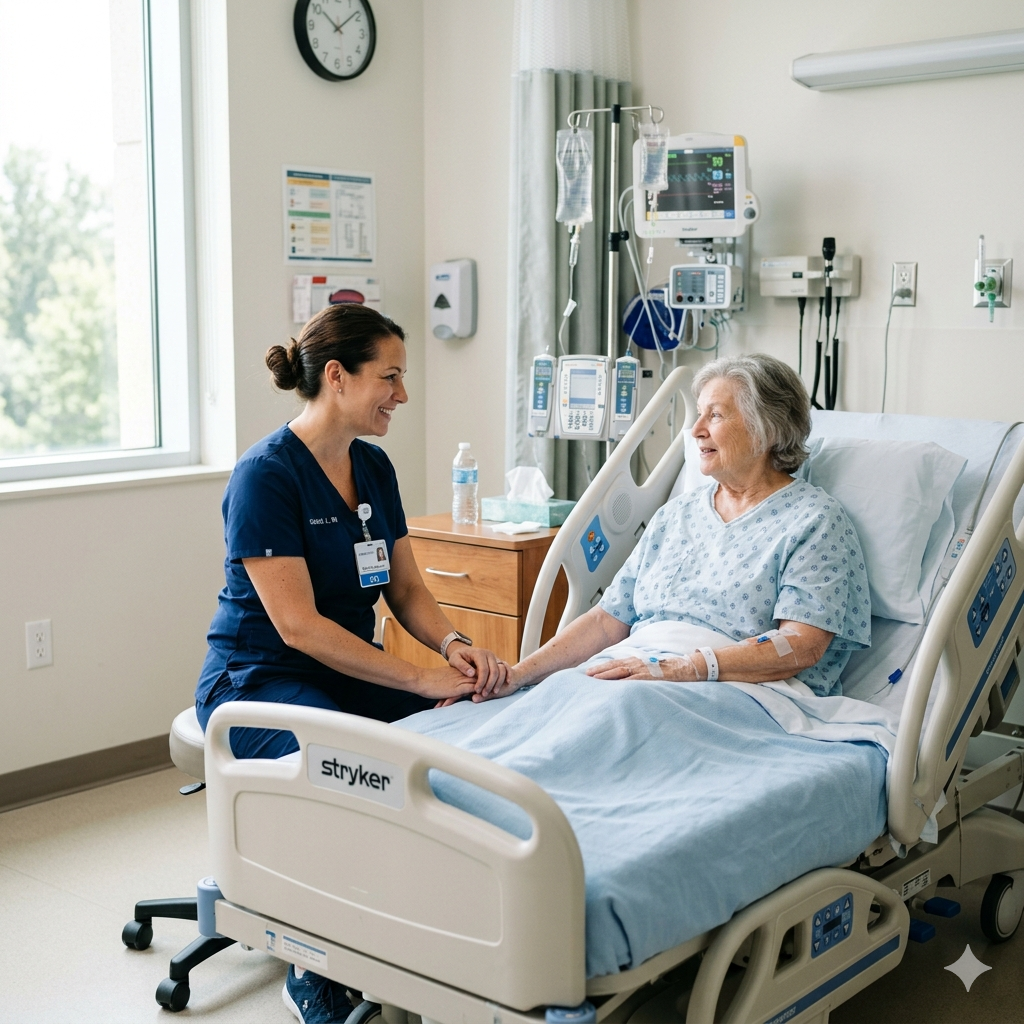
Body image changes after mastectomy represent one of the most psychologically complex challenges a nurse will encounter in oncology and medical-surgical settings. For patients undergoing mastectomy — the surgical removal of one or both breasts — the physical alteration is immediate, but the emotional and psychological adjustment unfolds over weeks, months, and sometimes years. Understanding this process is essential for every registered nurse providing holistic, patient-centered care. NCLEX questions routinely test a nurse’s ability to prioritize psychosocial interventions alongside physical recovery, making this topic high-yield for both clinical practice and board preparation.
Understanding Body Image in Nursing Practice
Body image is defined as a person’s perception of their own physical appearance and the feelings associated with that perception. In nursing, body image disturbance is recognized as a NANDA nursing diagnosis characterized by negative feelings about one’s physical self — feelings that can lead to social withdrawal, depression, sexual dysfunction, and non-adherence to follow-up care.
Mastectomy is one of the most significant surgical procedures affecting body image. The breast carries deep cultural, personal, and gender-related meanings across most societies. Losing one or both breasts — whether due to breast cancer, prophylactic mastectomy, or other indications — disrupts a patient’s established sense of self.
The registered nurse plays a pivotal role in recognizing early signs of body image disturbance, validating the patient’s experience, and coordinating interdisciplinary support. A structured nursing assessment and individualized care plan can dramatically improve psychosocial outcomes for this population.
Clinical Assessment of Body Image Disturbance After Mastectomy
Accurate nursing assessment is the foundation of effective care. An RN nurse should assess for body image disturbance using both objective and subjective data:
Subjective indicators:
- Patient verbalizes negative statements about surgical site (“I can’t look at myself,” “I don’t feel like a woman anymore”)
- Reports avoiding mirrors or uncovering the surgical area
- Expresses grief, shame, or anxiety about partner reactions
- Describes fear of social stigma or judgment
Objective indicators:
- Refuses to participate in wound care or dressing changes
- Avoids eye contact, remains withdrawn during interactions
- Declines visits from family or significant others
- Exhibits flat affect or tearfulness when the surgical area is referenced
Nurses should also screen for depression and anxiety using validated tools such as the PHQ-9 and GAD-7, as body image disturbance frequently co-occurs with these conditions in post-mastectomy patients. Early identification allows timely psychiatric or social work referral.
Nursing Interventions for Body Image Changes After Mastectomy
The nursing care plan for body image disturbance centers on therapeutic communication, patient education, and coordinated psychosocial support. Evidence-based nursing interventions include:
1. Establish a therapeutic relationship Begin with active listening. Allow the patient to express grief, anger, or fear without interruption or reassurance that minimizes her experience. Phrases such as “It sounds like this has been really difficult — tell me more about what you’re feeling” validate the patient’s experience and open the door to deeper assessment.
2. Involve the patient in wound care early Encourage the patient to participate in dressing changes or to view the incision site at her own pace. Forced viewing is never appropriate. Instead, offer support: “Many patients find it helpful to look at the incision gradually — I’ll be right here with you if you’d like to try.”
3. Provide anticipatory guidance Educate the patient about what to expect during healing, including changes in chest contour, scar formation, and options for breast reconstruction or prosthetics. Knowledge reduces uncertainty and restores a sense of control — a key nursing priority.
4. Facilitate peer support and referrals Connect patients with support groups such as the American Cancer Society’s Reach to Recovery program. Peer mentors who have undergone mastectomy provide lived experience that no nursing textbook can replicate. Referral to a certified oncology social worker or psychologist is appropriate when distress is significant or persistent.
5. Include significant others with patient consent Body image changes affect intimate relationships. With the patient’s permission, include partners in educational discussions to reduce fear and improve communication between the patient and her support system.
Psychosocial Nursing Diagnoses and NCLEX Priorities
For NCLEX preparation, the RN nurse must recognize that psychosocial needs do not take a back seat to physical recovery — particularly once immediate post-operative stability is established. Common nursing diagnoses related to body image changes after mastectomy include:
| Nursing Diagnosis | Related Factors | Defining Characteristics |
|---|---|---|
| Disturbed Body Image | Surgical removal of breast tissue | Negative verbalization, avoidance of wound |
| Situational Low Self-Esteem | Perceived loss of femininity/attractiveness | Withdrawal, tearfulness, self-deprecating statements |
| Grieving | Loss of body part and associated identity | Crying, anger, denial, bargaining |
| Sexual Dysfunction | Altered body image, fatigue, fear of rejection | Verbalized concern about intimacy, avoidance of partner |
| Risk for Complicated Grieving | Inadequate support systems, prior psychiatric history | Prolonged denial, social isolation |
On NCLEX, priority-setting questions in this context often follow Maslow’s Hierarchy and ABCs. Once physical safety is ensured, psychosocial priorities rise. A patient who verbalizes suicidal ideation in response to her mastectomy requires immediate psychiatric intervention — this is always the highest priority regardless of physical status.
Patient Education: Supporting Recovery and Adjustment
Patient education is a core nursing responsibility in the post-mastectomy period. The registered nurse should address the following topics before discharge:
- Prosthetics and reconstruction options: Patients should receive information about external breast prostheses, partial prostheses, and surgical reconstruction (immediate vs. delayed). Timing of reconstruction depends on treatment plan and patient preference — the nurse should facilitate referral to a plastic surgery consultation as appropriate.
- Clothing adaptations: Mastectomy bras, swimwear, and camisoles with built-in pockets for prostheses are widely available and can significantly improve comfort and confidence.
- Lymphedema prevention: Many post-mastectomy patients are at risk for lymphedema if axillary lymph nodes were removed. Nurses must teach arm precautions: avoid blood pressure cuffs, venipuncture, or tight clothing on the affected arm.
- Follow-up care: Emphasize the importance of regular oncology follow-up, self-breast exam of the remaining breast (if applicable), and adherence to adjuvant therapy (chemotherapy, radiation, hormonal therapy).
Comprehensive nursing education supports not only physical healing but also the patient’s sense of agency — a critical factor in positive body image adjustment.
💡 NCLEX Tips for Body Image Changes After Mastectomy
- Therapeutic communication is always the first intervention for a patient expressing body image disturbance — assess before acting.
- A patient who refuses to look at the surgical site is displaying a common, expected response — the RN nurse should document this, validate the feeling, and revisit readiness gently over time.
- Never force viewing of the incision. Patient autonomy and readiness must guide the pace of wound acceptance.
- If a post-mastectomy patient expresses suicidal ideation, this is a priority emergency — safety assessment and psychiatric referral come before all other nursing actions.
- NCLEX often tests the ability to differentiate grief (an expected, healthy response to loss) from complicated grief or clinical depression, which require additional intervention.
The Role of the Nursing Bundle in Oncology Care
Preparing for NCLEX with content on oncology nursing, psychosocial care, and medical-surgical priorities is significantly more effective with structured resources. A quality nursing bundle that integrates body image, cancer nursing, and psychosocial NCLEX content allows students to connect clinical concepts across domains rather than studying them in isolation. At rn-nurse.com, the nursing bundle is designed to reinforce exactly these connections — helping student nurses build both the knowledge base and the clinical reasoning skills that the NCLEX demands. Integrating a well-organized nursing bundle into your study routine ensures that psychosocial topics like body image disturbance receive the same rigorous attention as pharmacology or lab values.
Conclusion
Body image changes after mastectomy represent a profound intersection of physical nursing care and psychosocial support. The RN nurse who approaches this population with both clinical knowledge and therapeutic presence makes a meaningful difference in patient outcomes. From accurate nursing assessment and evidence-based interventions to patient education on prosthetics, lymphedema prevention, and peer support, the registered nurse is central to guiding patients through one of the most challenging adjustments of their lives.
For nursing students preparing for NCLEX, this content is high-yield — and practicing with targeted questions is essential. Visit rn-nurse.com/nclex-qcm/ to test your knowledge with NCLEX-style questions on oncology and psychosocial nursing. Explore the full nursing bundle at rn-nurse.com/nursing-courses/ to build the clinical confidence you need on exam day and beyond.