
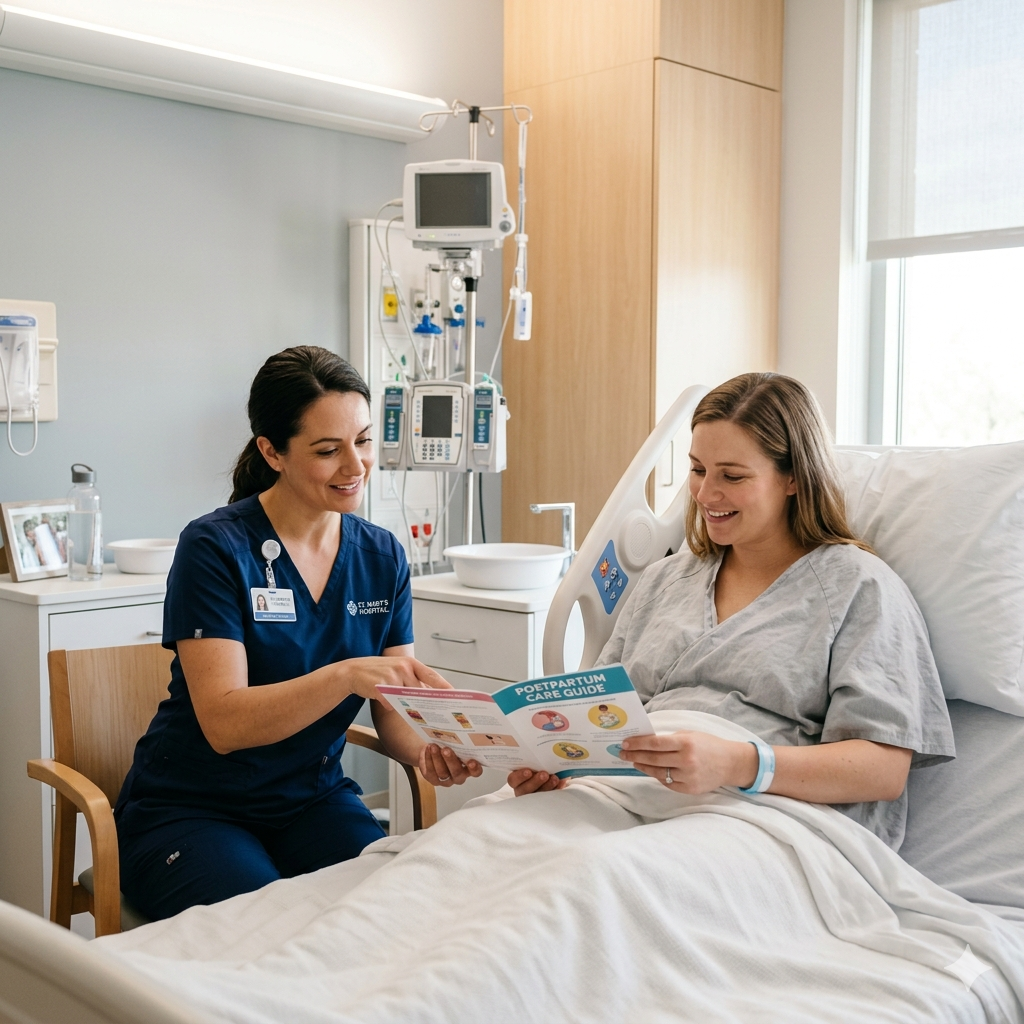
The postpartum period is one of the most physiologically dynamic phases a patient will experience. Dramatic hormonal shifts following delivery affect everything from mood and lactation to vaginal tissue and sexual function. For the registered nurse working in labor and delivery or postpartum care, understanding these changes is essential — both for providing evidence-based patient education and for mastering OB/maternity content on the NCLEX. Postpartum hormonal shifts and sexual recovery are high-yield topics that require clinical precision and compassionate communication.
The Hormonal Landscape After Delivery
Immediately after the placenta is delivered, the body undergoes a rapid hormonal cascade. Estrogen and progesterone — which were at peak levels during the third trimester — plummet sharply within the first 24 to 72 hours postpartum. This sudden drop is the physiological trigger for milk production and is also responsible for many of the mood-related symptoms new mothers report.
Key hormonal changes the nurse must understand include:
- Estrogen decline: Causes vaginal atrophy, decreased lubrication, and thinning of vaginal epithelium — all of which directly affect sexual comfort and recovery.
- Progesterone decline: Contributes to mood instability, fatigue, and sleep disruption.
- Prolactin elevation: Surges in breastfeeding patients, suppressing the hypothalamic-pituitary-ovarian axis and further reducing estrogen levels.
- Oxytocin release: Stimulated by breastfeeding, promoting uterine involution and maternal bonding, but also contributing to decreased libido in some patients.
For NCLEX preparation, understanding the relationship between prolactin, estrogen suppression, and lactational amenorrhea is essential. The RN nurse must recognize that breastfeeding patients are particularly vulnerable to prolonged estrogen deficiency and its sexual side effects.
Physiological Effects on Sexual Function
Postpartum hormonal shifts create a constellation of physical changes that directly impact sexual recovery. The registered nurse plays a critical role in normalizing these changes during postpartum teaching.
Vaginal dryness and dyspareunia (painful intercourse) are among the most commonly reported concerns. Estrogen deficiency reduces vaginal secretions and decreases elasticity of the vaginal walls. In breastfeeding patients, this effect can persist for the entire duration of lactation — sometimes 12 months or longer.
Additional physiological factors include:
- Perineal trauma: Lacerations, episiotomies, and healing tissue increase tactile sensitivity and discomfort at the vaginal introitus.
- Pelvic floor dysfunction: Stretching or tearing of the levator ani and surrounding muscles during vaginal delivery may cause pelvic pain, reduced sensation, or urinary incontinence, all of which affect sexual confidence and function.
- Uterine involution: The uterus returns to its pre-pregnancy size over approximately 6 weeks; cramping during sexual activity is possible until involution is complete.
- Fatigue: Prolactin-driven sleep disruption, newborn feeding schedules, and anemia from delivery blood loss significantly reduce libido.
Nursing documentation should reflect patient-reported sexual concerns as part of the comprehensive BUBBLE-HE postpartum assessment — specifically under Emotional and Homan’s (expanded to include overall physical status). Proactively addressing these concerns reduces patient anxiety and supports healthy recovery.
Nursing Assessment and the BUBBLE-HE Framework
Postpartum nursing assessment follows the structured BUBBLE-HE mnemonic, which guides the registered nurse in a head-to-toe evaluation of the postpartum patient:
| Component | Assessment Focus |
|---|---|
| B – Breasts | Engorgement, nipple integrity, lactation support |
| U – Uterus | Fundal height, firmness, involution progress |
| B – Bowel | Return of bowel function, constipation risk |
| B – Bladder | Voiding patterns, urinary retention, incontinence |
| L – Lochia | Color, amount, odor — signs of hemorrhage or infection |
| E – Episiotomy/Perineum | Healing, REEDA scale assessment |
| H – Homans / Overall | DVT screening, emotional status, pain |
| E – Emotional | Mood, bonding, signs of postpartum depression |
The Episiotomy/Perineum and Emotional components are most directly related to sexual recovery. The nurse should use open-ended, non-judgmental language when inquiring about sexual concerns — for example: “Many patients have questions about when it’s safe to resume sexual activity. Is that something you’d like to talk about?”
This approach supports therapeutic communication while gathering clinically relevant data. NCLEX questions frequently test the nurse’s ability to prioritize patient education in a patient-centered, non-assumptive manner.
Patient Education: Resuming Sexual Activity Postpartum
One of the most important nursing responsibilities during postpartum discharge teaching is addressing the timeline and safety of resuming sexual activity. Current clinical guidance — supported by the American College of Obstetricians and Gynecologists (ACOG) — recommends waiting until at least 6 weeks postpartum, after the provider has confirmed:
- Complete healing of perineal lacerations or episiotomy
- Resolution of lochia (cessation of postpartum bleeding)
- Adequate pelvic floor healing
The nurse should educate patients on the following strategies for managing postpartum sexual discomfort:
- Water-based lubricants: First-line recommendation for vaginal dryness; safe for use with condoms and breastfeeding patients.
- Topical estrogen: May be prescribed by the provider for severe vaginal atrophy; the RN nurse should counsel patients that minimal systemic absorption occurs and it is generally compatible with breastfeeding.
- Pelvic floor physical therapy: Refer patients experiencing persistent dyspareunia, pelvic pain, or incontinence — referral is within the nurse’s scope of advocacy.
- Gradual resumption: Encourage communication with partners and reinforce that some discomfort is normal during initial postpartum intercourse.
Contraception counseling is also a critical component of this teaching. Patients should understand that ovulation can occur before the first postpartum menstrual period, meaning pregnancy is possible even without a regular cycle returning.
💡 NCLEX Tips for Postpartum Hormonal Shifts and Sexual Recovery
- Prolactin suppresses estrogen: Breastfeeding patients will have greater and more prolonged vaginal dryness than formula-feeding patients — a common NCLEX distractor.
- Dyspareunia is expected: The nurse should normalize postpartum sexual discomfort rather than treat it as pathological, while still assessing for infection or trauma.
- 6-week guideline: The standard recommendation for resuming sexual activity is after the 6-week postpartum visit, but this is individualized based on healing.
- Contraception before menses: Ovulation precedes the first period; NCLEX frequently tests this concept in the context of family planning education.
- BUBBLE-HE includes emotional: Always assess mood and bonding as part of postpartum assessment — it is directly connected to sexual recovery and overall well-being.
Psychological Dimensions of Postpartum Sexual Recovery
Hormonal changes do not occur in isolation. The registered nurse must also assess psychological factors that influence sexual recovery, including postpartum mood disorders, body image concerns, and relationship dynamics.
Postpartum depression (PPD) affects approximately 1 in 7 birthing people and is strongly linked to the estrogen and progesterone drop following delivery. Decreased libido is both a symptom of PPD and a consequence of the underlying hormonal shifts. Screening with validated tools such as the Edinburgh Postnatal Depression Scale (EPDS) is standard nursing practice.
Body image concerns are also prevalent. Physical changes to the abdomen, breasts, perineum, and overall body may affect a patient’s sense of attractiveness or comfort with intimacy. Nursing care that affirms the patient’s experience and validates these concerns — without minimizing them — is central to person-centered postpartum care.
The nursing bundle for OB/maternity should include anticipatory guidance on these psychosocial dimensions, ideally beginning in the prenatal period so patients are prepared for postpartum changes before they occur.
Conclusion
Postpartum hormonal shifts and sexual recovery represent a high-yield area of OB/maternity nursing that every RN nurse must understand thoroughly — both for the NCLEX and for compassionate clinical practice. The rapid decline of estrogen and progesterone, the influence of prolactin during breastfeeding, and the physical healing demands of the perineum all converge to shape a patient’s postpartum sexual experience.
Registered nurses are uniquely positioned to normalize these changes, provide evidence-based education, and identify patients who need additional support. By integrating the BUBBLE-HE framework, therapeutic communication, and targeted discharge teaching, the nurse ensures that patients leave with the knowledge and confidence to navigate postpartum recovery.
Sharpen your OB/maternity NCLEX readiness with practice questions at rn-nurse.com/nclex-qcm/, or explore the full nursing bundle and OB courses at rn-nurse.com/nursing-courses/.