
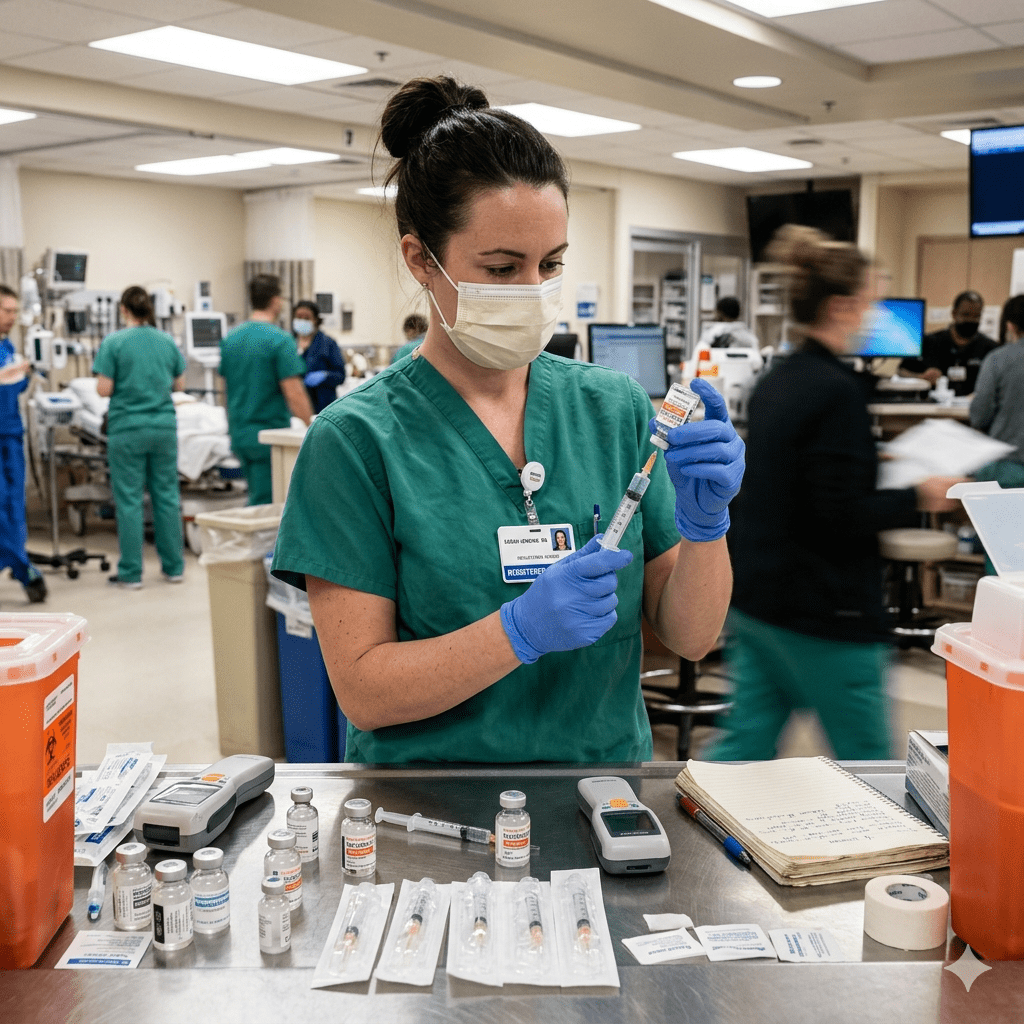
Toxicology emergencies demand speed, precision, and a thorough command of pharmacology. When a patient arrives in the emergency department with a suspected overdose or poisoning, the registered nurse is often the first clinician to assess, stabilize, and initiate treatment. Because of this front-line role, mastery of antidotes in toxicology emergencies is not just an NCLEX requirement — it is a fundamental competency for every nurse working in acute care. From opioid overdoses to acetaminophen toxicity, knowing which antidote to reach for — and when — can be the difference between life and death. This guide walks through the most high-yield antidote pairings tested on the NCLEX and encountered in real-world nursing practice.
Why Antidotes Matter in Nursing Practice
An antidote is an agent that counteracts the toxic effects of a specific substance. In toxicology emergencies, nurses must deliver interventions rapidly and ground every decision in evidence. Delays in antidote administration can lead to irreversible organ damage, respiratory failure, cardiac arrest, or death.
Furthermore, the role of the nurse extends well beyond simply administering the antidote. A skilled RN nurse must:
- Recognize early signs and symptoms of poisoning or overdose
- Identify the likely causative agent based on the clinical presentation
- Understand the mechanism of the antidote and its expected therapeutic effects
- Monitor for adverse reactions and treatment response
- Provide thorough patient and family education following stabilization
For nursing students, this topic represents one of the most high-yield areas for the NCLEX pharmacology section. Therefore, a solid nursing bundle that covers toxicology, antidotes, and emergency pharmacology is an essential study tool.
Opioid Overdose: Naloxone (Narcan)
Naloxone is the cornerstone antidote for opioid toxicity. Opioids — including morphine, fentanyl, heroin, and oxycodone — bind to mu-opioid receptors in the central nervous system, causing profound respiratory depression, miosis (pinpoint pupils), and altered mental status. Together, these three findings form the classic hallmark triad of opioid overdose.
Mechanistically, naloxone works by competitively blocking opioid receptors, rapidly reversing CNS and respiratory depression. Nurses can administer it intranasally, intramuscularly, intravenously, or subcutaneously depending on available access.
Key nursing considerations:
- Onset of action: 2–5 minutes IV; 5–15 minutes IM/intranasal
- Because the duration is shorter than most opioids, repeat dosing or a continuous infusion may be necessary
- Monitor for opioid withdrawal: agitation, tachycardia, hypertension, vomiting
- Reassess respiratory rate, oxygen saturation, and level of consciousness continuously
- Start with 0.4–2 mg IV and titrate to the patient’s respiratory response
Acetaminophen Overdose: N-Acetylcysteine (NAC)
Acetaminophen (Tylenol) overdose ranks among the most common causes of acute liver failure in the United States. When patients ingest toxic amounts, the body metabolizes acetaminophen into NAPQI, a hepatotoxic metabolite that depletes hepatic glutathione and causes direct liver cell necrosis.
In response, N-Acetylcysteine (NAC) replenishes glutathione stores and serves as a substitute substrate for NAPQI, effectively preventing liver damage. Consequently, NAC works best when nurses administer it within 8–10 hours of ingestion.
Key nursing considerations:
- Apply the Rumack-Matthew nomogram to assess toxicity risk based on serum acetaminophen level and time since ingestion
- Administer IV NAC as a loading dose, then follow with two additional infusions over 21 hours
- Monitor liver function tests (LFTs), INR, and serum creatinine throughout treatment
- Watch for anaphylactoid reactions with IV NAC: flushing, rash, bronchospasm
- Teach patients to avoid combining acetaminophen with alcohol, as this dramatically increases hepatotoxic risk
Benzodiazepine Overdose: Flumazenil
Flumazenil is a competitive GABA-A receptor antagonist that reverses benzodiazepine sedation and overdose. Benzodiazepines enhance the effect of GABA, causing sedation, respiratory depression, and amnesia. As a result, patients present with CNS depression that may mimic other toxidromes.
Key nursing considerations:
- Because flumazenil carries a very short half-life (approximately 1 hour), resedation is a significant risk — nurses must monitor these patients closely
- Contraindicated in patients with chronic benzodiazepine use, as it may precipitate severe withdrawal and seizures
- Also contraindicated when patients have concurrently ingested tricyclic antidepressants due to seizure risk
- Administer 0.2 mg IV over 30 seconds; repeat at 1-minute intervals up to 3 mg total if needed
- Maintain continuous monitoring for resedation and airway compromise after each dose
Notably, flumazenil sees less universal use than naloxone. Many toxicologists instead reserve it for procedural sedation reversal rather than recreational overdose, primarily because of the seizure risk.
Organophosphate Poisoning: Atropine and Pralidoxime
Organophosphate poisoning — caused by pesticide or nerve agent exposure — produces a life-threatening cholinergic toxidrome. These substances inhibit acetylcholinesterase, causing acetylcholine to accumulate at nerve synapses. The resulting clinical picture follows the mnemonic SLUDGE: Salivation, Lacrimation, Urination, Defecation, GI distress, Emesis — along with bronchospasm and bradycardia.
In this scenario, clinicians use two antidotes in combination:
- Atropine — an anticholinergic agent that blocks muscarinic receptors. Nurses give large doses rapidly (2–4 mg IV initially, repeated every 5–10 minutes) until secretions dry. Importantly, the clinical endpoint is drying of secretions, not pupil dilation.
- Pralidoxime (2-PAM) — reactivates acetylcholinesterase, but only when nurses give it early before “aging” — meaning irreversible enzyme binding — occurs.
Beyond antidote administration, nursing priorities include airway management, aggressive suctioning, and continuous cardiac monitoring. This scenario also appears frequently on the NCLEX as a classic toxicology question.
Heparin Overdose: Protamine Sulfate
Anticoagulation therapy is widespread in nursing practice, and heparin toxicity — manifested as severe or life-threatening bleeding — demands rapid reversal. Protamine sulfate is a positively charged protein that binds to and neutralizes negatively charged heparin molecules, forming an inactive complex.
Key nursing considerations:
- Calculate the dose based on the amount of heparin the patient received and the time elapsed since the last dose
- Administer slowly IV (no faster than 5 mg/minute) to prevent hypotension, bradycardia, and anaphylaxis
- Monitor aPTT after administration to assess reversal effectiveness
- Keep resuscitation equipment immediately available, as protamine reactions can escalate quickly
- Additionally, nurses can use protamine to partially reverse low molecular weight heparin (LMWH) such as enoxaparin, though the reversal remains incomplete
Digoxin Toxicity: Digoxin Immune Fab (Digibind/DigiFab)
Digoxin toxicity poses a serious risk in elderly patients and those with renal impairment. When digoxin levels climb into toxic range, patients develop bradyarrhythmias, heart block, and characteristic yellow-green visual disturbances. On the ECG, nurses will recognize scooped ST depression — often called the “Salvador Dali smile” — along with AV blocks.
Digoxin Immune Fab (Digibind) reverses toxicity by binding free digoxin molecules in the bloodstream, preventing receptor binding and enabling renal elimination.
Key nursing considerations:
- Base the dosing on the amount of digoxin the patient ingested or on steady-state serum levels
- After administration, serum digoxin levels will appear falsely elevated because assays detect the bound Fab fragments
- Monitor potassium closely, since reversal of toxicity may unmask underlying hypokalemia
- Watch for recurrent arrhythmias and signs of heart failure exacerbation
- Avoid class IA antiarrhythmics (procainamide, quinidine) in digoxin toxicity, as they worsen conduction and increase arrhythmia risk
Quick Reference Table: Key Antidotes for NCLEX
| Toxin / Drug | Antidote | Route | Key Nursing Note |
|---|---|---|---|
| Opioids | Naloxone (Narcan) | IV, IM, intranasal | Short duration — watch for resedation |
| Acetaminophen | N-Acetylcysteine (NAC) | IV or PO | Most effective within 8–10 hours |
| Benzodiazepines | Flumazenil | IV | Risk of seizures in chronic users |
| Organophosphates | Atropine + Pralidoxime | IV | Dry secretions = atropine endpoint |
| Heparin | Protamine Sulfate | IV (slow) | Monitor aPTT; watch for anaphylaxis |
| Digoxin | Digoxin Immune Fab | IV | Falsely elevated levels post-dose |
| Iron Overdose | Deferoxamine | IV/IM | Red-brown urine = iron chelation |
| Methanol/Ethylene Glycol | Fomepizole or Ethanol | IV | Inhibits alcohol dehydrogenase |
💡 NCLEX Tips for Antidotes in Toxicology Emergencies
- Match the antidote to the toxidrome first — opioid (miosis, respiratory depression) → naloxone; cholinergic (SLUDGE) → atropine.
- Naloxone wears off faster than most opioids — always monitor for return of sedation and repeat dosing as needed.
- Flumazenil is contraindicated in chronic benzodiazepine users and in mixed TCA/benzo overdoses because of seizure risk.
- NAC works best early — the Rumack-Matthew nomogram guides treatment decisions; time since ingestion is the critical variable.
- Atropine endpoint in organophosphate poisoning is drying of secretions, not heart rate or pupil size.
Conclusion
Antidotes in toxicology emergencies represent one of the most clinically urgent and NCLEX-tested areas of pharmacology nursing. Consequently, every registered nurse working in emergency, critical care, or medical-surgical settings must rapidly identify toxic syndromes and initiate appropriate antidote therapy without hesitation. From naloxone for opioids to NAC for acetaminophen, command of these drug-antidote pairings directly saves lives.
Nursing students preparing for the NCLEX should therefore prioritize this content in their study plan. A comprehensive nursing bundle that includes toxicology scenarios, pharmacology drills, and NCLEX-style questions will reinforce these critical pairings effectively. In addition, practicing toxidrome identification and linking each presentation to the correct antidote builds both the speed and accuracy the exam demands — and that real-world RN nurse practice requires.
Ready to test your knowledge? Visit rn-nurse.com/nclex-qcm/ for NCLEX practice questions on pharmacology and toxicology, or explore the full nursing courses library to deepen your exam preparation.