
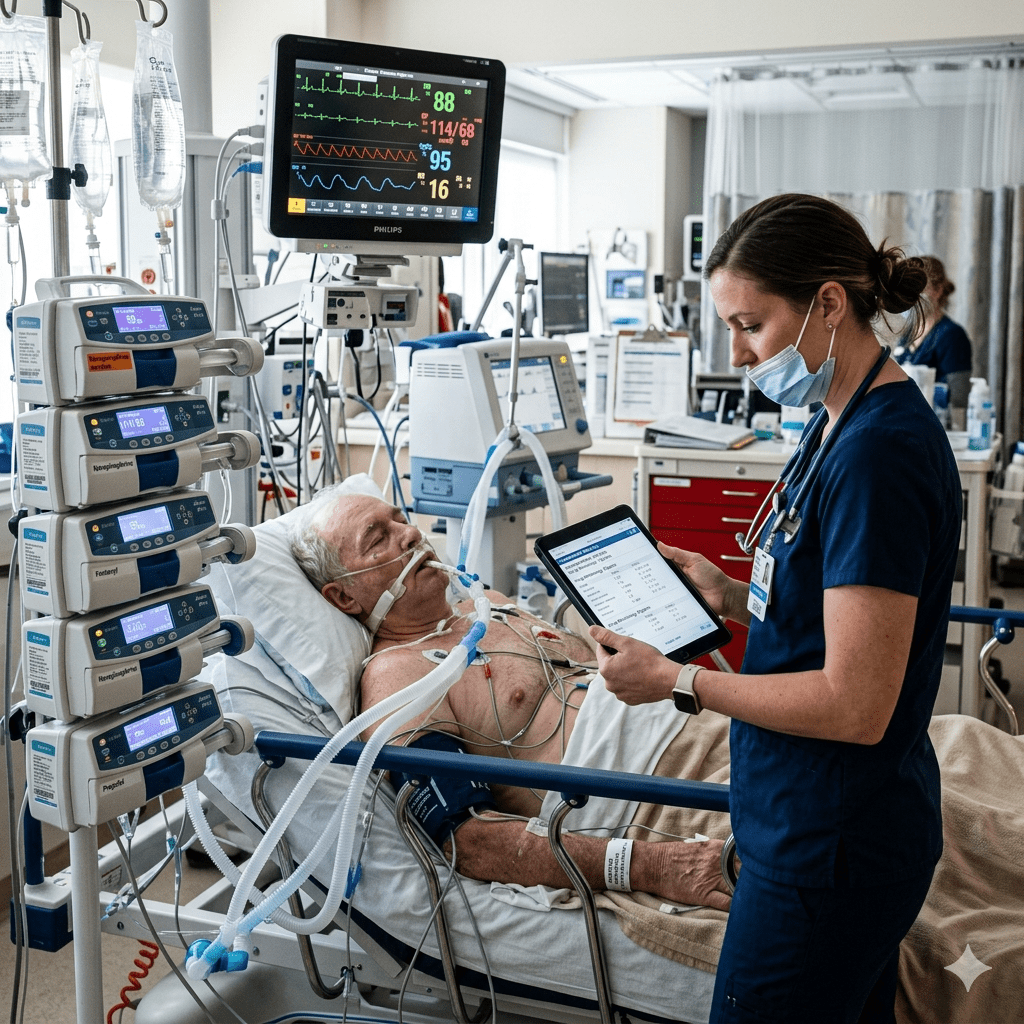
In intensive care units, patients often receive powerful medications that require careful monitoring to ensure safety and effectiveness. One of the most important strategies used in critical care is Therapeutic Drug Monitoring (TDM). This process helps healthcare professionals maintain drug levels within a safe and effective range.
For a registered nurse working in the ICU, understanding therapeutic drug monitoring is essential for safe medication administration and patient management. It is also a key topic for NCLEX pharmacology and critical care nursing questions. Many hospitals implement medication safety protocols as part of a structured nursing bundle designed to monitor high-risk drugs and prevent toxicity. The RN nurse plays a central role in collecting samples, monitoring patient responses, and reporting abnormal drug levels.
What Is Therapeutic Drug Monitoring?
Therapeutic Drug Monitoring refers to the measurement of specific drug levels in the bloodstream to ensure they remain within the therapeutic range.
The therapeutic range is the concentration of medication that produces the desired clinical effect without causing harmful side effects.
In critical care environments, small changes in drug levels can have significant effects. Therefore, registered nurses must closely monitor laboratory results and patient responses.
Therapeutic drug monitoring helps healthcare teams:
- Ensure medications are effective
- Prevent drug toxicity
- Adjust dosing for individual patients
- Improve overall treatment outcomes
These principles are important in both clinical nursing practice and NCLEX preparation.
Why Therapeutic Drug Monitoring Is Important in Critical Care
Critically ill patients often have altered physiology that affects how medications are processed in the body.
Factors that influence drug levels include:
- Impaired kidney function
- Liver dysfunction
- Fluid imbalances
- Drug interactions
- Changes in protein binding
Because of these variables, the RN nurse must closely monitor medication levels and clinical responses.
Without proper monitoring, patients may experience drug toxicity or inadequate treatment, both of which can lead to serious complications.
Common Drugs That Require Monitoring
Several medications commonly used in critical care require therapeutic drug monitoring.
Antibiotics
Certain antibiotics must remain within a narrow therapeutic range to effectively treat severe infections.
Examples include medications used for serious bacterial infections in ICU patients.
Anticonvulsants
Anticonvulsant medications require monitoring to ensure seizure control while preventing toxicity.
Cardiac Medications
Some cardiac drugs used in critically ill patients have narrow therapeutic windows, requiring careful monitoring.
Immunosuppressants
Patients who have undergone organ transplantation often require drug level monitoring to prevent rejection and toxicity.
The registered nurse must be familiar with these medications and the laboratory tests used to measure drug concentrations.
Understanding Therapeutic Range
The therapeutic range refers to the safe concentration of a drug in the bloodstream that produces the desired effect.
If the drug level is:
- Too low, the medication may not be effective.
- Too high, the patient may experience toxic side effects.
Maintaining this balance is essential in critical care.
The RN nurse helps ensure drug levels remain within this range through careful monitoring and communication with the healthcare team.
Peak and Trough Levels
Two important measurements in therapeutic drug monitoring are peak levels and trough levels.
Peak Level
The peak level represents the highest concentration of the drug in the bloodstream after administration.
Peak levels help determine whether the drug reaches an effective concentration.
Trough Level
The trough level is the lowest concentration of the drug in the bloodstream just before the next dose.
Trough levels help determine whether drug levels remain within the therapeutic range over time.
The registered nurse is responsible for collecting blood samples at the correct times to ensure accurate results.
Nursing Responsibilities in Therapeutic Drug Monitoring
Therapeutic drug monitoring involves several important nursing responsibilities in critical care settings.
Accurate Blood Sample Collection
The registered nurse must collect blood samples at the correct times, especially for peak and trough measurements.
Incorrect timing can lead to inaccurate drug level interpretation.
Monitoring Patient Response
In addition to laboratory values, the RN nurse must assess the patient’s clinical response to medications.
Key assessments include:
- Vital signs
- Neurological status
- Cardiac rhythm
- Kidney function
- Signs of toxicity
Documentation and Communication
The registered nurse must accurately document drug levels and patient responses.
Abnormal results should be reported promptly to the healthcare provider so medication adjustments can be made.
Many hospitals integrate these responsibilities into a structured nursing bundle focused on high-alert medication safety.
Risks of Poor Drug Monitoring
If therapeutic drug monitoring is not performed correctly, patients may experience serious complications.
Possible risks include:
- Drug toxicity
- Organ damage
- Treatment failure
- Increased hospital stay
- Higher mortality risk
Because of these risks, careful monitoring by the nursing team is essential in critical care units.
NCLEX Tips for Therapeutic Drug Monitoring
For NCLEX preparation, remember these key concepts:
- Therapeutic drug monitoring measures drug levels in the bloodstream
- The goal is to maintain medications within the therapeutic range
- Peak levels represent the highest drug concentration
- Trough levels represent the lowest concentration before the next dose
- Accurate blood sampling timing is essential
These principles are frequently tested in pharmacology and critical care nursing questions.
Conclusion
Therapeutic Drug Monitoring is a vital component of safe medication management in critical care environments. By measuring drug concentrations and assessing patient responses, healthcare teams can ensure medications remain both effective and safe.
The registered nurse plays a critical role in this process, from collecting blood samples to monitoring patient outcomes. Following evidence-based protocols and structured nursing bundle guidelines helps improve medication safety and patient care.
Understanding therapeutic drug monitoring is also essential for NCLEX success and advanced pharmacology knowledge, making it a fundamental concept for every RN nurse and nursing student working in critical care settings.