
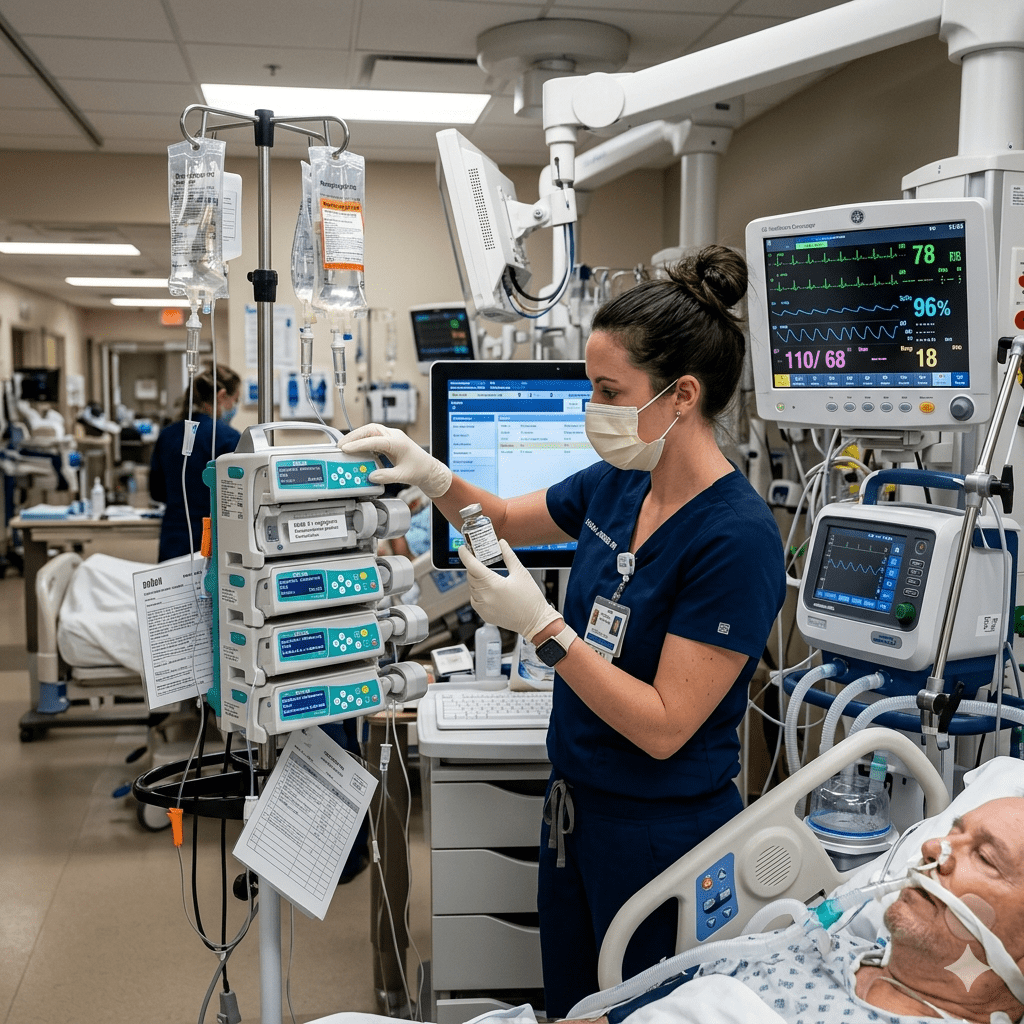
In critical care units, medications must work quickly, safely, and precisely. Understanding how drugs move through the body and how they affect the body is essential for every registered nurse working in intensive care. Two key concepts that guide safe medication administration are pharmacokinetics and pharmacodynamics.
For nursing students preparing for the NCLEX and practicing RN nurses, these concepts are critical for understanding ICU medications such as sedatives, vasopressors, antibiotics, and cardiac drugs. Many hospitals also implement medication safety protocols or a nursing bundle designed to improve drug administration and monitoring in critical care settings.
This guide explains the difference between pharmacokinetics and pharmacodynamics and how these principles apply to ICU drug therapy in modern nursing practice.
What Is Pharmacokinetics?
Pharmacokinetics refers to how the body processes a drug over time. It describes how medications are absorbed, distributed, metabolized, and eliminated.
In simple terms, pharmacokinetics answers the question:
“What does the body do to the drug?”
For a registered nurse administering medications in the ICU, understanding pharmacokinetics helps determine:
- How fast a drug begins to work
- How long the drug stays in the body
- The correct dosing interval
- Risk of drug accumulation
These principles are frequently tested on the NCLEX and are essential knowledge for safe nursing medication administration.
The Four Phases of Pharmacokinetics
Pharmacokinetics is commonly summarized using the ADME model.
Absorption
Absorption refers to how a drug enters the bloodstream after administration.
Common routes include:
- Intravenous (IV)
- Oral
- Intramuscular
- Subcutaneous
In the ICU, many medications are given intravenously for rapid absorption, allowing the RN nurse to achieve immediate therapeutic effects.
Distribution
Distribution describes how the drug spreads throughout the body’s tissues and organs after entering the bloodstream.
Several factors influence distribution:
- Blood flow to organs
- Plasma protein binding
- Body fat percentage
- Tissue permeability
A registered nurse must consider distribution when monitoring medication effects, especially in critically ill patients.
Metabolism
Metabolism is the chemical breakdown of drugs, primarily in the liver.
Liver enzymes convert medications into forms that are easier for the body to eliminate.
In ICU patients with liver dysfunction, drug metabolism may slow down. This increases the risk of drug toxicity, which the RN nurse must carefully monitor.
Excretion
Excretion is the removal of drugs from the body, usually through the kidneys.
Kidney function strongly influences drug clearance. ICU patients often experience renal impairment, which may cause medications to accumulate.
For this reason, the registered nurse must monitor laboratory values such as creatinine and urine output.
What Is Pharmacodynamics?
Pharmacodynamics focuses on how drugs affect the body.
In other words, pharmacodynamics answers the question:
“What does the drug do to the body?”
This includes:
- Therapeutic effects
- Side effects
- Toxic effects
- Drug interactions
Understanding pharmacodynamics helps the RN nurse predict how a patient will respond to medications, especially in the ICU.
Key Pharmacodynamic Concepts
Receptor Binding
Many medications work by binding to specific receptors in the body.
For example:
- Beta blockers act on beta receptors in the heart
- Opioids act on opioid receptors in the brain
When drugs bind to receptors, they trigger physiological responses.
A registered nurse must monitor these responses to evaluate drug effectiveness.
Dose–Response Relationship
Pharmacodynamics also studies how different doses affect the intensity of a drug’s effect.
Higher doses may produce stronger therapeutic effects, but they may also increase the risk of side effects.
Understanding this balance helps the RN nurse administer medications safely and effectively.
Therapeutic Window
The therapeutic window is the range of drug concentrations that produces the desired effect without causing toxicity.
Some ICU medications have very narrow therapeutic windows, meaning small dosage changes can have serious consequences.
Careful monitoring is a key responsibility of the registered nurse managing critical care medications.
Differences Between Pharmacokinetics and Pharmacodynamics
Although these concepts are closely related, they describe different aspects of drug therapy.
| Concept | Focus | Key Question |
|---|---|---|
| Pharmacokinetics | Drug movement through the body | What does the body do to the drug? |
| Pharmacodynamics | Drug effects on the body | What does the drug do to the body? |
Understanding both concepts helps nurses provide safe medication management in critical care environments.
Importance in ICU Drug Therapy
ICU medications often have rapid onset and powerful physiological effects. Examples include:
- Vasopressors for blood pressure support
- Sedatives for mechanical ventilation
- Antibiotics for severe infections
- Antiarrhythmic medications
Because critically ill patients often have impaired organ function, pharmacokinetic processes such as metabolism and excretion may change significantly.
This makes continuous assessment by the RN nurse essential for patient safety.
Nursing Responsibilities in ICU Drug Management
The registered nurse plays a central role in medication safety within the ICU.
Key nursing responsibilities include:
Monitoring vital signs after medication administration
Assessing patient response to therapy
Observing for side effects or toxicity
Checking laboratory values for organ function
Documenting medication effects accurately
Many hospitals implement medication safety protocols or a nursing bundle focused on high-alert ICU medications.
These protocols help reduce medication errors and improve patient outcomes.
NCLEX Tips for Pharmacokinetics and Pharmacodynamics
For NCLEX nursing exams, remember these key points:
- Pharmacokinetics = what the body does to the drug
- Pharmacodynamics = what the drug does to the body
- ADME represents absorption, distribution, metabolism, and excretion
- Therapeutic window refers to safe drug concentration range
- Organ dysfunction can alter drug metabolism and elimination
Understanding these concepts helps nursing students answer pharmacology questions accurately and provide safe patient care.
Conclusion
Pharmacokinetics and pharmacodynamics are fundamental principles that guide safe medication administration in intensive care units. By understanding how drugs move through the body and how they affect physiological systems, the registered nurse can anticipate patient responses and prevent complications.
Incorporating these principles into everyday nursing practice and medication monitoring improves patient safety and treatment effectiveness. Mastery of pharmacokinetics and pharmacodynamics is also essential for NCLEX success and advanced critical care nursing knowledge.
Through careful monitoring and adherence to evidence-based nursing bundle protocols, the RN nurse plays a vital role in ensuring safe and effective ICU drug therapy.