
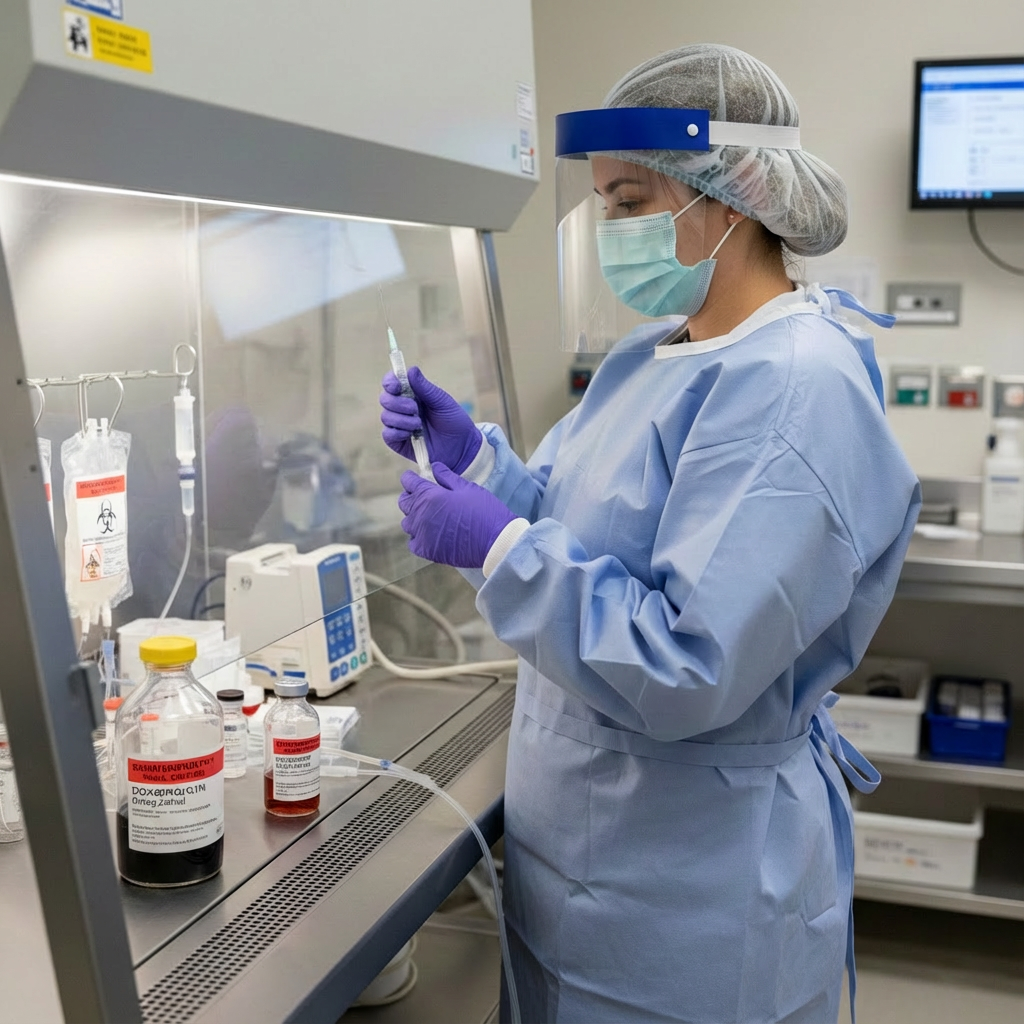
Handling and disposing of hazardous drugs safely represents a critical responsibility in modern nursing practice. Every nurse, especially a registered nurse preparing for the NCLEX, must understand how these medications pose risks not only to patients but also to healthcare workers. Therefore, safe handling protects the RN nurse, the healthcare team, and the environment while maintaining high standards of nursing care.
What Are Hazardous Drugs?
Hazardous drugs include medications that can cause harm through exposure. These drugs may be carcinogenic, teratogenic, or toxic to organs, even in small amounts. Common examples include chemotherapy agents, some antiviral drugs, immunosuppressants, and hormone therapies.
Because of these risks, nursing education programs and every nursing bundle emphasize strict handling protocols. On the NCLEX, questions often test whether a nurse can recognize these medications and apply appropriate safety measures.
Why Safe Handling Matters in Nursing Practice
First, hazardous drug exposure can occur through skin contact, inhalation, accidental injection, or ingestion. As a result, nurses face long-term health risks if they ignore safety guidelines.
Moreover, registered nurses act as role models for medication safety. When an RN nurse follows correct procedures, other staff members often do the same. Consequently, proper handling reduces workplace injuries and improves overall nursing outcomes.
Nursing Responsibilities When Handling Hazardous Drugs
1. Using Personal Protective Equipment (PPE)
Before handling hazardous drugs, a nurse must wear appropriate PPE. This includes chemotherapy-rated gloves, disposable gowns, eye protection, and masks when needed. Importantly, nurses should never reuse gloves or gowns after handling these medications.
Additionally, nursing guidelines recommend changing gloves immediately if contamination occurs. On the NCLEX, selecting PPE correctly often determines the correct answer.
2. Safe Preparation and Administration
Whenever possible, nurses should prepare hazardous drugs in designated areas using closed-system transfer devices. During administration, the RN nurse must avoid crushing tablets or opening capsules unless pharmacy guidance allows it.
Furthermore, nurses should double-check medication labels and verify dosages carefully. This step reduces medication errors, a major focus in NCLEX and nursing bundle content.
3. Spill Management and Exposure Response
Despite precautions, spills can happen. When they do, nurses must act quickly and calmly. Spill kits should always remain accessible in medication preparation areas.
First, the nurse should secure the area. Next, the nurse should don PPE before cleaning the spill according to facility policy. Afterward, the nurse must report the incident and document the exposure. These steps demonstrate professional nursing accountability and align with NCLEX safety principles.
Proper Disposal of Hazardous Drugs
1. Segregating Hazardous Waste
Nurses must never dispose of hazardous drugs in regular trash or sharps containers unless specifically approved. Instead, they should place these medications in clearly labeled hazardous waste containers.
Likewise, contaminated items such as tubing, gloves, and gowns require disposal in designated containers. This practice protects environmental services staff and other nurses from accidental exposure.
2. Disposal of Unused or Expired Medications
When medications remain unused or expire, the registered nurse should follow facility protocols or pharmacy instructions. Often, return systems or specialized disposal bins handle these drugs safely.
For NCLEX preparation, remember that flushing hazardous drugs down the sink or toilet is unsafe and incorrect unless explicitly stated in policy.
Patient and Family Education
Nurses also play a key role in educating patients and families. For example, when patients take hazardous medications at home, the nurse must explain safe storage, handling, and disposal.
Additionally, the RN nurse should teach families to avoid touching pills directly and to return unused medications to approved collection sites. Effective patient education reflects high-quality nursing care and frequently appears in NCLEX questions.
NCLEX Tips for Hazardous Drug Handling
To succeed on NCLEX medication safety questions, nurses should remember these priorities:
- Safety always comes first.
- PPE is non-negotiable.
- Disposal requires special containers.
- Education protects both patients and caregivers.
By applying these principles, nursing students and practicing nurses demonstrate critical thinking and professionalism.
Role of Nursing Bundles in Learning Medication Safety
A well-designed nursing bundle simplifies complex topics like hazardous drug handling. These bundles often include checklists, visuals, and NCLEX-style questions that reinforce safe nursing practices.
For registered nurses and RN nurse students alike, using a nursing bundle strengthens confidence and improves medication safety knowledge.
Conclusion
Handling and disposal of hazardous drugs demand vigilance, knowledge, and consistency from every nurse. Through proper PPE use, careful administration, correct disposal, and patient education, nurses reduce risks and uphold professional standards.
Ultimately, mastering this topic prepares the registered nurse for real-world practice and NCLEX success. By following evidence-based nursing guidelines, every RN nurse contributes to a safer healthcare environment.