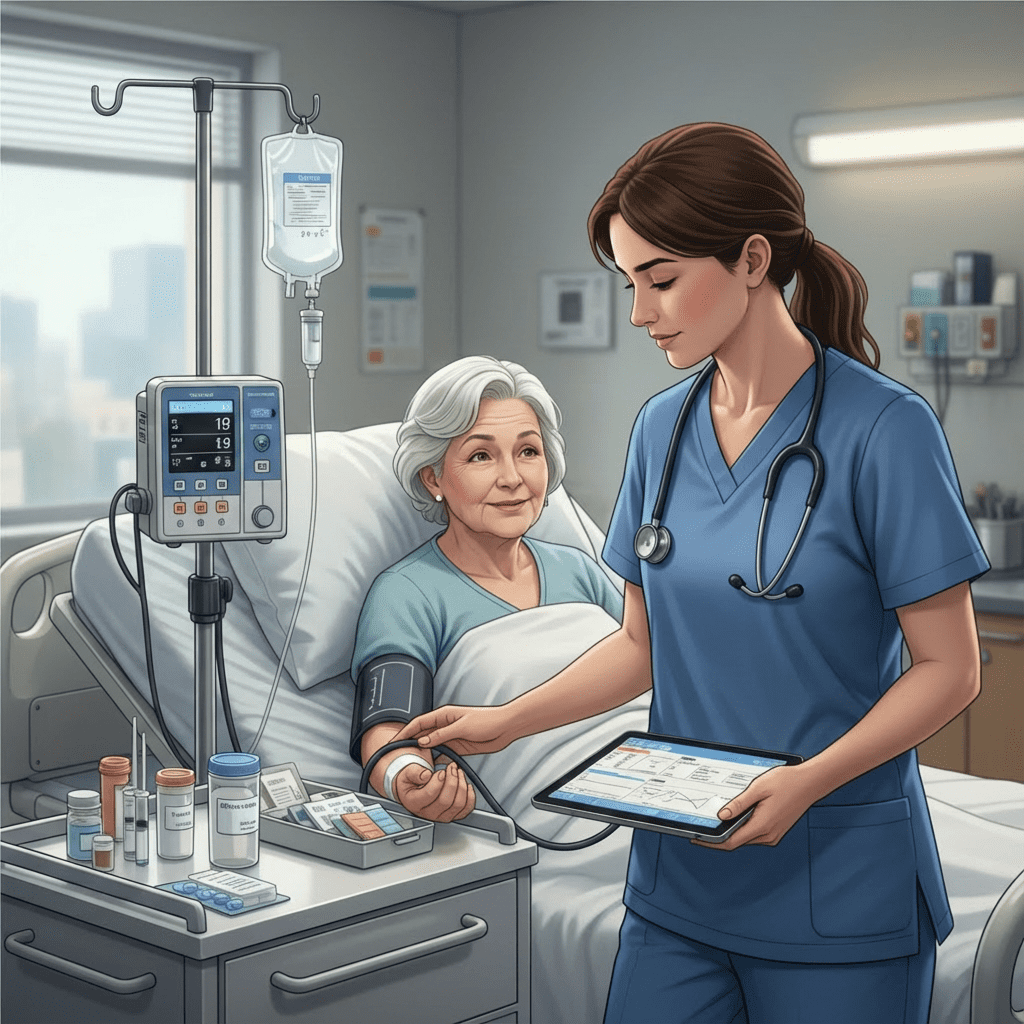
Adverse drug reactions (ADRs) are a major cause of patient harm and hospital admissions worldwide. Early detection and prompt intervention can prevent serious complications. For this reason, monitoring for adverse drug reactions is a critical responsibility of every nurse. This topic is frequently tested on the NCLEX and is essential knowledge for all registered nurses (RN nurses) in clinical practice.
Understanding Adverse Drug Reactions
An adverse drug reaction is any harmful or unintended response to a medication given at a normal dose. ADRs can range from mild side effects to life-threatening events such as anaphylaxis.
Common Types of Adverse Drug Reactions
- Allergic reactions
- Toxic effects
- Side effects
- Drug–drug interactions
- Idiosyncratic reactions
A strong foundation in pharmacology helps the nurse identify early warning signs of these reactions.
Why Monitoring ADRs Is a Nursing Priority
Nurses are often the first healthcare professionals to notice subtle changes in patient condition. Prompt nursing action can reduce morbidity and improve patient safety.
From an NCLEX perspective, medication safety and patient monitoring are high-priority nursing concepts.
Nursing Assessment for Adverse Drug Reactions
Baseline Assessment
Before administering any medication, the registered nurse should:
- Review allergies
- Assess vital signs
- Check laboratory values
- Verify current medications
Establishing a baseline allows the nurse to recognize deviations quickly.
Ongoing Monitoring After Medication Administration
After administration, continuous assessment is essential.
Key Areas Nurses Monitor
- Vital signs (blood pressure, heart rate, respiratory rate)
- Skin changes (rash, hives, flushing)
- Respiratory status (wheezing, dyspnea)
- Gastrointestinal symptoms (nausea, vomiting)
- Neurological changes (confusion, dizziness)
These assessment skills are emphasized in many nursing bundle study resources.
High-Risk Medications and Special Populations
Certain medications and patient populations require increased vigilance.
High-Risk Medications
- Antibiotics
- Opioids
- Anticoagulants
- Chemotherapy agents
- Cardiovascular medications
High-Risk Patients
- Older adults
- Pediatric patients
- Patients with renal or liver disease
- Patients taking multiple medications
The RN nurse must individualize monitoring based on patient risk factors.
Nursing Interventions for Suspected ADRs
Immediate Nursing Actions
- Stop the medication (if appropriate)
- Maintain airway, breathing, and circulation
- Notify the healthcare provider
- Administer emergency medications as prescribed
- Document findings accurately
🚨 NCLEX Alert: For suspected anaphylaxis, airway management is the priority.
Patient Education and Nursing Communication
Educating patients empowers them to participate in safety monitoring.
Teaching Points for Nurses
- Instruct patients to report new symptoms immediately
- Review common and serious side effects
- Encourage medication adherence
- Discuss interactions with over-the-counter drugs
Effective patient education is a core nursing responsibility and a common NCLEX theme.
Documentation and Reporting
Accurate documentation supports patient safety and legal protection.
What Nurses Should Document
- Time and dose of medication
- Patient response
- Signs and symptoms of ADRs
- Interventions performed
- Provider notifications
Reporting ADRs contributes to system-wide safety improvements.
❓ FAQ
An adverse drug reaction is any harmful or unintended response to a medication given at normal doses, ranging from mild side effects to severe allergic reactions.
Nurses are often the first to observe changes in patient condition, making early detection of adverse drug reactions critical for patient safety.
Older adults, pediatric patients, individuals with kidney or liver disease, and patients taking multiple medications are at higher risk.
The nurse should stop the medication if appropriate, assess airway, breathing, and circulation, and notify the healthcare provider immediately.