
Medication errors remain one of the most common and preventable causes of patient harm. A significant contributor to these errors is look-alike/sound-alike (LASA) medications. Every nurse must understand how these errors occur and how to prevent them. Safe medication administration is a core responsibility in nursing, frequently tested on the NCLEX, and essential for every registered nurse (RN nurse) in all healthcare settings.
What Are Look-Alike / Sound-Alike Medications?
Look-alike/sound-alike medications are drugs that have similar names, packaging, labeling, or pronunciations. These similarities can cause confusion during prescribing, dispensing, or administration.
Common LASA Medication Examples
- Dopamine vs. Dobutamine
- Hydroxyzine vs. Hydralazine
- Morphine vs. Hydromorphone
- Celebrex vs. Celexa
- Zantac vs. Zyrtec
🚨 NCLEX Tip: Many medication safety questions involve confusing drug names.
Why LASA Medications Are Dangerous
LASA errors can result in:
- Wrong medication administration
- Incorrect dosage
- Delayed treatment
- Serious adverse reactions
- Sentinel events
The nurse is often the last line of defense before a medication reaches the patient, making vigilance essential.
Nursing Assessment and Awareness
Key Nursing Responsibilities
- Review medication orders carefully
- Verify unfamiliar drug names
- Identify high-alert medications
- Question unclear or incomplete orders
A registered nurse must never assume a medication is correct based solely on familiarity or appearance.
Nurse Safety Tips to Prevent LASA Errors
1. Follow the Rights of Medication Administration
Every RN nurse must consistently apply:
- Right patient
- Right medication
- Right dose
- Right route
- Right time
- Right documentation
- Right reason
- Right response
These principles are heavily emphasized in nursing bundle study resources and NCLEX preparation.
2. Use Tall Man Lettering
Tall Man lettering highlights differences in similar drug names:
- hydrOXYzine vs. hydrALAZINE
- DOBUTamine vs. DOPamine
This visual strategy reduces reading errors during medication administration.
3. Read Medication Labels Carefully
- Read labels three times
- Avoid relying on color or packaging
- Check concentration and formulation
Distractions increase errors, so nurses should minimize interruptions during medication preparation.
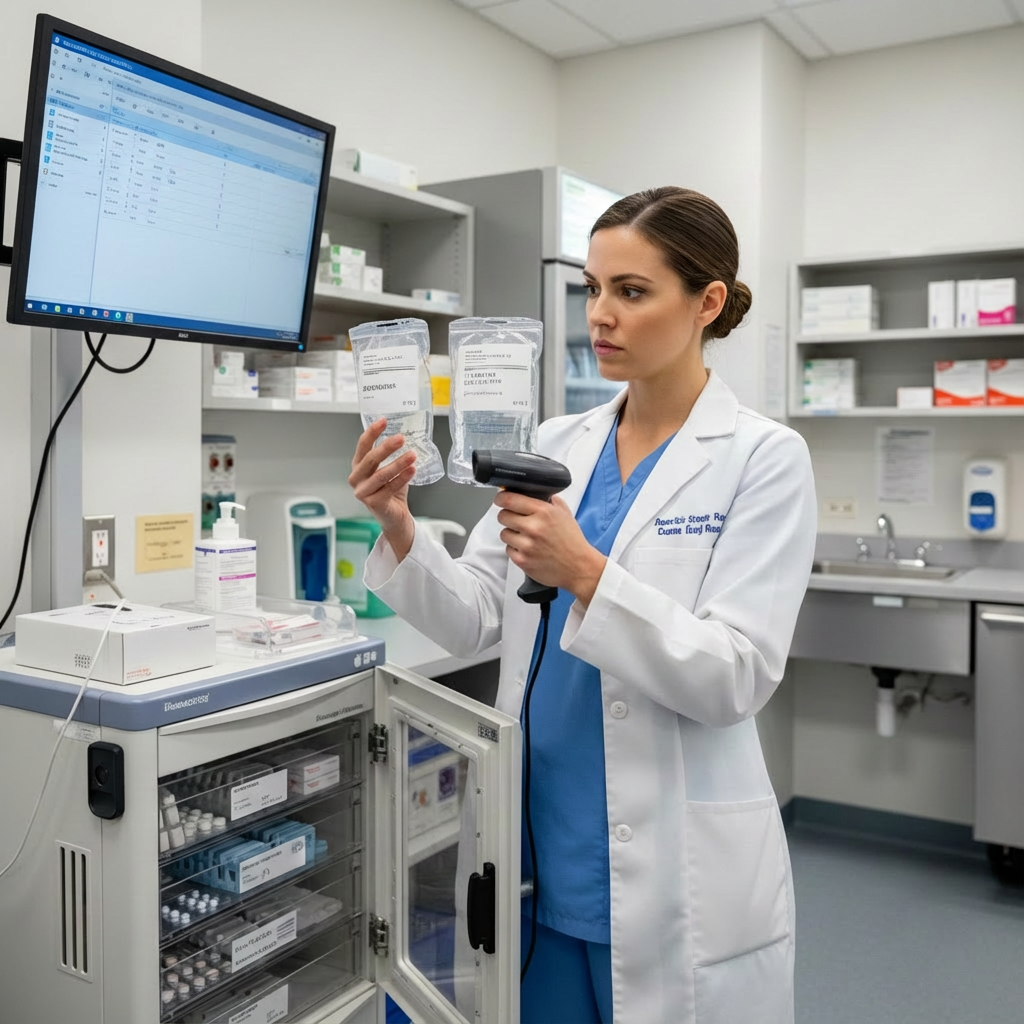
4. Utilize Barcode Medication Administration (BCMA)
When available, barcode scanning provides an additional safety check. However, the nurse must still use critical thinking and not rely solely on technology.
5. Double-Check High-Risk Medications
Independent double checks should be performed for:
- IV infusions
- Pediatric medications
- Insulin
- Anticoagulants
- Chemotherapy agents
Patient Education and Communication
Educating patients adds another layer of safety.
Nursing Teaching Points
- Encourage patients to ask about medications
- Teach patients medication names and purposes
- Verify allergies before administration
Effective communication is a core nursing competency tested on the NCLEX.
Reporting and Learning from Errors
A culture of safety encourages reporting near misses and errors without fear of punishment.
Nurse Responsibilities
- Report medication errors promptly
- Complete incident reports accurately
- Participate in safety improvement initiatives
Learning from errors improves patient outcomes and strengthens professional nursing practice.
❓ FAQ
LASA medications are drugs with similar names, spellings, or packaging that can be easily confused, increasing the risk of medication errors.
Nurses are often the final checkpoint before a medication reaches the patient. Recognizing LASA medications helps prevent serious and potentially fatal errors.
Key strategies include using the medication rights, Tall Man lettering, barcode scanning, independent double checks, and minimizing distractions during medication preparation.
Yes. The NCLEX frequently includes questions on medication safety, error prevention, and look-alike/sound-alike drugs.