
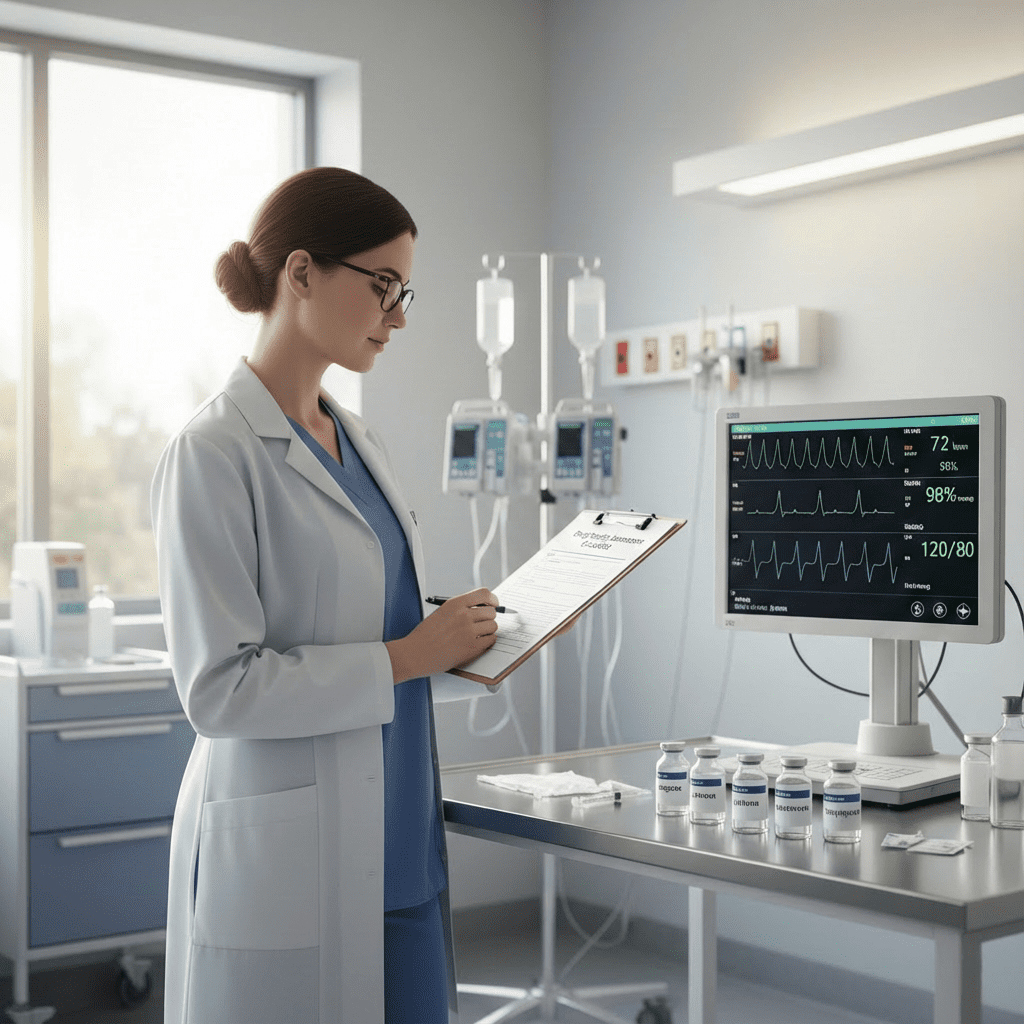
Recognizing early signs of drug toxicity is one of the most essential responsibilities of a registered nurse. Patients in hospitals, long-term care facilities, and emergency departments often take multiple medications, which increases the risk of harmful drug levels. Because of that, every RN nurse must understand how toxicity develops and how to assess patients quickly and safely. This knowledge strengthens clinical judgment, helps prevent complications, and directly improves NCLEX success.
Drug toxicity occurs when a medication builds up in the body and exceeds safe levels. Sometimes this happens because the kidneys or liver cannot clear the drug effectively. Other times, interactions with other medications make drug levels rise dangerously. Regardless of the cause, nurses must act fast when assessing for toxicity, which makes this topic vital in any nursing bundle or NCLEX study plan.
Below are the most common drug toxicity signs every nurse should recognize and the medications frequently associated with them.
1. Digoxin Toxicity
Digoxin toxicity remains a classic NCLEX nursing topic. The nurse must stay alert because even small increases in digoxin levels may become dangerous.
Key Signs
- Vision changes (yellow halos, blurred vision)
- Nausea and vomiting
- Bradycardia
- Fatigue and weakness
Nursing Actions
A registered nurse evaluates apical heart rate for a full minute and holds the dose if the rate is below 60 bpm. Additionally, the nurse reviews potassium levels because low potassium increases digoxin toxicity risk.
2. Lithium Toxicity
Lithium toxicity progresses quickly, so the RN nurse must identify warning signs early.
Early Symptoms
- Tremors
- Nausea and diarrhea
- Slurred speech
- Unsteady gait
Severe Symptoms
- Confusion
- Seizures
- Coma
Nursing Considerations
Nurses remind patients to maintain consistent sodium and fluid intake because dehydration dramatically increases lithium levels.
3. Acetaminophen (Tylenol) Toxicity
Acetaminophen toxicity can cause severe liver damage. Nurses frequently assess for this condition in emergency and medical-surgical units.
Signs
- Elevated liver enzymes
- Right-upper-quadrant abdominal pain
- Nausea and loss of appetite
- Jaundice (late sign)
Nursing Responsibilities
The nurse must review total daily intake since the safe limit is generally 4 grams per day. Many combination medications contain hidden acetaminophen, which the RN nurse should explain to patients.
4. Heparin Toxicity
Heparin toxicity leads to excessive bleeding. Because bleeding risk can escalate quickly, NCLEX exams often emphasize this topic.
Symptoms
- Nosebleeds
- Bleeding gums
- Dark stools or blood in urine
- Easy bruising
Nursing Interventions
The nurse monitors the aPTT, assesses for active bleeding, and keeps protamine sulfate readily available as the antidote.
5. Opioid Toxicity
Opioid toxicity is extremely common and requires immediate nursing recognition.
Classic Signs
- Respiratory depression
- Pinpoint pupils
- Low level of consciousness
- Weak pulse
Nursing Actions
RN nurses administer naloxone when respiratory rate drops and continuously reassess because naloxone wears off faster than the opioid.
6. Vancomycin Toxicity
Vancomycin may cause kidney damage and hearing loss. Because of this, nurses must monitor patients closely.
Signs
- Elevated creatinine
- Decreased urine output
- Ringing in the ears (tinnitus)
- Hearing difficulties
Nursing Care
The nurse draws trough levels before the next dose and reports abnormal kidney function to the provider immediately.
7. Theophylline Toxicity
Theophylline toxicity remains an important NCLEX pharmacology topic.
Symptoms
- Tachycardia
- Restlessness
- Vomiting
- Seizures (severe toxicity)
Nursing Focus
RN nurses review lab results and watch for drug interactions, especially antibiotics that increase theophylline levels.
8. Warfarin Toxicity
Warfarin toxicity can cause internal bleeding. Every nurse must understand this medication well because it appears frequently on the NCLEX.
Warning Signs
- Gum bleeding
- Excessive bruising
- Hematuria
- Black, tarry stools
Nursing Considerations
Nurses monitor INR, educate patients about vitamin K foods, and prepare vitamin K as the reversal agent when needed.
Final Thoughts
Drug toxicity remains a critical nursing concept, both in clinical practice and on the NCLEX exam. When a nurse recognizes toxicity early, patient outcomes improve dramatically. Therefore, every RN nurse should build a strong nursing bundle of pharmacology knowledge and review lab monitoring, antidotes, and clinical symptoms regularly.
By combining assessment skills with evidence-based nursing practice, registered nurses can identify toxicity fast, communicate effectively with providers, and ensure safe medication administration for every patient.
FAQ
Drug toxicity involves life-threatening complications, so the NCLEX emphasizes early recognition, assessment, and safe medication administration. Nurses must know which symptoms appear first and which actions take priority.
Patients with kidney failure, liver disease, dehydration, polypharmacy, or advanced age often accumulate medications faster. Because of that, RN nurses monitor these patients more frequently.
Lab values such as creatinine, liver enzymes, INR, digoxin level, and lithium level help nurses detect toxicity before symptoms worsen. Monitoring ensures safe dosing and prevents complications.
The priority is to stop the medication, assess vital signs, notify the provider, and prepare reversal agents if needed. Rapid intervention prevents organ damage and improves survival.