
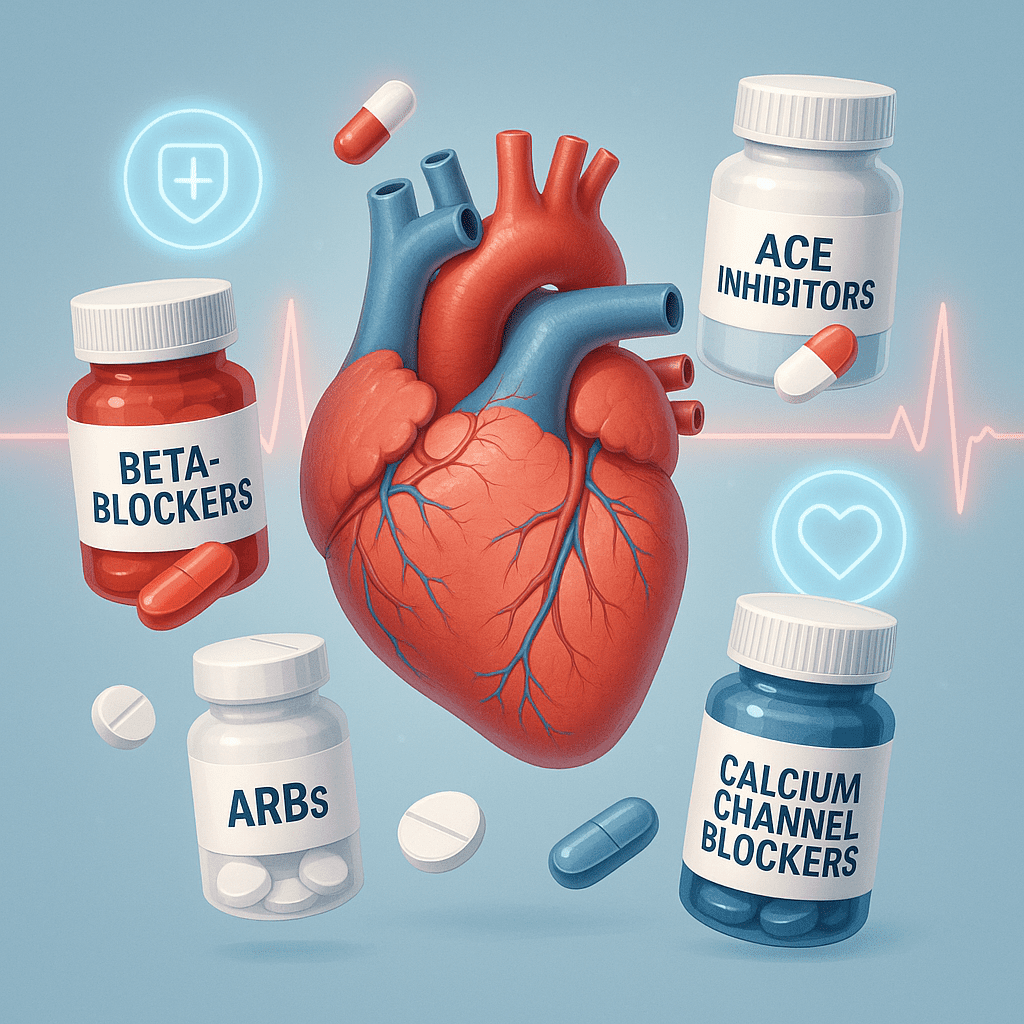
Cardiovascular medications are among the most frequently administered drugs in clinical practice, and every registered nurse (RN nurse) must understand how they work, how to monitor patients effectively, and how to recognize adverse effects early. For students preparing for the NCLEX, mastering the fundamentals of cardiac drugs—such as beta-blockers, ACE inhibitors, calcium channel blockers, nitrates, and diuretics—is essential. These medications directly affect hemodynamics, workload, and oxygen demand, making them critical in acute and chronic cardiac care.
This guide provides nurses and nursing students with a clear, practical overview of key cardiac drug classes to support safe practice and enhance any nursing bundle focused on cardiovascular care.
1. Beta-Blockers
Beta-blockers are commonly prescribed to treat hypertension, arrhythmias, heart failure, and post-MI management. They block the effects of epinephrine, reducing heart rate and myocardial oxygen demand.
Common Examples
- Metoprolol
- Atenolol
- Propranolol
- Carvedilol
Nursing Considerations
A RN nurse must:
- Monitor HR and BP before giving the medication.
- Hold if HR < 60 bpm or SBP < 90 mmHg (follow facility policy).
- Educate patients about fatigue, dizziness, and possible bronchoconstriction (especially with non-selective beta-blockers like propranolol).
- Use caution in patients with asthma or COPD.
NCLEX Tip
Remember that beta-blockers can mask hypoglycemia symptoms in diabetic patients.
2. ACE Inhibitors
ACE inhibitors lower blood pressure by preventing angiotensin I from converting to angiotensin II, reducing vasoconstriction and fluid retention.
Common Examples
- Lisinopril
- Enalapril
- Captopril
Nursing Considerations
Every nurse should:
- Monitor BP and renal function (BUN, creatinine).
- Watch for hyperkalemia.
- Educate patients about the risk of a nagging dry cough.
- Be alert for angioedema, which is a medical emergency.
NCLEX Tip
ACE inhibitors and potassium-sparing diuretics together increase the risk of dangerously high potassium levels.
3. ARBs (Angiotensin II Receptor Blockers)
ARBs are often used when ACE inhibitors cause a persistent cough. They block angiotensin II receptors, leading to vasodilation.
Common Examples
- Losartan
- Valsartan
Nursing Considerations
A registered nurse should:
- Monitor potassium levels and BP.
- Teach patients that ARBs do not typically cause cough.
- Monitor for dizziness and renal changes.
4. Calcium Channel Blockers
These drugs relax blood vessels and decrease contractility, making them useful for hypertension, angina, and arrhythmias.
Common Examples
- Amlodipine
- Diltiazem
- Verapamil
- Nifedipine
Nursing Considerations
Nurses must:
- Monitor BP and HR closely.
- Teach patients to avoid grapefruit juice.
- Watch for peripheral edema and constipation.
NCLEX Tip
Diltiazem and verapamil can lower HR—monitor for bradycardia.
5. Nitrates
Nitrates relieve chest pain by relaxing blood vessels and improving coronary perfusion.
Common Examples
- Nitroglycerin
- Isosorbide dinitrate
Nursing Considerations
A RN nurse should:
- Check BP before administration—nitrates cause vasodilation.
- Educate patients about headache as a common side effect.
- Ensure the patient avoids erectile-dysfunction medications (dangerous drop in BP).
NCLEX Tip
Place nitroglycerin tablets under the tongue and replace them every 6 months.
6. Diuretics
Although not strictly “cardiac drugs,” diuretics play a major role in heart failure and hypertension management.
Common Examples
- Furosemide
- Hydrochlorothiazide
- Spironolactone
Nursing Considerations
Nurses need to:
- Monitor electrolytes (especially potassium).
- Assess for dehydration and hypotension.
- Weigh patients daily to evaluate fluid status.
Why These Drugs Matter for NCLEX and Real-World Practice
Understanding cardiac drugs is essential because these medications are cornerstones of emergency care, chronic disease management, and hemodynamic stabilization. The NCLEX routinely tests medication safety, side effects, nursing interventions, and patient education—topics every new nurse must master.
FAQ: Cardiac Drugs for Nurses and RN Students
Beta-blockers, ACE inhibitors, ARBs, CCBs, anticoagulants, and diuretics appear most often.
Heart rate, blood pressure, and respiratory status (especially in asthma/COPD).
Because of bradykinin accumulation, a well-known class side effect.
No — the combination can cause life-threatening hypotension.
Sodium, potassium, chloride, BUN/creatinine, blood pressure, and patient weight.