
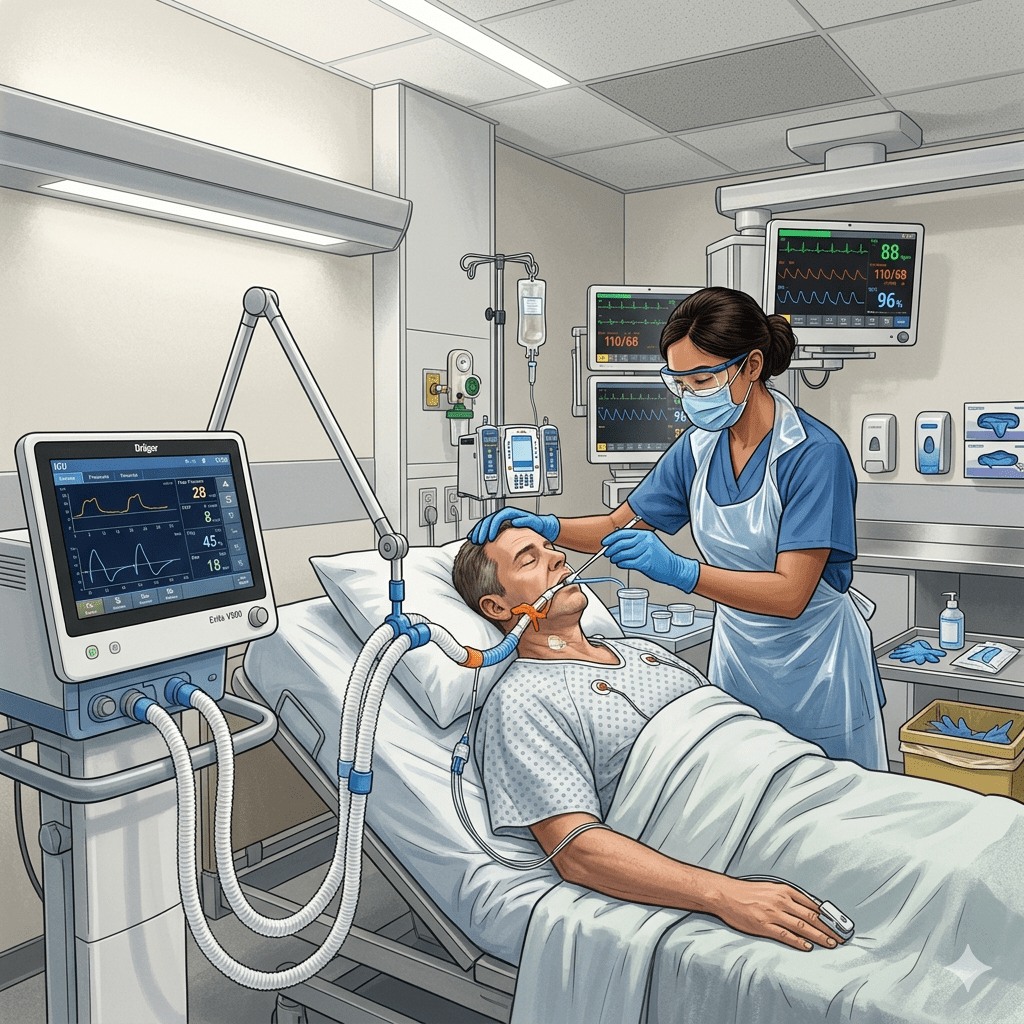
Ventilator-Associated Pneumonia (VAP) is one of the most common infections that can occur in critically ill patients who require mechanical ventilation. Because this infection can increase hospital stays, complications, and mortality rates, prevention is a major priority in intensive care units. Therefore, every nurse and registered nurse (RN nurse) must understand the strategies used to prevent this serious condition.
One of the most effective approaches used in modern healthcare is the Ventilator-Associated Pneumonia prevention bundle. These bundles combine several evidence-based interventions that significantly reduce infection risk. Additionally, VAP prevention is frequently tested on the NCLEX, and many nursing bundle study resources emphasize this topic to help students prepare for clinical practice.
In this article, we will explore what Ventilator-Associated Pneumonia is, why prevention bundles are important, and the essential nursing protocols used to reduce infection risk in ventilated patients.
What Is Ventilator-Associated Pneumonia?
Ventilator-Associated Pneumonia is a lung infection that develops 48 hours or more after a patient is placed on mechanical ventilation. The infection occurs when bacteria enter the lower respiratory tract through the ventilator system or the endotracheal tube.
Patients who require mechanical ventilation are especially vulnerable because the normal airway defense mechanisms are bypassed. Consequently, microorganisms can more easily reach the lungs.
Common symptoms of VAP include:
- Fever
- Increased respiratory secretions
- Abnormal chest X-ray findings
- Elevated white blood cell count
- Worsening oxygen levels
Because these symptoms may appear gradually, the RN nurse must carefully monitor ventilated patients for early signs of infection.
What Is a VAP Prevention Bundle?
A prevention bundle is a group of evidence-based practices that, when implemented together, significantly reduce the risk of infection.
In the case of ventilator-associated pneumonia, the bundle includes specific interventions that focus on airway management, patient positioning, and infection control.
Healthcare organizations use these bundles because combining multiple safety steps improves outcomes more effectively than using a single intervention alone.
For students preparing for the NCLEX, understanding the components of the VAP bundle is an important part of critical care nursing knowledge.
Key Components of the VAP Prevention Bundle
Several core practices are included in most ventilator-associated pneumonia prevention bundles. Therefore, the registered nurse must perform these interventions consistently to protect patient health.
Elevating the Head of the Bed
One of the most important prevention strategies is maintaining the patient in a semi-upright position.
The head of the bed should typically be elevated between 30 and 45 degrees.
This position helps prevent aspiration of gastric contents and reduces the likelihood that bacteria will enter the lungs. Consequently, it significantly lowers the risk of ventilator-associated pneumonia.
Daily Sedation Assessment
Many ICU protocols include daily sedation interruption or assessment to determine whether the patient still requires mechanical ventilation.
Reducing sedation levels can help patients regain respiratory function sooner and may shorten ventilator duration. As a result, the risk of infection decreases.
The RN nurse plays a key role in monitoring sedation levels and reporting patient readiness for ventilator weaning.
Oral Care With Antiseptic Solutions
Proper oral hygiene is another essential component of VAP prevention.
Ventilated patients often cannot perform normal oral care, which allows bacteria to accumulate in the mouth. Therefore, the nurse must provide regular oral hygiene using antiseptic solutions such as chlorhexidine.
Routine oral care helps reduce bacterial colonization and lowers the risk of infection spreading to the lungs.
Peptic Ulcer Disease Prophylaxis
Critically ill patients are at risk for stress-related stomach ulcers. Preventive medications may be administered to protect the gastrointestinal tract.
However, these medications must be used carefully because changes in stomach acidity can sometimes influence bacterial growth.
The registered nurse monitors medication administration and observes patients for potential complications.
Deep Vein Thrombosis Prevention
Although this intervention primarily prevents blood clots, it is often included in ICU care bundles because immobilized ventilated patients are at high risk of developing deep vein thrombosis (DVT).
DVT prevention may involve:
- Anticoagulant medications
- Compression devices
- Encouraging mobility when possible
Monitoring these measures is another important responsibility for the RN nurse.
Additional Nursing Interventions for VAP Prevention
Beyond the standard bundle components, critical care nurses implement additional strategies to reduce infection risk.
Important practices include:
- Maintaining strict hand hygiene
- Using sterile suctioning techniques
- Regularly assessing ventilator equipment
- Monitoring respiratory secretions
- Ensuring proper endotracheal tube care
These actions help minimize bacterial contamination and protect patient safety.
Why VAP Prevention Is Important
Ventilator-associated pneumonia can significantly impact patient outcomes. Consequently, preventing this infection is a major priority in intensive care units.
Potential complications of VAP include:
- Prolonged mechanical ventilation
- Increased ICU length of stay
- Higher healthcare costs
- Greater risk of mortality
By following prevention bundles carefully, the nurse can play a vital role in reducing these risks.
Importance for NCLEX Preparation
Because infection prevention is a major responsibility in nursing, ventilator-associated pneumonia frequently appears in NCLEX exam questions.
For example, the registered nurse may be asked to identify:
- Correct patient positioning for ventilated patients
- Priority interventions for infection prevention
- Appropriate oral care practices
- Nursing responsibilities in ventilator management
Mastering these topics helps students develop strong clinical judgment skills.
How Nursing Study Bundles Help Students Learn
Complex ICU topics can be challenging for many students. Fortunately, structured resources such as a nursing bundle can simplify important concepts like ventilator-associated pneumonia prevention.
A well-designed nursing bundle often includes:
- Simplified infection prevention charts
- Ventilator care checklists
- NCLEX-style practice questions
- Quick reference guides for ICU procedures
These tools help future registered nurses build confidence when caring for critically ill patients.
Final Thoughts
Ventilator-Associated Pneumonia is a serious complication that can develop in patients receiving mechanical ventilation. However, consistent use of prevention bundles has significantly reduced infection rates in many healthcare settings.
Because nurses spend the most time at the bedside, they play a critical role in implementing these safety protocols. By maintaining proper patient positioning, performing oral hygiene, monitoring sedation, and following strict infection control practices, the RN nurse helps protect vulnerable ICU patients.
For nursing students preparing for the NCLEX, understanding VAP prevention bundles is an essential part of critical care nursing knowledge. With continued learning and the support of organized study materials like a nursing bundle, future registered nurses can develop the skills needed to deliver safe and effective patient care.