
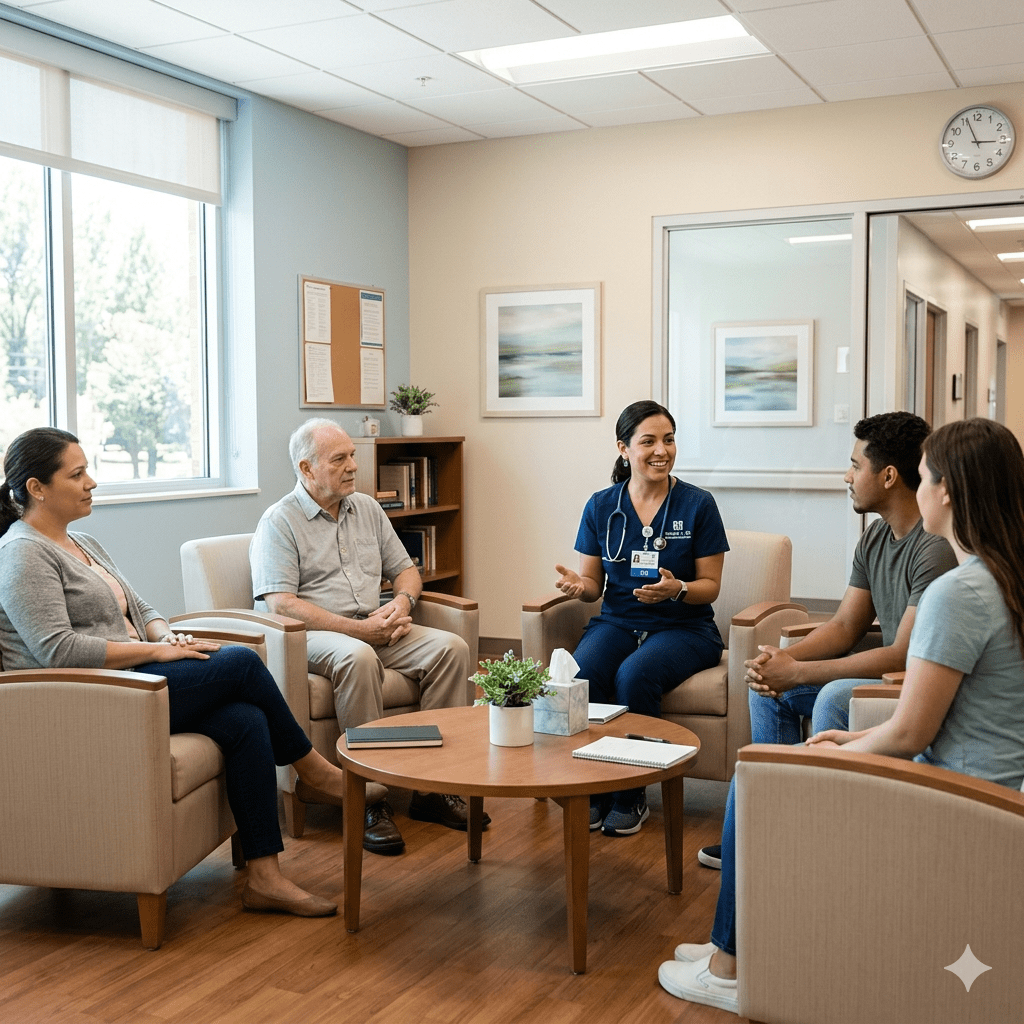
The environment itself is a treatment tool. In psychiatric nursing, the concept of therapeutic milieu refers to a carefully structured, safe, and healing environment designed to support a patient’s emotional, psychological, and social recovery. For any registered nurse working in a mental health setting — or preparing for the NCLEX — understanding how to create and maintain a therapeutic milieu is not optional. It is foundational.
This topic appears with regularity on NCLEX mental health questions and reflects the day-to-day reality of nursing practice in inpatient psychiatric units, partial hospitalization programs, and behavioral health settings. Mastery of therapeutic milieu psychiatric nursing principles equips the RN nurse to manage complex patient behaviors, promote autonomy, ensure safety, and deliver holistic, evidence-based care.
What Is a Therapeutic Milieu?
A therapeutic milieu (from the French word for “environment” or “surroundings”) is a structured, safe, and consistent social environment that uses every aspect of the patient’s daily surroundings as part of the treatment plan. The concept was pioneered by psychiatrist Maxwell Jones in the mid-20th century and has remained central to inpatient psychiatric nursing practice ever since.
The milieu encompasses the physical space, the interpersonal interactions, the daily schedule, the rules, and the overall emotional climate of the unit. Every conversation, group activity, mealtime, and conflict resolution opportunity becomes a therapeutic moment. The nurse functions not only as a clinician but as an active participant in shaping that environment.
Key goals of the therapeutic milieu include:
- Promoting safety — physical and psychological
- Fostering trust and predictability
- Encouraging autonomy and self-responsibility
- Facilitating social skills and healthy peer interaction
- Supporting recovery through structure and routine
Core Components of a Therapeutic Milieu in Nursing Practice
Every registered nurse working in a psychiatric setting must be able to identify and implement the five core components of a therapeutic milieu. These are foundational for both NCLEX exams and real-world clinical performance.
1. Safety Safety is the first priority. Both physical safety (preventing self-harm, elopement, or harm to others) and emotional safety (freedom from humiliation, coercion, or abuse) must be maintained. The nurse performs regular safety checks, removes hazardous objects, monitors patient behavior for escalation, and intervenes with de-escalation techniques before crises occur.
2. Structure A predictable daily schedule — including mealtimes, group therapy, individual sessions, and recreational activities — reduces anxiety and provides patients with a sense of control. Nursing staff reinforce structure consistently, helping patients transition from chaotic lifestyles toward organized, healthy routines.
3. Norms Clear and consistently enforced behavioral expectations create a therapeutic culture. Patients understand what is acceptable behavior and what is not. The RN nurse models these norms through professional behavior, empathetic communication, and boundary maintenance.
4. Limit Setting Therapeutic limit setting is not punitive — it is protective. When patients engage in harmful, disruptive, or unsafe behavior, the nurse intervenes calmly and consistently. The goal is to help the patient recognize the behavior, understand its impact, and develop alternative coping strategies.
5. Balance The therapeutic milieu balances structure with freedom. Patients are given increasing levels of autonomy and responsibility as they demonstrate progress, reinforcing self-efficacy and preparing them for discharge and reintegration into the community.
The Nurse’s Role in Maintaining the Therapeutic Milieu
The RN nurse is the constant presence in the psychiatric unit — the professional who bridges every element of the milieu. Unlike physicians or therapists who see patients for limited windows, nursing staff interact with patients around the clock, making their role in sustaining the therapeutic environment irreplaceable.
Key nursing responsibilities include:
- Milieu management: Monitoring the unit atmosphere, identifying tension early, and intervening before conflicts escalate
- Therapeutic communication: Using active listening, open-ended questions, reflection, and validation to build trust and facilitate emotional expression
- Group facilitation: Leading or co-leading structured groups (psychoeducation, coping skills, medication education)
- Role modeling: Demonstrating calm, professional, and respectful behavior at all times
- Individualized care planning: Collaborating with the interdisciplinary team to set goals that reflect the patient’s progress within the milieu
For nurses reviewing this as part of an NCLEX nursing bundle, it is critical to understand that the nurse does not just observe the therapeutic milieu — the nurse actively creates it.
Therapeutic Communication Within the Milieu
Therapeutic milieu psychiatric nursing cannot be separated from therapeutic communication. Every verbal and nonverbal interaction the nurse has with a patient either strengthens or weakens the milieu. The registered nurse must apply intentional, evidence-based communication strategies at all times.
Foundational therapeutic communication techniques include:
| Technique | Description | Example |
|---|---|---|
| Active listening | Full attention to verbal and nonverbal cues | Maintaining eye contact, nodding, leaning forward |
| Open-ended questions | Encourage elaboration | “How have you been feeling today?” |
| Reflection | Mirror the patient’s feelings | “It sounds like you’re feeling overwhelmed.” |
| Clarification | Ensure accurate understanding | “Can you tell me more about what you mean by that?” |
| Silence | Allow processing time | Sitting quietly with the patient without rushing |
Non-therapeutic responses — such as false reassurance (“Everything will be fine”), giving unsolicited advice, or minimizing feelings — disrupt the therapeutic relationship and undermine the milieu. These are commonly tested on NCLEX mental health questions.
NCLEX Tips for Therapeutic Milieu
💡 NCLEX Tips for Therapeutic Milieu Psychiatric Nursing
- Safety is always the first priority in psychiatric nursing. When answering NCLEX questions, if a safety concern is present, it takes precedence over all other interventions.
- The nurse’s primary role in the milieu is to create a safe, structured, trusting environment — not to provide psychotherapy.
- Limit setting should always be calm, consistent, and non-punitive. NCLEX questions often test whether a nurse’s response is therapeutic or punitive.
- Structure and routine reduce anxiety and are especially beneficial for patients with psychosis, mania, or personality disorders.
- When a patient’s behavior escalates, the nurse should de-escalate first — verbal redirection before physical intervention.
Applying Therapeutic Milieu Principles Across Diagnoses
Therapeutic milieu psychiatric nursing applies across a wide spectrum of diagnoses, though its implementation varies based on patient population and acuity.
Schizophrenia/Psychosis: Patients benefit from low-stimulation environments, clear and simple communication, and predictable routines. The nurse avoids arguing about delusions and instead redirects toward reality-based coping.
Bipolar Disorder (Manic Phase): Decreased environmental stimulation, structured activities, and limit setting on intrusive or grandiose behaviors are essential. The RN nurse monitors for impulsivity and safety risks.
Major Depression: The nurse promotes engagement in milieu activities, monitors for suicidal ideation, and uses therapeutic presence to combat isolation. Encouraging small daily accomplishments supports self-efficacy.
Personality Disorders: Consistent limit setting, clear expectations, and team-wide communication prevent splitting behaviors. The nursing bundle of interventions must be uniformly applied across all staff.
Substance Use Disorders: Milieu principles support peer connection, structured accountability, and psychoeducation on relapse prevention. Group activities within the milieu reinforce recovery identity.
Conclusion
Therapeutic milieu psychiatric nursing is both a philosophy and a practice. For the registered nurse, every moment on the psychiatric unit — every conversation, every boundary enforced, every group facilitated — contributes to the healing environment. Mastering the core components of the milieu, applying therapeutic communication, and consistently prioritizing patient safety transforms the unit itself into a powerful treatment intervention.
For nursing students preparing for NCLEX, a solid understanding of these concepts is essential. Test yourself with NCLEX-style mental health questions at rn-nurse.com/nclex-qcm/ and deepen your knowledge with the full mental health nursing bundle available at rn-nurse.com/nursing-courses/. The RN nurse who understands the milieu is not just managing a unit — they are facilitating recovery.