
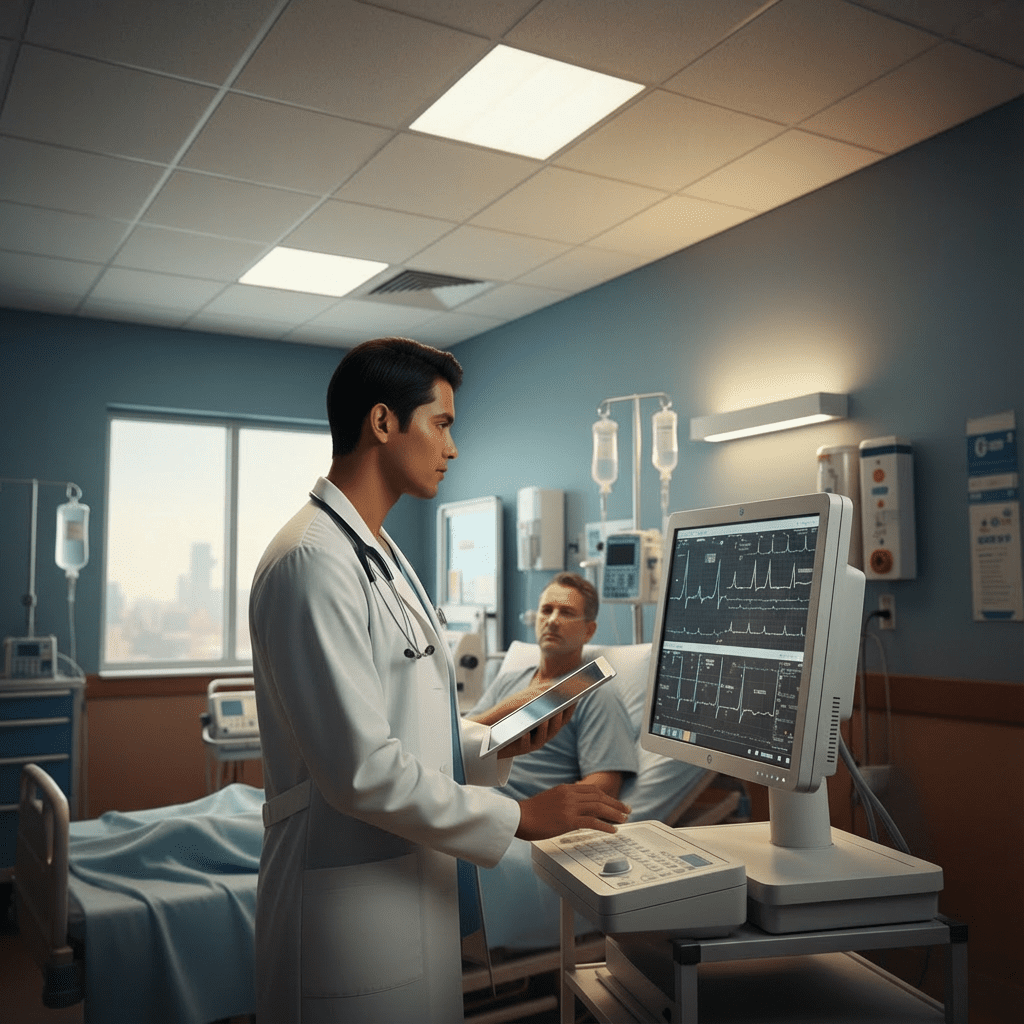
Early recognition of ischemia can save a patient’s life, and the ST segment is one of the most important parts of the EKG for identifying cardiac injury. For every registered nurse, especially those preparing for the NCLEX, understanding ST-segment monitoring is essential. Whether you work in critical care, telemetry, emergency medicine, or use a nursing bundle to study cardiac topics, mastering ST-segment interpretation gives you confidence and improves patient outcomes.
What Is the ST Segment?
The ST segment represents the time between ventricular depolarization and repolarization. In a healthy heart, it is isoelectric (flat) and aligned with the baseline. Any deviation—either elevation or depression—can indicate myocardial ischemia or injury.
Monitoring ST changes helps a nurse detect evolving cardiac problems early, especially during chest pain episodes, after surgery, or while titrating vasoactive drugs.
Why ST-Segment Monitoring Matters for Nurses
Ischemia can progress quickly, often without dramatic symptoms. Because of this, RN nurses rely on real-time ST-segment monitoring to:
- Detect acute coronary syndrome
- Identify silent ischemia
- Evaluate response to nitroglycerin
- Monitor high-risk cardiac patients
- Alert providers before irreversible heart damage occurs
This skill is heavily tested on the NCLEX, especially in questions about prioritization, telemetry alarms, and cardiac emergencies.
ST-Segment Elevation: What It Means
ST-segment elevation usually signals acute injury, most often a STEMI (ST-Elevation Myocardial Infarction).
Typical features include:
- Elevated ST segment in two or more contiguous leads
- Possible reciprocal ST depression in opposite leads
- Chest pain unrelieved by rest
Priority nursing actions include:
- Activate the STEMI protocol immediately.
- Obtain a 12-lead EKG if not already done.
- Prepare the patient for reperfusion therapy (PCI).
- Administer aspirin if not contraindicated.
- Keep continuous cardiac monitoring.
Every action above aligns with NCLEX prioritization concepts involving circulation, perfusion, and rapid response.
ST-Segment Depression: A Sign of Ischemia
ST depression usually points to myocardial ischemia, often reversible if treated early.
Common causes:
- Angina
- Hypotension
- Tachyarrhythmias
- Hypokalemia
- Digitalis effect
Key nursing interventions:
- Assess chest pain characteristics
- Administer oxygen if needed
- Notify the provider
- Prepare for potential medication changes
- Monitor electrolytes closely
Nursing students often encounter these details in cardiac nursing bundles that prepare them for high-stakes exams.
How Nurses Perform ST-Segment Monitoring
Most telemetry monitors allow continuous ST trending. A registered nurse should:
✔ Set the baseline
Record a clean, stable baseline when the patient is pain-free.
✔ Choose the correct leads
Ischemia often appears first in:
- Lead II
- Lead V5
- Lead V1 (for right-sided or septal ischemia)
✔ Watch for changes
A shift of ≥ 1 mm (0.1 mV) from baseline is clinically significant.
✔ Correlate with symptoms
Chest pressure, shortness of breath, diaphoresis, or nausea correlate strongly with EKG changes.
✔ Document accurately
Include:
- Lead
- Millimeter deviation
- Symptoms
- Time of onset
- Interventions
How NCLEX Tests ST-Segment Knowledge
The NCLEX commonly includes questions about:
- Interrupting ischemic progression
- Cardiac prioritization
- Telemetry alarms
- Chest pain management
- Recognizing STEMI vs. ischemia
Knowing the difference between ST elevation and depression helps the RN nurse respond quickly and safely.
Quick NCLEX Mnemonics for Nurses
“ELEVATE = EMERGENCY”
ST elevation always requires rapid action.
“DEPRESS = DECREASED OXYGEN”
ST depression signals ischemia, meaning less oxygen to the myocardium.
Conclusion
ST-segment monitoring is a vital nursing skill that directly prevents cardiac complications. Whether you are a seasoned registered nurse, a new graduate, or a student learning through a nursing bundle, mastering ST interpretations strengthens your clinical judgment and boosts your NCLEX readiness. Early recognition truly saves lives, and the heart depends on you.