
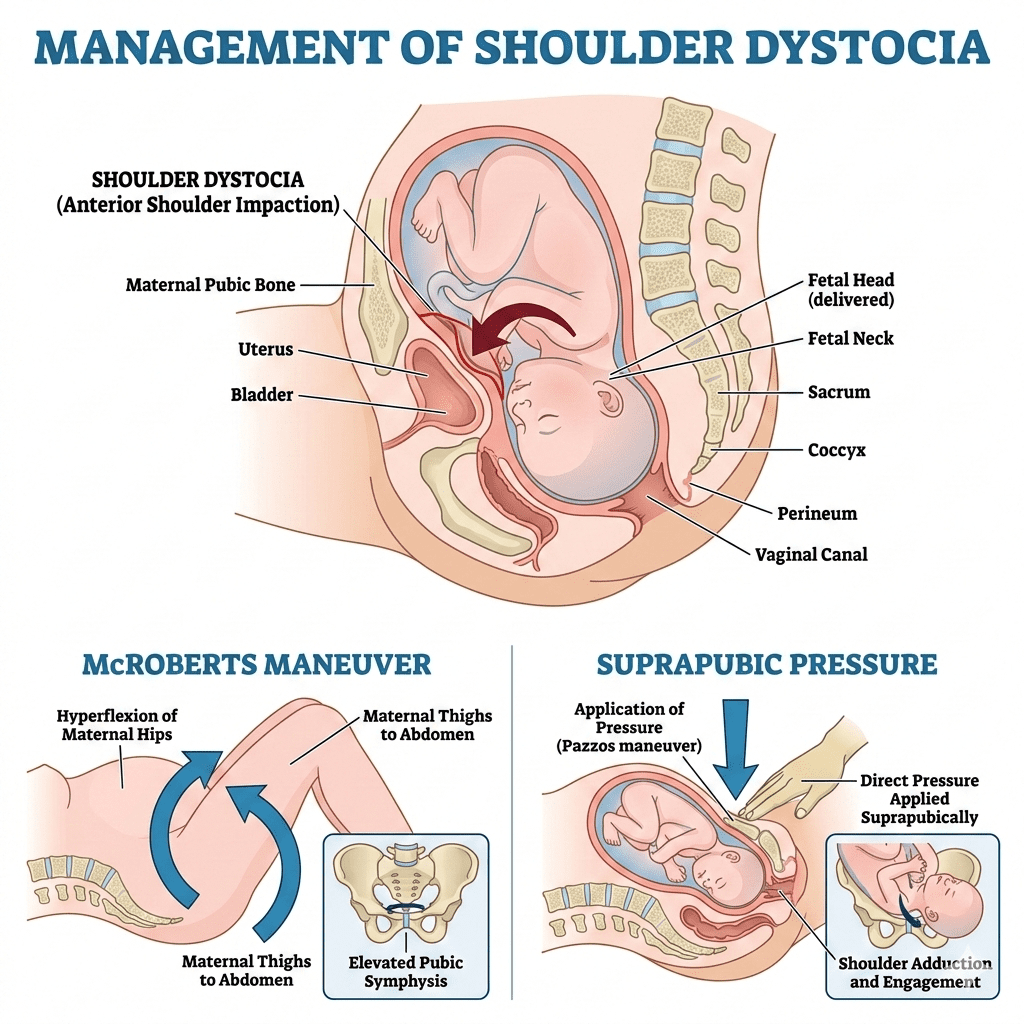
Shoulder dystocia is a serious obstetric emergency that occurs during vaginal delivery when the baby’s shoulders become lodged behind the mother’s pelvic bone after the head has been delivered. This situation requires rapid recognition and immediate intervention to prevent injury to both the mother and newborn.
For a registered nurse working in labor and delivery, understanding shoulder dystocia management is critical. It is also a high-yield topic for NCLEX preparation, where nursing students must identify emergency actions and appropriate interventions. In many hospitals, response to shoulder dystocia is organized through a structured nursing bundle designed to ensure coordinated and effective care.
What Is Shoulder Dystocia?
Shoulder dystocia occurs when the anterior fetal shoulder becomes impacted behind the maternal pubic symphysis, preventing the rest of the baby from delivering after the head emerges.
This condition requires immediate action from the healthcare team, including the RN nurse, obstetric provider, and neonatal team.
Why Shoulder Dystocia Is Dangerous
Without rapid intervention, shoulder dystocia can lead to:
- Fetal hypoxia
- Brachial plexus injury
- Fractures of the clavicle or humerus
- Postpartum hemorrhage
- Maternal perineal trauma
Because of these risks, the registered nurse must recognize the signs quickly and activate emergency protocols.
Risk Factors for Shoulder Dystocia
Although shoulder dystocia can occur unexpectedly, several factors increase the likelihood of this complication.
Maternal Risk Factors
- Gestational diabetes
- Maternal obesity
- Post-term pregnancy
- Previous shoulder dystocia
Fetal Risk Factors
- Fetal macrosomia (large baby)
- Prolonged second stage of labor
- Operative vaginal delivery
A nurse monitoring labor progression must remain alert to these risk factors and prepare for possible complications.
Signs of Shoulder Dystocia
Early recognition is essential in emergency nursing care during childbirth.
Classic Clinical Signs
- Turtle sign (baby’s head retracts back toward the perineum after delivery)
- Difficulty delivering the shoulders
- Failure of the shoulders to descend with normal traction
When these signs occur, the RN nurse must immediately notify the obstetric provider and initiate the shoulder dystocia protocol.
Emergency Nursing Actions During Shoulder Dystocia
Managing shoulder dystocia requires rapid teamwork and coordinated interventions. The registered nurse plays a central role in initiating emergency measures.
Step 1: Call for Help
The first priority for the nurse is activating the emergency response.
The RN nurse should:
- Call the obstetric emergency team
- Notify neonatal resuscitation staff
- Document the time shoulder dystocia is recognized
Quick team mobilization is a key element of the nursing bundle used in obstetric emergencies.
Step 2: Position the Mother (McRoberts Maneuver)
One of the most effective interventions is the McRoberts maneuver, which involves flexing the mother’s legs tightly toward her abdomen.
The registered nurse assists with positioning, which helps widen the pelvic outlet and may release the trapped shoulder.
For NCLEX exam questions, this maneuver is often the first intervention used to relieve shoulder dystocia.
Step 3: Apply Suprapubic Pressure
If the McRoberts maneuver alone is not effective, suprapubic pressure may be applied.
The RN nurse or assisting staff places firm pressure just above the maternal pubic bone to push the fetal shoulder downward and help it rotate.
This maneuver helps free the impacted shoulder without excessive traction on the baby’s head.
Step 4: Avoid Excessive Traction
One of the most important principles in shoulder dystocia management is avoiding excessive pulling on the infant’s head.
Excessive traction increases the risk of brachial plexus injury.
A knowledgeable registered nurse assists the provider while ensuring that traction is minimized.
Step 5: Prepare for Additional Maneuvers
If the initial maneuvers fail, the obstetric provider may attempt additional techniques.
The nurse supports these procedures by preparing equipment and assisting the team.
Examples include:
- Rubin maneuver
- Woods screw maneuver
- Delivery of the posterior arm
Throughout this process, the RN nurse continues to monitor fetal status and assist with emergency care.
Nursing Responsibilities After Shoulder Dystocia
Once delivery is completed, the registered nurse must perform thorough maternal and newborn assessments.
Newborn Assessment
The nurse should evaluate the newborn for:
- Arm movement abnormalities
- Clavicle fractures
- Signs of brachial plexus injury
- Respiratory distress
Newborn monitoring is part of the nursing bundle for post-delivery neonatal assessment.
Maternal Assessment
The RN nurse must also assess the mother for complications such as:
- Postpartum hemorrhage
- Vaginal or perineal trauma
- Emotional distress
Prompt assessment helps identify complications early and ensures appropriate treatment.
Documentation Responsibilities for Nurses
Accurate documentation is critical after shoulder dystocia events.
The registered nurse should record:
- Time of head delivery
- Time shoulder dystocia was recognized
- Interventions performed
- Personnel involved
- Newborn condition at birth
Clear documentation supports patient safety, legal protection, and quality improvement in obstetric nursing practice.
NCLEX Tips for Shoulder Dystocia
For nursing students studying for the NCLEX, shoulder dystocia questions often focus on priority nursing actions.
Key concepts to remember include:
- Shoulder dystocia occurs when the shoulder becomes trapped behind the pubic bone
- The McRoberts maneuver is the first-line intervention
- Suprapubic pressure may help release the shoulder
- Avoid excessive traction on the fetal head
- Immediate teamwork and rapid response are essential
These concepts help future RN nurses demonstrate safe clinical judgment in obstetric emergencies.
Conclusion
Shoulder dystocia is a time-sensitive obstetric emergency that requires immediate intervention. The registered nurse plays a critical role in recognizing the complication, initiating emergency procedures, and supporting safe delivery.
Through rapid response, proper positioning, and coordinated teamwork, the RN nurse helps reduce the risk of serious complications for both mother and baby. Mastering shoulder dystocia management is essential for both clinical nursing practice and success on the NCLEX, ensuring that nurses are prepared to respond effectively during childbirth emergencies.