
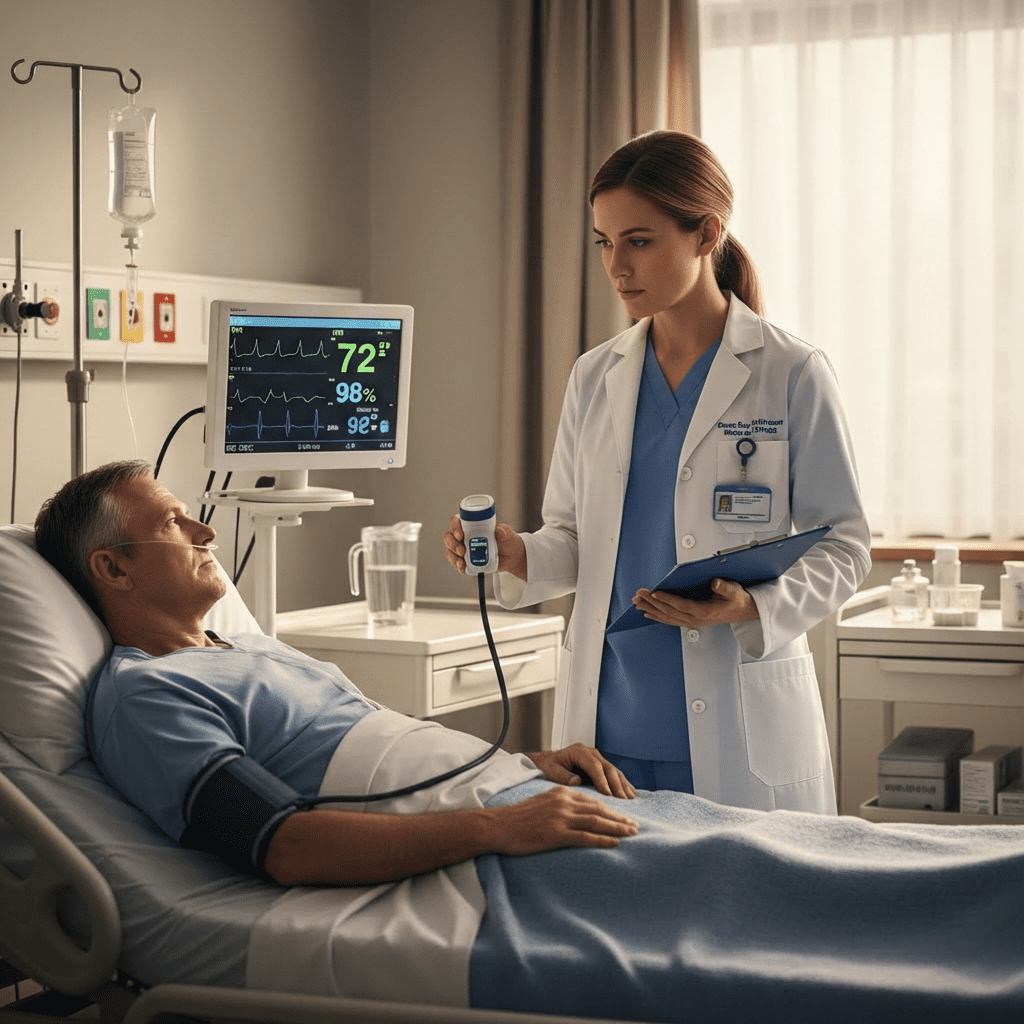
Recognizing deteriorating patients early is a critical nursing responsibility that directly saves lives. Every nurse and registered nurse (RN nurse) must be able to identify subtle changes in a patient’s condition before a medical emergency occurs. Because early deterioration often presents with mild or nonspecific signs, prompt recognition and intervention are essential. Therefore, this topic is heavily emphasized in nursing education, included in most nursing bundles, and frequently tested on the NCLEX.
In this article, you will learn how nurses recognize early patient deterioration, which warning signs matter most, and how timely nursing actions improve outcomes in both clinical practice and NCLEX-style scenarios.
What Does Patient Deterioration Mean in Nursing?
Patient deterioration refers to a worsening of physiological status that, if unrecognized, can progress to respiratory failure, cardiac arrest, or death. In nursing practice, deterioration often occurs gradually rather than suddenly. As a result, nurses must rely on careful assessment and clinical judgment.
Common causes of deterioration include:
- Respiratory compromise
- Sepsis or infection
- Cardiac instability
- Hemorrhage
- Neurological changes
🧠 NCLEX Insight: Early deterioration usually involves changes in vital signs and mental status.
Why Early Recognition Is a Nursing Priority
Early recognition of deterioration improves patient survival. First, it allows for rapid intervention. Second, it prevents progression to critical illness. Additionally, early action reduces ICU admissions and hospital mortality.
When deterioration is missed, patients may experience:
- Respiratory arrest
- Cardiac arrest
- Multi-organ failure
- Increased length of stay
Consequently, recognizing deterioration early is a core responsibility for every RN nurse and a high-yield NCLEX topic.
The Nurse’s Role in Early Detection
Nurses are often the first healthcare professionals to notice changes in patient condition. Because nurses spend the most time with patients, they play a central role in early detection. Moreover, registered nurses are responsible for escalating care when deterioration is suspected.
Key nursing responsibilities include:
- Continuous patient assessment
- Accurate vital sign monitoring
- Identifying abnormal trends
- Communicating concerns promptly
- Initiating rapid response protocols
📘 Nursing Bundle Tip: Many nursing bundles emphasize early warning systems and rapid response activation.
Key Early Warning Signs of Patient Deterioration
Changes in Vital Signs
Vital signs are often the earliest indicators of deterioration. Therefore, trends are more important than single readings.
Warning signs include:
- Increasing respiratory rate
- Decreasing oxygen saturation
- Hypotension or hypertension
- Tachycardia or bradycardia
- Fever or hypothermia
⚠️ NCLEX Alert: Respiratory rate changes are often the first sign of deterioration.
Respiratory Changes
Respiratory compromise is a leading cause of patient deterioration. As oxygen levels fall, subtle signs may appear before obvious distress.
Early respiratory warning signs include:
- Increased work of breathing
- Use of accessory muscles
- Shortness of breath
- Abnormal breath sounds
Neurological Changes
Changes in mental status are critical indicators of deterioration. Even mild confusion can signal hypoxia, infection, or poor perfusion.
Watch for:
- Restlessness or agitation
- Decreased level of consciousness
- New confusion or delirium
- Difficulty speaking
🧠 NCLEX Focus: Any sudden neurological change requires immediate nursing action.
Cardiovascular Indicators
Cardiovascular instability often accompanies deterioration. For this reason, nurses must monitor circulation closely.
Signs include:
- Chest pain
- Weak or thready pulses
- Delayed capillary refill
- Cool or clammy skin
Using Early Warning Scoring Systems
Many healthcare facilities use Early Warning Score (EWS) systems to detect deterioration. These tools, however, do not replace clinical judgment.
Common systems include:
- MEWS (Modified Early Warning Score)
- NEWS (National Early Warning Score)
📌 NCLEX Tip: Scoring tools support assessment but nursing judgment remains essential.
Nursing Actions When Deterioration Is Suspected
When early deterioration is identified, nurses must act quickly. Rather than waiting, prompt intervention can prevent escalation.
Key actions include:
- Reassessing vital signs
- Providing oxygen if ordered
- Ensuring patient safety
- Notifying the healthcare provider
- Activating the rapid response team
🚨 Registered Nurse Responsibility: Advocacy is essential when a patient’s condition worsens.
Communication and Escalation of Care
Effective communication saves lives. Therefore, nurses should use structured communication tools when escalating care.
SBAR Communication
- Situation
- Background
- Assessment
- Recommendation
📘 NCLEX Reminder: Clear communication is a patient safety priority.
Common Nursing Errors That Delay Recognition
Despite best intentions, errors can occur. For example, normalizing abnormal vital signs may delay intervention. Similarly, failing to reassess after changes can worsen outcomes.
Common errors include:
- Ignoring subtle trends
- Failing to document changes
- Delaying provider notification
- Underestimating patient complaints
⚠️ RN Nurse Accountability: Early recognition requires constant vigilance.
NCLEX-Style Practice Question
A nurse notices a patient has become increasingly restless with a rising respiratory rate. What is the nurse’s priority action?
A. Document findings and reassess later
B. Administer pain medication
C. Notify the healthcare provider
D. Encourage the patient to rest
✅ Correct Answer: C
Rationale: Restlessness and increased respiratory rate indicate early deterioration and require prompt escalation.
Why Early Recognition Is a High-Yield NCLEX Topic
This topic appears frequently on the NCLEX because it:
- Emphasizes patient safety
- Tests clinical judgment
- Applies to all nursing specialties
- Reflects real-world nursing practice
Therefore, mastering early recognition strengthens both exam readiness and clinical confidence.
Final Thoughts
Recognizing deteriorating patients early is one of the most important skills in nursing. By identifying subtle changes, monitoring trends, and acting quickly, nurses protect patients from life-threatening complications.
For nursing students, this topic is essential for NCLEX success. For registered nurses and RN nurses, it reflects professional responsibility and clinical excellence. Ultimately, early recognition saves lives and defines high-quality nursing care.