
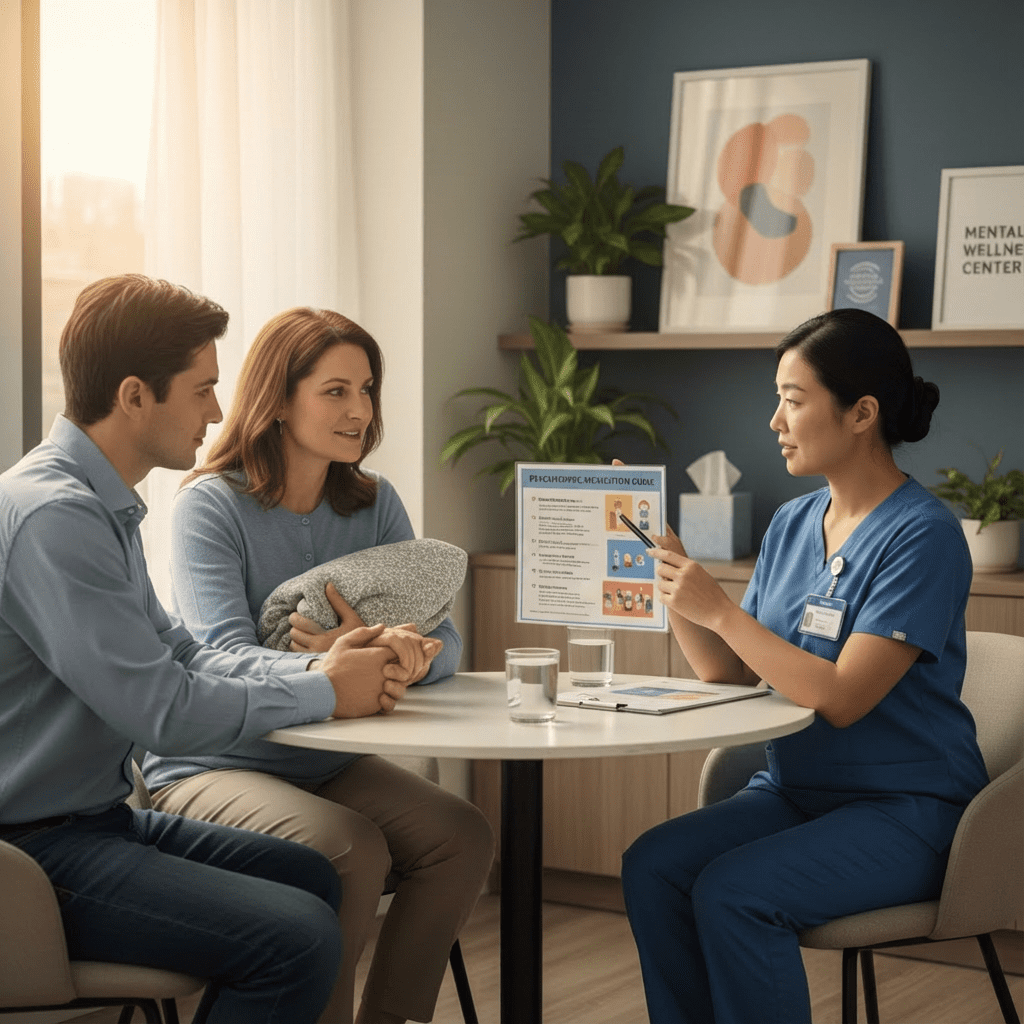
Psychotropic medications play a vital role in treating mental health disorders such as depression, anxiety, bipolar disorder, and schizophrenia. While these medications help stabilize mood, behavior, and thinking, their success depends greatly on proper understanding and adherence.
Nurses are essential in teaching families about psychotropic medications, ensuring safe use, early detection of side effects, and long-term treatment success.
For every registered nurse (RN nurse) and for students preparing for the NCLEX, family education is a core responsibility in mental health nursing.
What Are Psychotropic Medications?
Psychotropic medications affect the brain and are used to manage psychiatric conditions. Common classes include:
- Antidepressants
- Antipsychotics
- Mood stabilizers
- Anxiolytics
- Stimulants
A nurse must understand how these medications work to effectively educate both patients and families.
Why Family Teaching Is Critical in Psychotropic Therapy
Many patients rely on family members for daily support. When families are well-informed, they can:
- Encourage medication adherence
- Recognize early warning signs
- Prevent medication errors
- Reduce relapse and hospitalization
Teaching families is a fundamental part of nursing practice and is often emphasized in NCLEX nursing questions.
The Nurse’s Role in Family Education
A registered nurse acts as a bridge between the healthcare team and the family. Key responsibilities include:
- Explaining medication purpose and expected effects
- Teaching correct dosage and timing
- Reviewing side effects and adverse reactions
- Promoting safety and compliance
- Addressing myths and fears
These responsibilities are commonly covered in nursing bundles for mental health and pharmacology.
1. Teaching the Purpose of Psychotropic Medications
Families should understand:
- Why the medication is prescribed
- What symptoms it targets
- That improvement may take time
A nurse explains that psychotropic medications often require weeks, not days, to show full effects—an important concept tested on the NCLEX.
2. Medication Adherence and Consistency
Key Teaching Points for Families
A registered nurse teaches families to:
- Give medication at the same time daily
- Never stop medication abruptly
- Avoid doubling doses if one is missed
- Follow the provider’s instructions exactly
Sudden discontinuation can cause withdrawal symptoms or symptom relapse.
3. Teaching About Common Side Effects
Families should be prepared for common side effects such as:
- Drowsiness
- Weight gain
- Dry mouth
- Dizziness
- Gastrointestinal upset
A nurse explains which side effects are expected and which require immediate medical attention.
NCLEX Tip: Always teach families to report severe side effects such as suicidal thoughts or abnormal movements.
4. Recognizing Serious and Life-Threatening Reactions
When to Seek Immediate Help
A RN nurse teaches families to seek urgent care for:
- Suicidal ideation or behavior
- Neuroleptic malignant syndrome (NMS)
- Serotonin syndrome
- Severe allergic reactions
Early recognition can be lifesaving and is a high-priority nursing intervention.
5. Teaching Safety and Medication Storage
Psychotropic medications can be dangerous if misused. Nursing education includes:
- Keeping medications locked and out of children’s reach
- Not sharing medications
- Proper disposal of unused drugs
Safety teaching is essential for every nurse and frequently included in NCLEX nursing bundles.
6. Educating Families About Drug Interactions
A registered nurse explains that psychotropic medications may interact with:
- Alcohol
- Over-the-counter medications
- Herbal supplements
Families should always consult a nurse or healthcare provider before adding new medications.
7. Teaching About Monitoring and Follow-Up
Psychotropic therapy requires ongoing monitoring. Nurses teach families the importance of:
- Regular follow-up appointments
- Blood tests when required (e.g., lithium levels)
- Monitoring mood and behavior changes
These monitoring responsibilities are core concepts in nursing education.
8. Reducing Stigma Through Education
Mental illness often carries stigma. A nurse helps families by:
- Normalizing mental health treatment
- Encouraging open communication
- Promoting empathy and understanding
Reducing stigma improves medication adherence and patient outcomes.
9. Age-Specific Teaching Considerations
Children and Adolescents
- Monitor growth and behavior
- Watch for increased suicidal thoughts
Older Adults
- Increased sensitivity to side effects
- Higher risk of falls and confusion
A registered nurse tailors education based on age and individual needs.
10. Cultural Sensitivity in Family Teaching
Cultural beliefs may influence attitudes toward medication. Nurses must:
- Respect cultural values
- Address misconceptions gently
- Use culturally appropriate teaching strategies
Culturally competent nursing care is emphasized in NCLEX standards.
Common Psychotropic Medications Families Should Know
Antidepressants
- SSRIs, SNRIs, TCAs
- Teach delayed onset of action
Antipsychotics
- Monitor for extrapyramidal symptoms (EPS)
- Educate about weight gain and metabolic effects
Mood Stabilizers
- Lithium requires blood level monitoring
- Teach signs of toxicity
These medication classes are frequently reviewed in pharmacology nursing bundles.
NCLEX Focus: Psychotropic Medication Teaching
On the NCLEX, questions often test whether the nurse:
- Provides accurate medication teaching
- Prioritizes safety
- Identifies adverse effects
- Uses therapeutic communication
Family education is a high-yield topic in nursing exam preparation.
Why Psychotropic Teaching Is a Core Nursing Skill
Effective teaching:
- Improves treatment adherence
- Reduces relapse
- Enhances patient and family confidence
- Strengthens therapeutic relationships
Every RN nurse must master psychotropic medication teaching to provide safe, compassionate care.
Final Thoughts
Psychotropic medication teaching for families is a cornerstone of mental health nursing. Through clear education, safety guidance, and emotional support, nurses empower families to actively participate in care. This collaborative approach leads to better outcomes and safer medication use.