
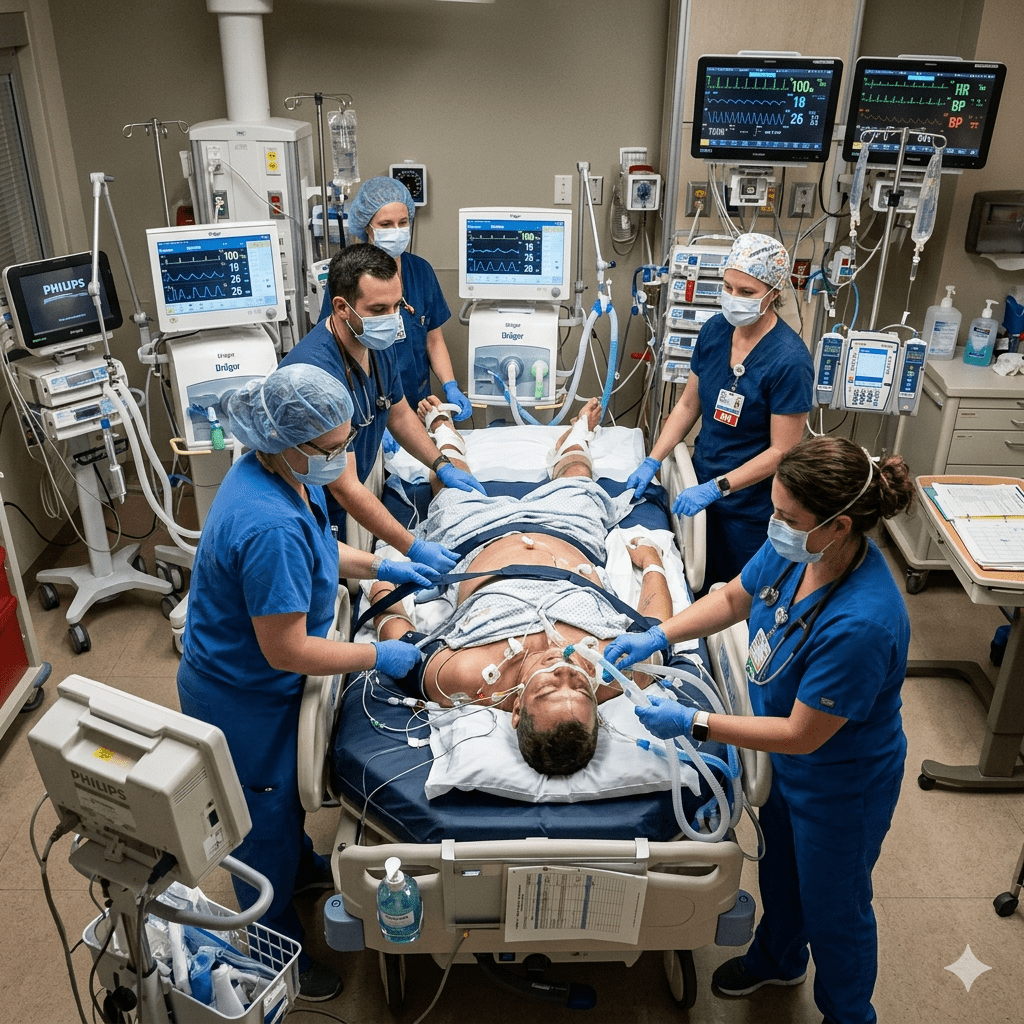
Acute Respiratory Distress Syndrome (ARDS) is a severe lung condition that causes significant breathing difficulties and low oxygen levels. In critical care settings, one effective intervention used to improve oxygenation is prone positioning, which involves placing the patient face down instead of on their back. Therefore, understanding how to safely perform this procedure is essential for every nurse and registered nurse (RN nurse) working in intensive care units.
Prone positioning has become an important topic in critical care nursing, particularly after its widespread use in severe respiratory illnesses. Additionally, nursing students preparing for the NCLEX often study prone positioning as part of respiratory and emergency care protocols. Many educational resources, including comprehensive nursing bundle study guides, explain the technique and emphasize safety during patient repositioning.
In this article, we will explore why prone positioning is used in ARDS patients and review the essential nursing safety protocols that help prevent complications.
What Is ARDS?
Acute Respiratory Distress Syndrome is a life-threatening condition in which fluid builds up in the air sacs of the lungs. As a result, oxygen cannot pass easily into the bloodstream.
Common causes of ARDS include:
- Severe pneumonia
- Sepsis
- Trauma
- Aspiration of gastric contents
- Severe viral infections
Because oxygen levels can drop rapidly, ARDS patients often require mechanical ventilation in an intensive care setting. Consequently, the RN nurse must closely monitor respiratory status and collaborate with the healthcare team to optimize oxygen delivery.
What Is Prone Positioning?
Prone positioning refers to placing a patient face down rather than lying on their back (supine position). This technique helps redistribute lung ventilation and improves oxygen exchange.
When a patient is placed in the prone position, several physiological changes occur:
- Improved lung expansion
- Better oxygenation
- Reduced pressure on the lungs
- Improved ventilation-perfusion matching
Because of these benefits, prone positioning has become a key strategy in managing severe ARDS. Therefore, critical care nurses must understand the procedure and follow strict safety protocols.
Why Prone Positioning Improves Oxygenation
In ARDS, fluid and inflammation cause parts of the lungs to collapse. When a patient lies on their back, gravity and pressure from the heart can further compress lung tissue.
However, turning the patient onto the stomach helps redistribute airflow and blood flow within the lungs.
Benefits of prone positioning include:
- Opening collapsed lung areas
- Improving oxygen delivery to the bloodstream
- Reducing ventilator-related lung injury
- Enhancing overall respiratory function
For this reason, prone positioning is commonly used for 12 to 16 hours per day in patients with severe ARDS.
Understanding these benefits is important for nursing students preparing for the NCLEX and for practicing registered nurses caring for critically ill patients.
Nursing Safety Protocols During Prone Positioning
Because prone positioning involves moving critically ill patients, careful planning and teamwork are essential. Consequently, hospitals follow strict safety protocols to reduce complications.
1. Pre-Procedure Assessment
Before turning the patient, the nurse should perform a complete assessment.
Important checks include:
- Verify airway stability
- Assess vital signs
- Confirm secure placement of tubes and lines
- Review recent laboratory results
The RN nurse must also ensure that all equipment is functioning correctly before repositioning the patient.
2. Team Coordination
Prone positioning requires a coordinated team effort. Usually, four to six healthcare professionals assist with the procedure.
Each team member has a specific role, such as:
- Airway management
- Monitoring IV lines
- Supporting the patient’s body during repositioning
- Managing monitoring equipment
Clear communication among the nursing team helps prevent accidental dislodgement of tubes or catheters.
3. Protecting the Airway and Tubes
One of the most important responsibilities of the registered nurse during prone positioning is protecting the airway.
Safety steps include:
- Ensuring the endotracheal tube is secure
- Monitoring ventilator settings
- Checking for kinks in breathing circuits
- Confirming IV lines remain intact
Because airway complications can be life-threatening, careful monitoring is essential throughout the procedure.
4. Preventing Pressure Injuries
Patients in the prone position are at risk of developing pressure injuries on the face, chest, and knees.
Therefore, the nurse must:
- Use protective padding
- Reposition the head regularly
- Inspect the skin frequently
- Monitor pressure points
Proper skin care is a critical component of safe critical care nursing practice.
5. Continuous Monitoring
After the patient is positioned, the RN nurse must continue close monitoring.
Key parameters include:
- Oxygen saturation
- Respiratory rate
- Blood pressure
- Heart rate
- Ventilator performance
Any sudden change in vital signs must be reported immediately to the healthcare team.
Potential Complications of Prone Positioning
Although prone positioning can improve oxygenation, complications may occur if safety protocols are not followed.
Possible risks include:
- Accidental removal of tubes or catheters
- Facial swelling
- Pressure ulcers
- Nerve compression injuries
- Airway obstruction
Because of these risks, continuous monitoring by the nurse is essential to ensure patient safety.
These clinical considerations are often included in NCLEX questions related to respiratory and critical care nursing.
Nursing Priorities During ARDS Care
Managing ARDS requires careful monitoring and multiple interventions. Therefore, the registered nurse must prioritize several aspects of patient care.
Key nursing priorities include:
- Maintaining adequate oxygenation
- Monitoring ventilator settings
- Preventing infections
- Protecting skin integrity
- Supporting patient comfort and safety
In addition, the RN nurse provides emotional support to family members who may be concerned about the patient’s condition.
How Nursing Study Bundles Help Students Learn Critical Care Skills
Many nursing students find critical care topics challenging at first. However, structured study tools such as a nursing bundle can simplify complex procedures like prone positioning.
A comprehensive nursing bundle often includes:
- Visual diagrams of ARDS management
- Step-by-step nursing protocols
- NCLEX-style practice questions
- Quick reference sheets for ICU care
These resources help future registered nurses build confidence when caring for critically ill patients.
Final Thoughts
Prone positioning is a powerful intervention used to improve oxygenation in patients with severe ARDS. When performed correctly, it can significantly enhance lung function and increase survival rates.
Because the procedure involves moving critically ill patients, strict safety protocols must always be followed. Therefore, every nurse and RN nurse working in critical care should understand how to safely implement prone positioning.
For nursing students preparing for the NCLEX, learning these protocols is also essential for mastering respiratory and critical care nursing concepts. With practice and the support of organized study materials like a nursing bundle, future registered nurses can develop the skills needed to provide safe and effective care for patients with severe respiratory illness.