
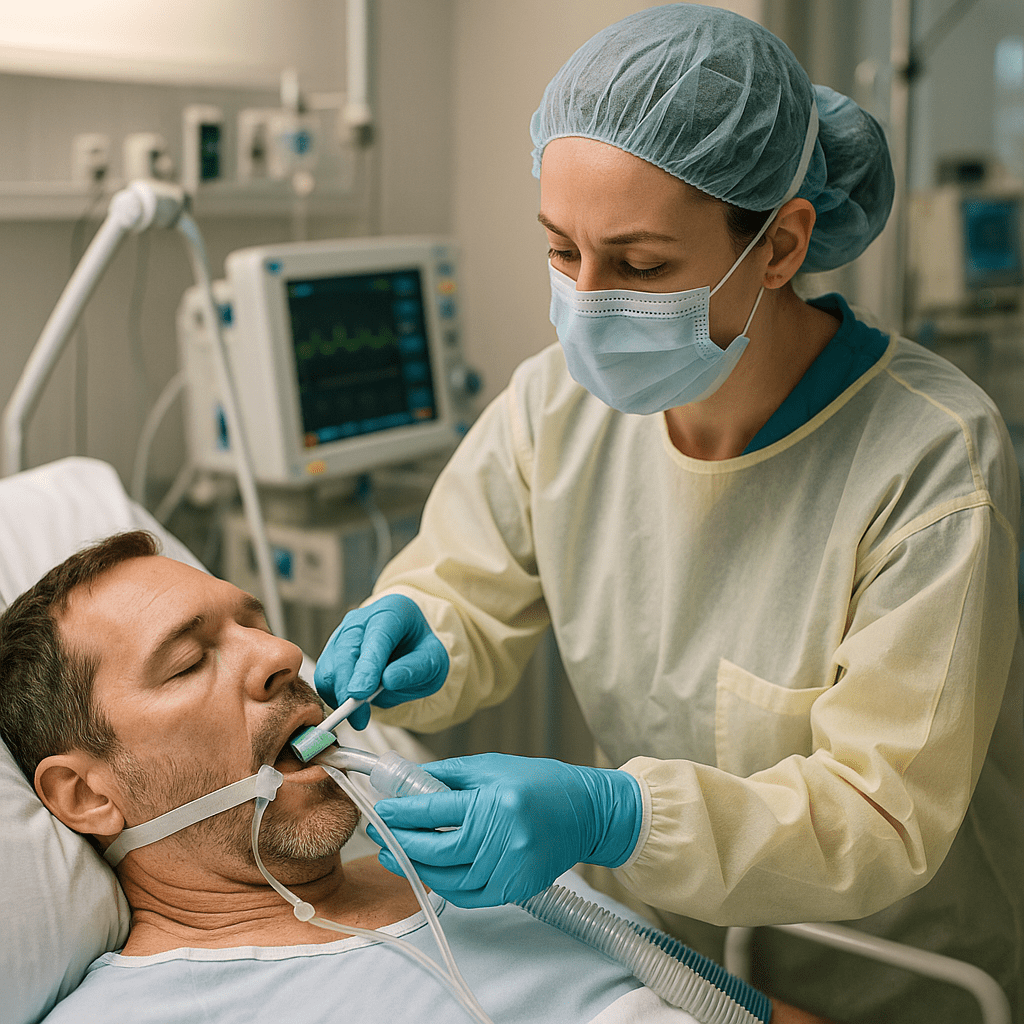
Ventilator-Associated Pneumonia (VAP) is one of the most serious complications seen in critically ill patients who require mechanical ventilation. For every registered nurse (RN), understanding how to prevent VAP is not only essential for patient safety but also a key topic on the NCLEX and within every nursing bundle in intensive care units.
This guide will help nurses recognize VAP risk factors, implement evidence-based interventions, and reinforce key concepts for NCLEX success.
🧠 What Is Ventilator-Associated Pneumonia (VAP)?
VAP is a lung infection that develops 48 hours or more after a patient is intubated and placed on mechanical ventilation. It occurs when bacteria enter the lower respiratory tract through the endotracheal tube.
For nurses, preventing VAP means stopping bacteria before they reach the lungs — through meticulous infection control, oral care, and proper suctioning techniques.
⚠️ Risk Factors for VAP
Registered nurses should be aware of the most common risk factors associated with ventilator-associated pneumonia:
- Prolonged mechanical ventilation (>48 hours)
- Poor oral hygiene
- Supine positioning
- Inadequate hand hygiene
- Aspiration of gastric contents
- Use of contaminated respiratory equipment
- Weakened immune system or malnutrition
Understanding these factors is crucial for NCLEX questions focusing on infection control and patient safety.
🩺 Nursing Interventions to Prevent VAP
Every nurse in the ICU plays a vital role in preventing VAP. The following interventions are part of the standard nursing bundles recommended by evidence-based practice guidelines:
1. Elevate the Head of the Bed (30–45°)
This position reduces the risk of aspiration and promotes lung expansion. RN nurses should ensure the patient’s bed angle is checked regularly.
2. Perform Regular Oral Care
Oral hygiene with chlorhexidine is one of the most effective strategies to prevent VAP. Nurses should perform oral care at least every 4 hours.
3. Daily Sedation Vacation and Assessment for Extubation
Reducing sedation and assessing readiness for extubation help minimize the duration of ventilation, which lowers VAP risk.
4. Subglottic Suctioning
Using endotracheal tubes with subglottic suction ports removes secretions above the cuff and prevents aspiration into the lungs.
5. Strict Hand Hygiene
Hand hygiene before and after patient contact remains one of the simplest yet most powerful nursing interventions to prevent infection.
6. Monitor Ventilator Circuits and Equipment
Registered nurses should ensure ventilator circuits are replaced only when visibly soiled or malfunctioning—not routinely—to reduce bacterial exposure.
🧩 Nursing Responsibilities in VAP Prevention
For registered nurses, the role in VAP prevention includes:
- Performing ongoing respiratory assessments (lung sounds, oxygen saturation, respiratory rate)
- Monitoring for early signs of infection (fever, purulent sputum, increased secretions)
- Administering prescribed antibiotics promptly and accurately
- Documenting all VAP prevention measures and patient responses
These interventions align with best-practice nursing bundles designed to improve ICU outcomes and reduce infection-related mortality.
🧠 NCLEX Tips for Nurses
On the NCLEX, expect questions that test your understanding of infection prevention, airway management, and prioritization. Key points include:
- Always elevate the head of the bed for ventilated patients.
- Oral care and suctioning are top preventive measures.
- Avoid routine ventilator tubing changes unless contaminated.
- Report any sudden increase in secretions, fever, or oxygen demand to the provider immediately.
Remember: Prevention is better than treatment. The nurse’s proactive care is the best defense against VAP.
👩⚕️ The Role of the Registered Nurse
The registered nurse (RN) is the frontline defender in preventing ventilator-associated pneumonia. By following infection control practices, communicating effectively with the healthcare team, and educating families, nurses can significantly improve patient outcomes.
Moreover, applying the principles of the nursing bundle ensures standardized care and aligns with the latest NCLEX competencies in infection prevention and patient safety.
🧩 Key Takeaway
Preventing Ventilator-Associated Pneumonia (VAP) requires vigilance, skill, and consistency. For every RN nurse, mastering these preventive measures not only protects patients but also strengthens clinical judgment for NCLEX success and real-world nursing excellence.
Through continuous education, assessment, and collaboration, registered nurses ensure the highest standards of care for critically ill patients.