
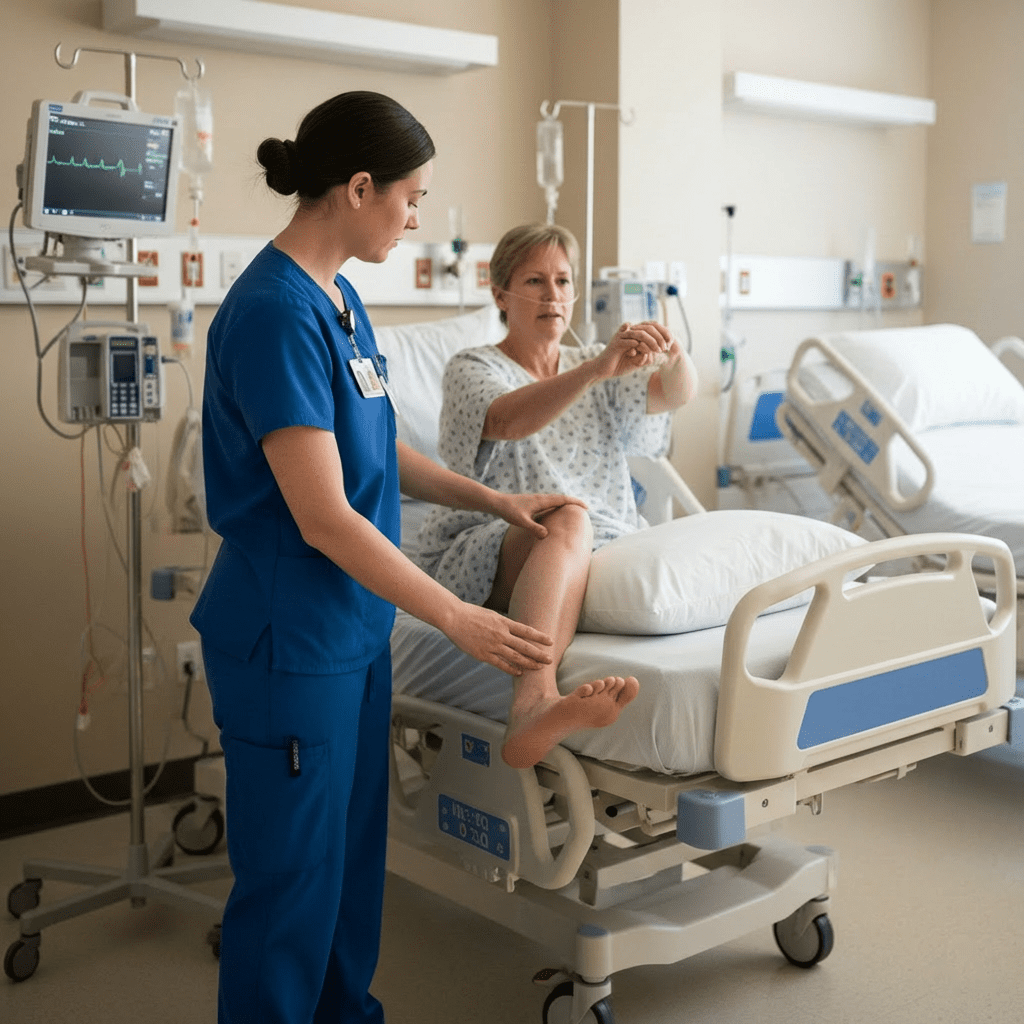
ICU-acquired weakness (ICU-AW) is a common but often underrecognized complication in critically ill patients. It leads to muscle loss, delayed recovery, prolonged mechanical ventilation, and extended hospital stays. Because nurses spend the most time at the bedside, the nurse plays a key role in prevention, early recognition, and daily interventions. For this reason, ICU-acquired weakness is frequently tested on the NCLEX and emphasized in many nursing bundle resources.
This article explains ICU-acquired weakness in simple terms, outlines nursing prevention strategies, and highlights key NCLEX points for every registered nurse (RN nurse).
What Is ICU-Acquired Weakness?
ICU-acquired weakness refers to generalized muscle weakness that develops during critical illness, even in patients with no prior neuromuscular disease. It typically affects both the upper and lower extremities and may persist long after ICU discharge.
Importantly, ICU-AW is not caused by a single factor. Instead, it results from prolonged immobility, inflammation, poor nutrition, and certain medications.
Why ICU-Acquired Weakness Matters in Nursing
ICU-acquired weakness significantly impacts patient outcomes. Patients may experience:
- Difficulty weaning from mechanical ventilation
- Increased risk of falls
- Loss of independence after discharge
- Longer ICU and hospital stays
Therefore, preventing ICU-acquired weakness is a patient safety priority and a core responsibility in critical care nursing.
Risk Factors for ICU-Acquired Weakness
Several factors increase the risk of ICU-AW. Nurses should remain especially alert when patients have:
- Prolonged bed rest
- Mechanical ventilation for several days
- Sepsis or systemic inflammation
- Poor nutritional intake
- Prolonged use of sedatives, corticosteroids, or neuromuscular blockers
Recognizing these risks early allows nurses to implement preventive strategies sooner.
Early Signs and Assessment
Early detection begins with consistent nursing assessment. Common early signs include:
- Reduced muscle strength
- Difficulty moving limbs against gravity
- Decreased handgrip strength
- Delayed response during mobility activities
Whenever possible, nurses should assess muscle strength daily and document changes clearly.
Nursing Strategies to Prevent ICU-Acquired Weakness
Early Mobility and Progressive Activity
Early mobility is the most effective intervention for preventing ICU-acquired weakness. As soon as the patient is stable, nurses should:
- Encourage active or passive range-of-motion exercises
- Assist with sitting at the edge of the bed
- Collaborate with physical therapy for ambulation
Even small movements can significantly reduce muscle loss over time.
Minimizing Sedation
Excessive sedation contributes to immobility and muscle atrophy. Therefore, nurses should:
- Follow daily sedation interruption protocols
- Use sedation scales such as RASS
- Advocate for the lowest effective sedation level
On the NCLEX, lighter sedation is often associated with better patient outcomes.
Optimizing Nutrition Support
Adequate nutrition is essential for muscle preservation. Nurses should:
- Monitor caloric and protein intake
- Ensure enteral feeding is started early when appropriate
- Collaborate with dietitians for individualized plans
Many nursing bundle study guides emphasize nutrition as a key prevention strategy.
Glycemic Control and Infection Prevention
Poor glucose control and infections worsen muscle breakdown. As a result, nurses must:
- Monitor blood glucose levels closely
- Follow strict infection-control protocols
- Perform meticulous hand hygiene
Preventing infection supports overall muscle recovery and patient stability.
Multidisciplinary Collaboration in the ICU
Preventing ICU-acquired weakness requires teamwork. Nurses collaborate daily with:
- Physicians
- Physical and occupational therapists
- Dietitians
- Respiratory therapists
Clear communication ensures early mobility, proper nutrition, and safe sedation management.
Nursing Documentation and Patient Safety
Accurate documentation strengthens continuity of care. Nurses should clearly record:
- Mobility level and tolerance
- Muscle strength assessments
- Nutrition intake
- Patient response to activity
Consistent documentation also supports quality improvement and safe handoffs.
Patient and Family Education
When appropriate, nurses should educate patients and families about:
- The importance of movement
- Expected recovery timelines
- Continued exercises after ICU discharge
Education improves cooperation and long-term recovery outcomes.
NCLEX Tips: Preventing ICU-Acquired Weakness
For NCLEX success, remember these high-yield points:
- Early mobility is the best prevention strategy
- Prolonged bed rest increases muscle loss
- Excess sedation worsens weakness
- Adequate nutrition supports muscle strength
- Nurses play a primary role in prevention
If a question asks how to reduce ICU-acquired weakness, choose early activity and mobility whenever possible.
Role of Nursing Bundles in ICU Care
A structured nursing bundle helps standardize care and reduce ICU-related complications. These bundles often include:
- Early mobility protocols
- Sedation minimization
- Nutritional optimization
- Infection prevention measures
Using nursing bundles improves consistency and patient outcomes across critical care units.
Final Thoughts
Preventing ICU-acquired weakness is a shared responsibility, but the nurse remains at the center of prevention efforts. Through early mobility, careful sedation management, adequate nutrition, and continuous assessment, nurses significantly improve patient recovery. Mastering this topic not only enhances bedside care but also strengthens confidence for the NCLEX and daily nursing practice.
For every registered nurse and RN nurse, preventing ICU-acquired weakness is essential to delivering safe, high-quality critical care.