
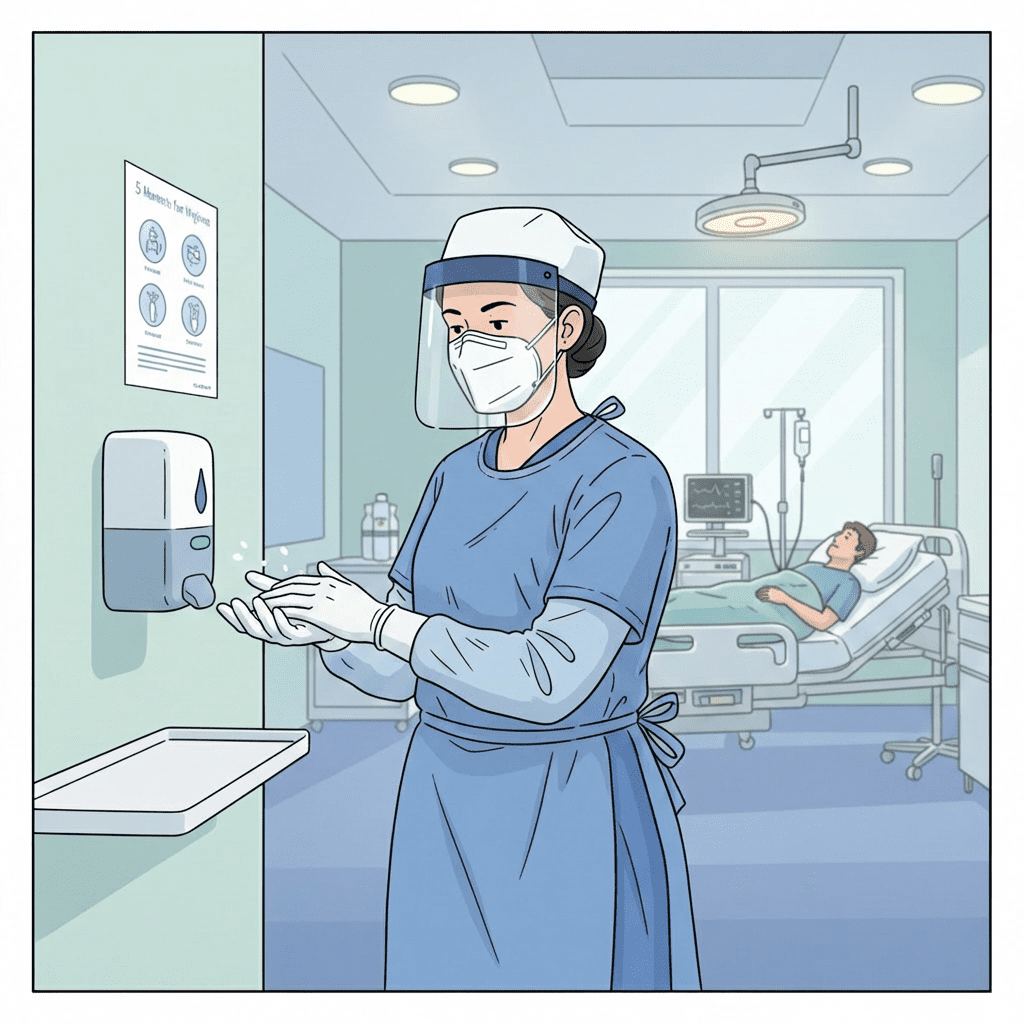
Preventing hospital-acquired infections (HAIs) is one of the most important responsibilities in nursing practice. Every nurse and registered nurse (RN nurse) plays a vital role in protecting patients from infections that develop during hospitalization. Because HAIs increase morbidity, length of stay, and healthcare costs, infection prevention is a major focus of nursing education and a high-yield topic on the NCLEX.
In this guide, you will learn what hospital-acquired infections are, why prevention matters, and which evidence-based nursing interventions reduce infection risk in clinical settings and on the NCLEX exam.
What Are Hospital-Acquired Infections?
Hospital-acquired infections, also known as healthcare-associated infections, are infections that occur 48 hours or more after hospital admission and were not present at the time of admission. In contrast to community-acquired infections, HAIs develop as a result of medical care, invasive procedures, or environmental exposure.
Common examples include:
- Catheter-associated urinary tract infections (CAUTIs)
- Central line-associated bloodstream infections (CLABSIs)
- Ventilator-associated pneumonia (VAP)
- Surgical site infections (SSIs)
🧠 NCLEX Insight: Identifying the type of HAI often helps determine the priority nursing intervention.
Why Preventing HAIs Is a Nursing Priority
Preventing HAIs is essential for patient safety and quality care. First, HAIs can lead to serious complications. Second, many of these infections are preventable with proper nursing care. Additionally, hospitals are held accountable for HAI rates, which directly affects healthcare outcomes.
As a result, HAIs can cause:
- Increased patient morbidity and mortality
- Longer hospital stays
- Higher healthcare costs
- Legal and ethical consequences
Therefore, preventing hospital-acquired infections is a key responsibility for every RN nurse and a frequent topic in nursing bundle review materials.
The Nurse’s Role in Preventing Hospital-Acquired Infections
Nurses are on the front line of infection prevention. Rather than relying solely on policies, nurses must consistently apply infection control principles during every patient interaction. Moreover, registered nurses are responsible for identifying risks and intervening early.
Key nursing responsibilities include:
- Performing proper hand hygiene
- Using personal protective equipment (PPE) correctly
- Maintaining aseptic technique
- Monitoring for early signs of infection
- Educating patients and families
📘 Nursing Bundle Tip: Infection prevention is tested across multiple NCLEX categories, including safety, fundamentals, and medical-surgical nursing.
Hand Hygiene: The Most Effective Prevention Strategy
Hand hygiene is the single most effective way to prevent hospital-acquired infections. Despite its simplicity, improper hand hygiene remains a leading cause of HAIs.
When Nurses Must Perform Hand Hygiene
- Before and after patient contact
- Before aseptic procedures
- After contact with bodily fluids
- After removing gloves
- After touching patient surroundings
🧼 NCLEX Focus: Gloves do not replace hand hygiene.
Proper Use of Personal Protective Equipment (PPE)
Personal protective equipment provides a barrier against infection transmission. However, PPE is only effective when used correctly. Therefore, nurses must select PPE based on the mode of transmission.
Types of PPE
- Gloves
- Gowns
- Masks
- Eye protection
Importantly, improper removal of PPE can contaminate the nurse and the environment.
⚠️ NCLEX Alert: Questions often test the order of donning and doffing PPE.
Preventing Device-Related Infections
Medical devices significantly increase infection risk. For this reason, nurses must follow strict protocols when managing invasive devices.
Catheter-Associated Urinary Tract Infections (CAUTIs)
Prevention strategies include:
- Avoiding unnecessary catheter use
- Maintaining a closed drainage system
- Keeping the collection bag below bladder level
- Performing perineal care regularly
Central Line-Associated Bloodstream Infections (CLABSIs)
To prevent CLABSIs, nurses should:
- Use aseptic technique during line care
- Perform regular site assessments
- Change dressings per protocol
- Scrub the hub before access
📌 NCLEX Tip: Removing unnecessary lines is a priority intervention.
Preventing Surgical Site Infections
Surgical site infections can delay healing and increase complications. Therefore, prevention requires careful coordination before and after surgery.
Key nursing interventions include:
- Preoperative skin preparation
- Maintaining sterile technique
- Monitoring wound sites
- Educating patients on wound care
Additionally, early detection of redness, swelling, or drainage is critical.
Environmental and Equipment Cleaning
A clean environment supports infection prevention. Meanwhile, contaminated equipment can quickly spread pathogens.
Nursing responsibilities include:
- Cleaning shared equipment between patients
- Ensuring proper linen handling
- Disinfecting high-touch surfaces
🧠 NCLEX Reminder: Environmental hygiene is part of standard precautions.
Patient and Family Education
Education plays a major role in preventing HAIs. When patients understand infection prevention, compliance improves significantly.
Teaching should include:
- Proper hand hygiene
- Respiratory etiquette
- Wound care instructions
- Signs of infection to report
Consequently, patient education reduces readmissions and complications.
Common Nursing Errors That Increase Infection Risk
Even experienced nurses may unintentionally increase infection risk. For example, rushing care can lead to skipped hand hygiene. Similarly, poor documentation may delay intervention.
Common errors include:
- Inconsistent hand hygiene
- Improper glove use
- Skipping device care
- Ignoring early infection signs
⚠️ Registered Nurse Responsibility: Infection prevention requires consistent attention, not occasional effort.
NCLEX-Style Practice Question
Which nursing action is most effective in preventing hospital-acquired infections?
A. Administering antibiotics early
B. Wearing gloves for all patient care
C. Performing proper hand hygiene
D. Isolating all hospitalized patients
✅ Correct Answer: C
Rationale: Hand hygiene is the most effective and evidence-based infection prevention measure.
Why Preventing HAIs Is a High-Yield NCLEX Topic
This topic is frequently tested on the NCLEX because it:
- Emphasizes patient safety
- Applies to all clinical settings
- Integrates fundamentals of nursing
- Reflects real-world nursing priorities
Therefore, mastering infection prevention strengthens both exam readiness and clinical competence.
Final Thoughts
Preventing hospital-acquired infections is a shared responsibility, but nurses play the most critical role. By practicing proper hand hygiene, using PPE correctly, and following infection control protocols, nurses protect patients from avoidable harm.
For nursing students, this topic is essential for NCLEX success. For registered nurses, it represents professional accountability and high-quality patient care. Ultimately, effective infection prevention saves lives and strengthens the nursing profession.