
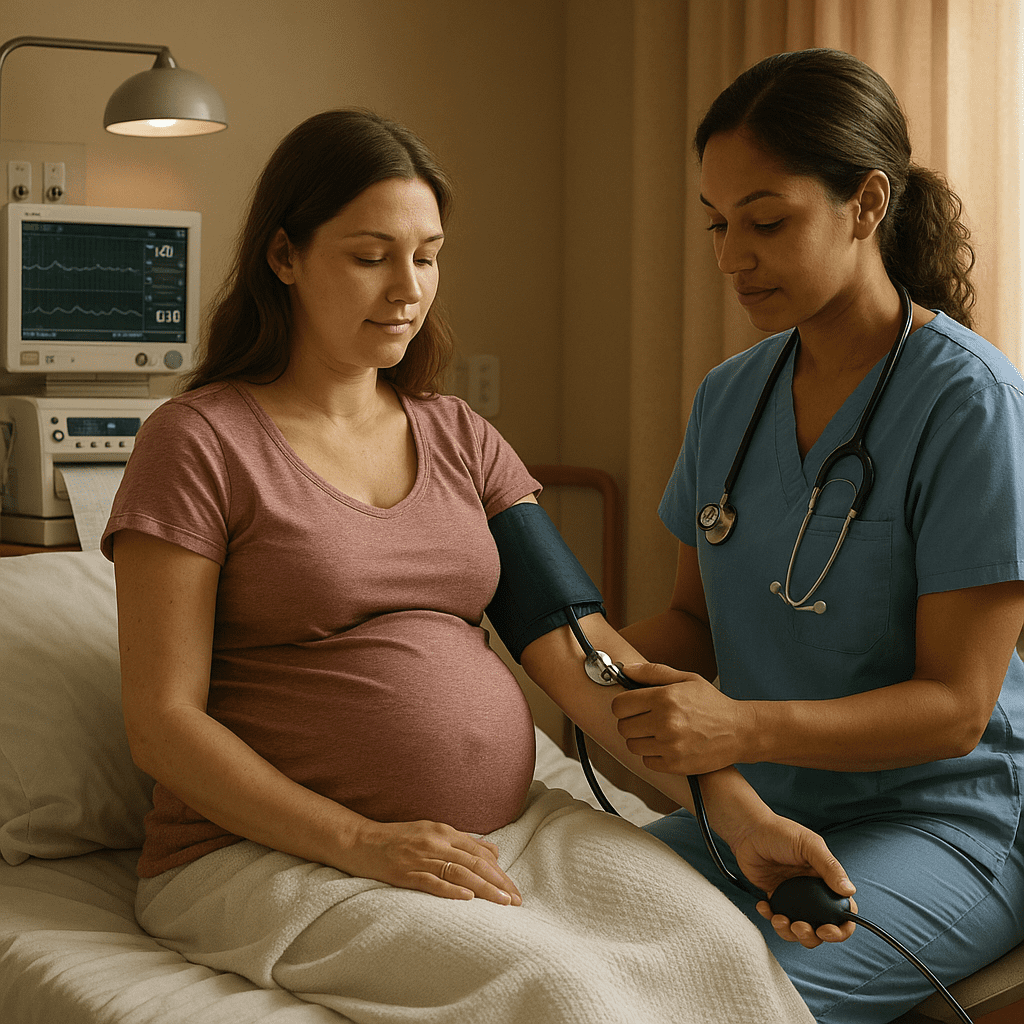
Preeclampsia is one of the most important pregnancy complications every nurse, RN nurse, or registered nurse must recognize early. Because the condition can develop suddenly and progress rapidly, understanding its warning signs is essential not only for clinical practice but also for NCLEX success. This guide breaks down the causes, symptoms, risks, and evidence-based interventions that every nursing student and practicing nurse should know.
✅ What Is Preeclampsia?
Preeclampsia is a pregnancy-related hypertensive disorder that usually occurs after 20 weeks of gestation and involves:
- High blood pressure
- Protein in the urine (proteinuria)
- Organ dysfunction (liver, kidneys, brain)
For any registered nurse, rapid recognition is critical because untreated preeclampsia can progress to eclampsia, a life-threatening condition involving seizures.
✅ Why Preeclampsia Matters for Nurses and the NCLEX
The NCLEX frequently tests this topic because it requires the nurse to:
- Identify early warning signs
- Prioritize patient safety
- Provide timely interventions
- Educate the mother and family
This makes preeclampsia a high-yield topic in every nursing bundle, maternity course, or obstetrics module.
✅ Risk Factors Every RN Nurse Should Know
A nurse should remain alert when caring for patients with any of the following risk factors:
- First pregnancy
- Age <20 or >35
- Previous preeclampsia
- Chronic hypertension
- Diabetes mellitus
- Multiple gestation
- Kidney disease
- Obesity
- Family history of preeclampsia
These appear often on the NCLEX and in maternity clinical practice.
✅ Early Warning Signs: What Nurses Should Detect Quickly
✅ 1. Elevated Blood Pressure
- BP ≥ 140/90 mmHg
- Two readings, at least 4 hours apart
- Severe: BP ≥ 160/110 mmHg
✅ 2. Proteinuria
- ≥ 300 mg in 24-hour urine
- Protein/creatinine ratio ≥ 0.3
✅ 3. Edema
- Facial swelling
- Sudden hand swelling
- Rapid weight gain
✅ 4. Neurological Signs
- Persistent headache
- Blurred or double vision
- Seeing spots
- Hyperreflexia
✅ 5. Upper Right Abdominal Pain
This often indicates liver involvement, which is an emergency.
✅ Nursing Assessment for Preeclampsia
A registered nurse or RN nurse should always include:
- Frequent BP monitoring
- Urine protein dipstick
- Deep tendon reflex assessment
- Monitoring for clonus
- Daily weight and edema evaluation
- Fetal monitoring (NST, BPP)
- Labs (platelets, liver enzymes, creatinine)
These assessments help catch the condition early and guide interventions.
✅ Nursing Interventions: What Every Nurse Must Do
✅ 1. Stabilize Blood Pressure
Antihypertensive medications may include:
- Labetalol
- Hydralazine
- Nifedipine
These drugs help protect maternal organs and prevent stroke.
✅ 2. Prevent Seizures
The priority medication is:
➡️ Magnesium sulfate
A registered nurse must monitor:
- Respiratory rate
- Reflexes
- Urine output
- Magnesium toxicity (loss of reflexes, low respirations)
The antidote is calcium gluconate — an NCLEX favorite.
✅ 3. Protect the Fetus
- Monitoring fetal heart rate
- Ultrasound for growth restrictions
- Planning for early delivery if needed
✅ 4. Educate the Patient
A nurse should teach:
- Warning signs to report immediately
- Importance of rest
- Daily fetal movement counting
- Medication adherence
✅ 5. Prepare for Delivery
Delivery is the only cure, and the healthcare team may decide on early induction if the condition worsens.
✅ Complications to Watch For (NCLEX High-Yield)
- Eclampsia (seizures)
- HELLP syndrome
- Placental abruption
- DIC (disseminated intravascular coagulation)
- Stroke
- Fetal growth restriction
- Preterm birth
Nurses must monitor closely to prevent fatal outcomes.
✅ Postpartum Nursing Care
Preeclampsia can continue—or even appear—for the first time after delivery.
A nurse must keep monitoring:
- BP levels for 48–72 hours
- Urine output
- Headaches and vision changes
- Magnesium sulfate infusion (usually 24 hours postpartum)
✅ Final Thoughts
Preeclampsia requires early detection, constant monitoring, and rapid intervention. Nurses play the biggest role in spotting symptoms before they escalate. For any RN nurse, registered nurse, or nursing student preparing for the NCLEX, mastering this topic is essential for safe maternity care.
FAQs
Preeclampsia is a pregnancy complication involving high blood pressure and organ dysfunction. It is dangerous because it can rapidly progress to eclampsia, stroke, liver failure, placental abruption, or fetal distress if not treated early.
A nurse should watch for elevated blood pressure, proteinuria, sudden swelling of the face or hands, severe headache, visual changes, and upper abdominal pain. These require immediate evaluation.
Diagnosis is based on blood pressure readings, urine protein levels, lab findings (platelets, liver enzymes), and maternal symptoms. Nurses play a major role in collecting and monitoring these signs.
Magnesium sulfate is the primary medication used to prevent eclamptic seizures. Nurses must watch for magnesium toxicity by monitoring reflexes, respirations, and urine output.